
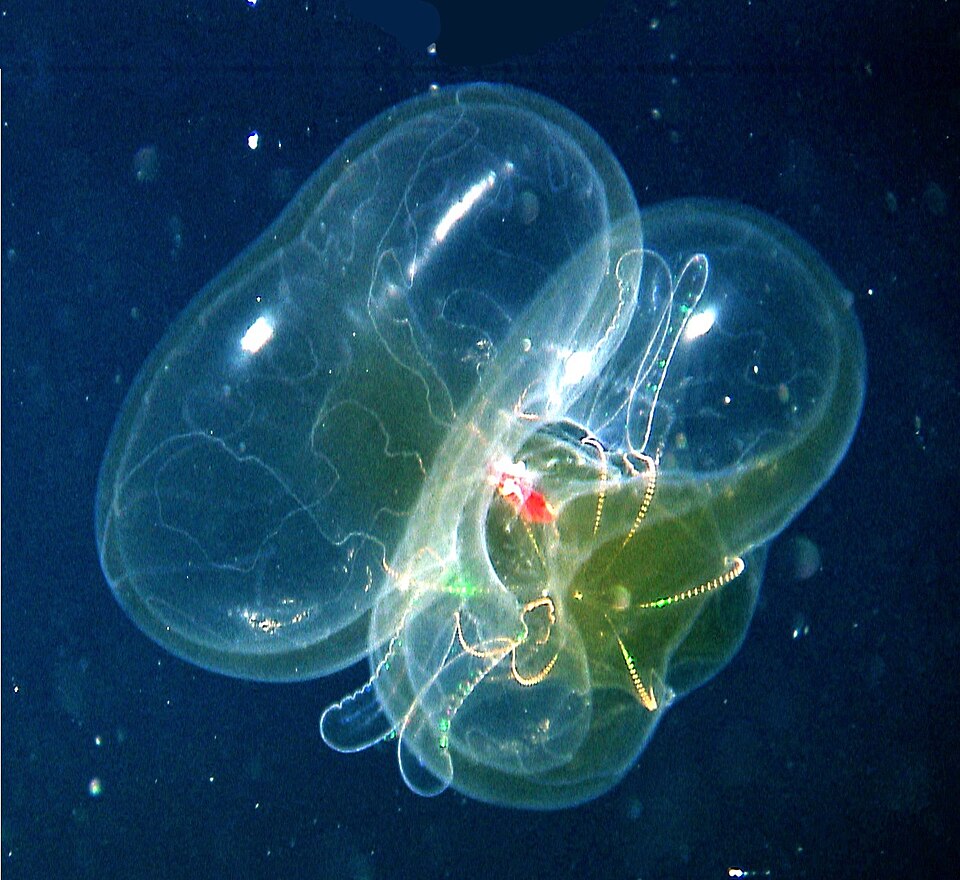
An underwater camera can reveal a nearly transparent animal without settling its identity or explaining its biology. Recent MBARI expedition logs show the work between an encounter and a research record: observations by blue-water scuba divers, collections by a deep robotic vehicle, and examination back in the ship’s laboratory.
Two teams observing different environments
In an October 14 field log, graduate researcher Anik Grearson describes a team using blue-water scuba to observe and collect animals near the surface while another team worked with ROV Doc Ricketts in deep water. The account reports gelatinous organisms, including ctenophores and siphonophores, encountered offshore of Central California.
This is specialized research diving described by its participants. It is not an instruction to reproduce the operation on a recreational trip. The useful lesson for a reader is that different depths and collection methods provide different views of the water column; one camera deployment cannot stand in for every environment.
The specimen continues to generate information
The October 17 laboratory account describes photographing siphonophores, examining their specialized body units under a microscope and preserving tissues for research or museum collections. It explains why handling these fragile animals carefully is essential to studying them. An image of a complete animal and a close examination of its structures answer complementary questions.
That sequence helps explain why an expedition’s first photographs are not the final research output. A field identification may be a useful starting point, while later comparison, anatomy and preserved material support a more detailed conclusion. A viewer should look for which stage a particular statement describes.
Read the research window accurately
The expedition overview lists October 13–20, 2026 aboard R/V David Packard, with a range of methods for studying gelatinous animals. The dated logs document particular work during that window. They do not establish that all planned sampling succeeded or announce a completed scientific analysis on October 20.
For divers who enjoy photographing unfamiliar marine life, this is a useful model of intellectual patience. Keep the original observation separate from the name you first attach to it. Record what you know about the image’s context and what remains uncertain. An unusual shape is a reason for a question, not proof of a new species.
When sharing a photograph with a research or identification program, use its requested format and leave the file’s origin clear. Avoid presenting another expedition’s image as something you personally encountered. The value lies in an honest record that other people can interpret.
Our ocean DNA data article discusses another kind of marine evidence. A sample, a photograph and an inferred identity have different meanings; connecting them carefully is part of making research useful.
Dates and scope: field logs October 14 and 17; expedition scheduled October 13–20, 2026. Sources checked October 25. This is recent-month field reporting, not newly published results today, a wildlife-handling guide or a TRIMIX research expedition.
Join the discussion
Share a question or a useful experience about this article. Every comment is reviewed before it appears.