The TRIMIX collection is coming online. Online ordering opens soon.
Tutorials & resources
Know your gear. Before you dive.
Find your cylinder’s user manual, understand its operating limits and get answers to common ownership questions. Start with the guide for your exact model.
The manual library
Choose your cylinder.
Original multilingual PDFs, including English. Read online or save a copy. The English section begins on PDF page 3; printed page numbers begin after the cover and language index.
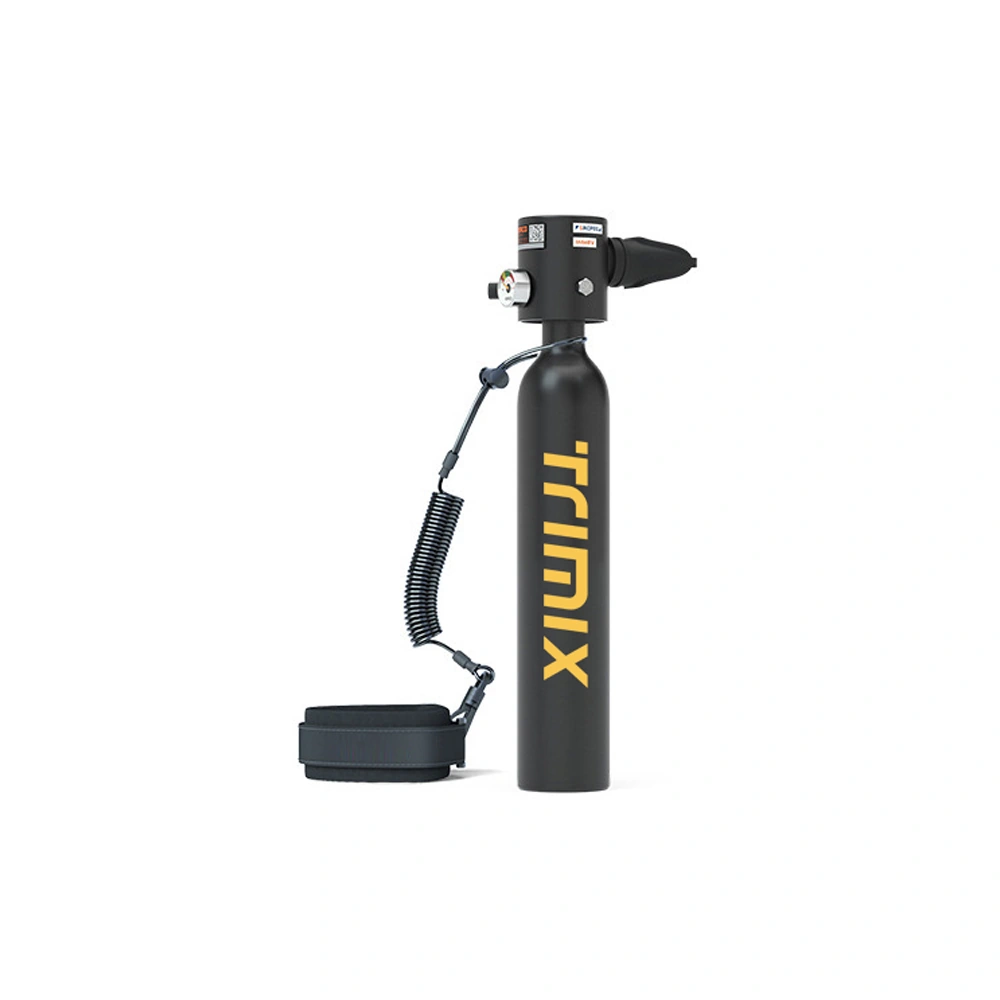
T-500 0.5L cylinder
Product structure, filling guidance, checks, troubleshooting, storage and maintenance for the T-500 cylinder.
Also applies to the T-500 cylinder supplied in T-500SM and T-500SM4P kits. Mask, adapter and pump instructions are separate.
Read the full manual before use. The summaries below help you find key information; they do not replace the model-specific instructions, cylinder markings, scuba training or a dive plan. For a kit, follow every component’s instructions and use the most restrictive operating limit.
Common questions
Clear answers. Better preparation.
These answers draw on the T-500, T-1000 and T-2000 manuals. Check your exact model and equipment configuration.
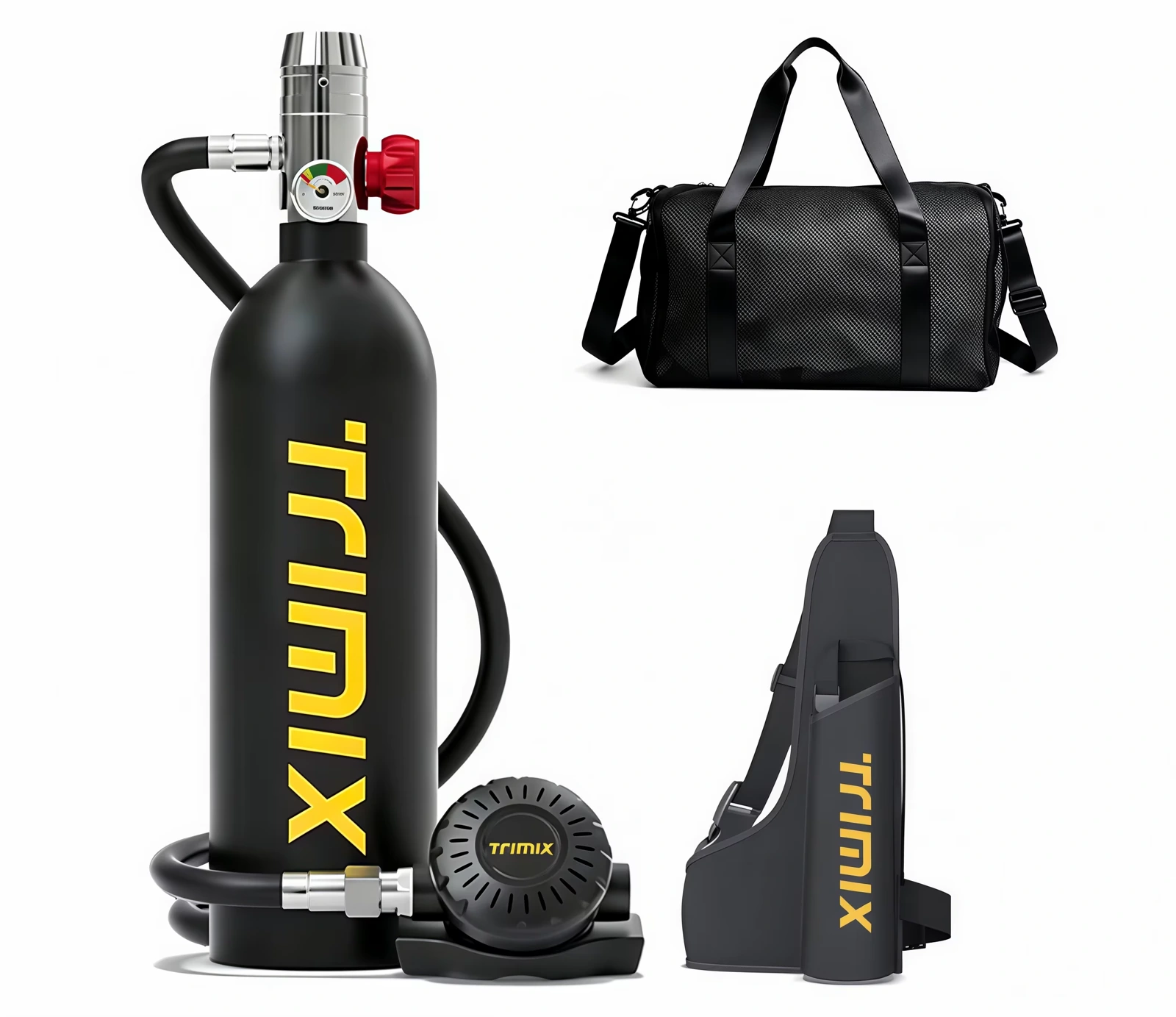
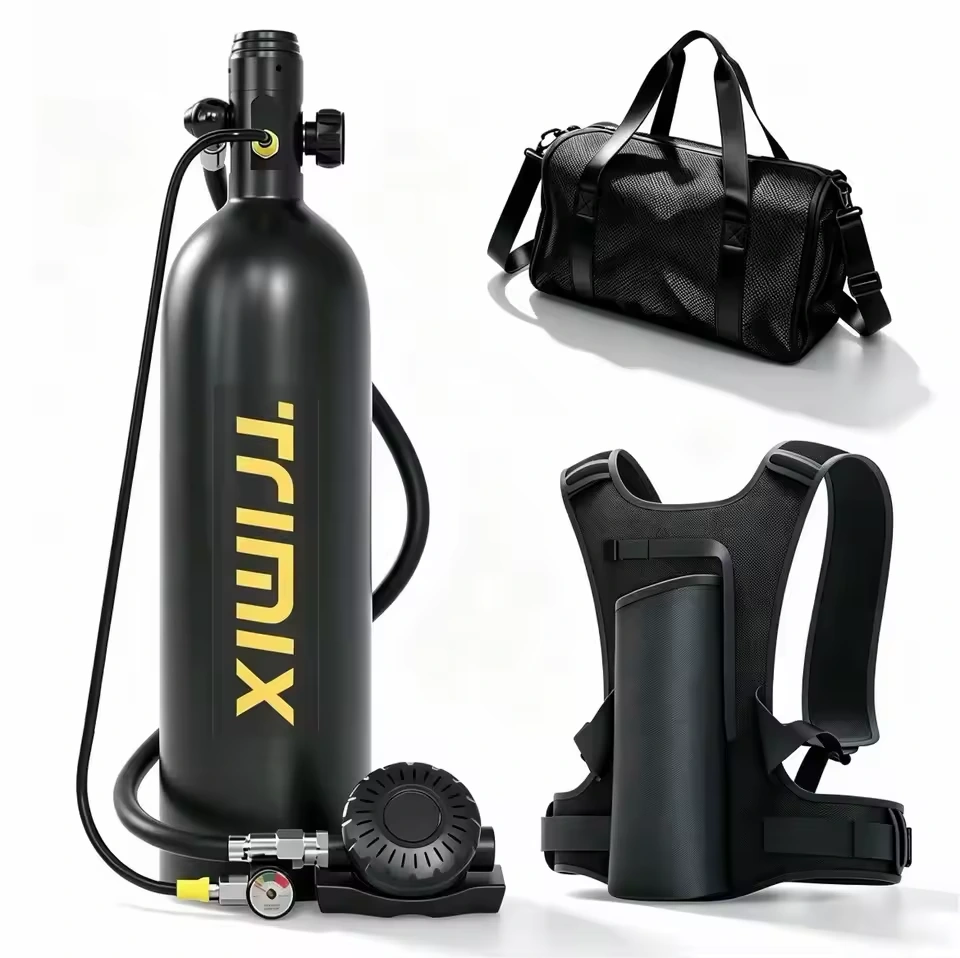
Match the model on your cylinder and breathing assembly: T-500 for 0.5L, T-1000 for 1L or T-2000 for 2.0L. The T-500 guide covers the cylinder used in our 0.5L kits, but does not replace separate mask, adapter or pump instructions.
What is the intended depth, and why does the manual mention 30 m?
Section 1.1 describes normal use at depths of less than 10 m. The separate reference to depths within 30 m applies only to emergency rescue or a backup air supply for professional diving equipment. It is not a 30 m recreational diving rating. Stay within your training, dive plan and the limits of the complete setup.
How many minutes of breathing time will I get?
The supplied manuals do not specify a guaranteed runtime. Available time depends on depth, breathing rate, activity, starting pressure and the reserve required by your dive plan. Monitor your gauge and plan the return and ascent with sufficient air; do not use a fixed number of minutes as your air-management plan.
What pressure and breathing gas do these cylinders use?
The manuals list 200 bar / 20 MPa as the maximum pressure and require compressed air suitable for human breathing. They prohibit filling with pure oxygen. Follow the markings on the actual cylinder and the model’s filling instructions; never exceed the rated pressure.
Can I use any air compressor or hand pump?
No. Filling equipment must be compatible with the cylinder’s pressure rating and deliver suitable breathing-quality air. T-500 and T-1000 manuals describe electric pumps, manual pumps and adapter filling; the T-2000 manual describes an electric compressor or scuba adapter. The manuals require an oil-water separator for pump methods, but a separator or pressure rating alone does not establish breathing-air quality. Have the equipment and procedure checked by a qualified fill provider. See DAN’s breathing-air guidance.
What should I check before use?
Check for damage, leaks, abnormal operation, and water or foreign material in the breathing cavity. Confirm that the equipment is correctly assembled and functioning as described in its manual. Do not fill or use damaged, leaking or malfunctioning equipment. Stop and arrange qualified service if a fault is found.
Is the equipment suitable for cold water or an untrained user?
The manuals specify water above 10°C and warn that untrained use can cause serious injury or death. Obtain appropriate scuba training and become familiar with the equipment under qualified supervision. Do not use the cylinder alone; the manuals call for at least two accompanying people.
Are there age or health restrictions?
The manufacturer’s manuals exclude users under 14 or over 60, require adult supervision for minors, and exclude pregnancy and people who are not fit for diving or swimming. These restrictions do not establish medical fitness. Follow the manual and obtain appropriate professional advice about fitness to dive.
How should I clean and store the equipment?
Follow the manual’s fresh-water cleaning instructions after use and dry the equipment before storage. Keep it away from direct sunlight, high heat, impacts, oils, acids and alkalis. The stated storage range is 5–30°C with 40–70% relative humidity; do not leave it in a hot car.
How often does it need professional inspection?
The manuals call for annual inspection or maintenance by an authorized dealer or professional diving organization, recommend an annual cylinder visual inspection and specify hydrostatic testing every five years. The required interval also depends on the actual cylinder’s markings and the rules in your destination. Have a qualified provider confirm the applicable schedule. Do not attempt unauthorized disassembly or service on pressurized parts.
0.5L refilling guide
Three ways to refill your T-500.
Choose a refill method before choosing your kit. A compatible electric compressor, a scuba refill adapter or a high-pressure hand pump can provide different levels of convenience and effort.
01
Electric compressor
Approx. 10 minutes*
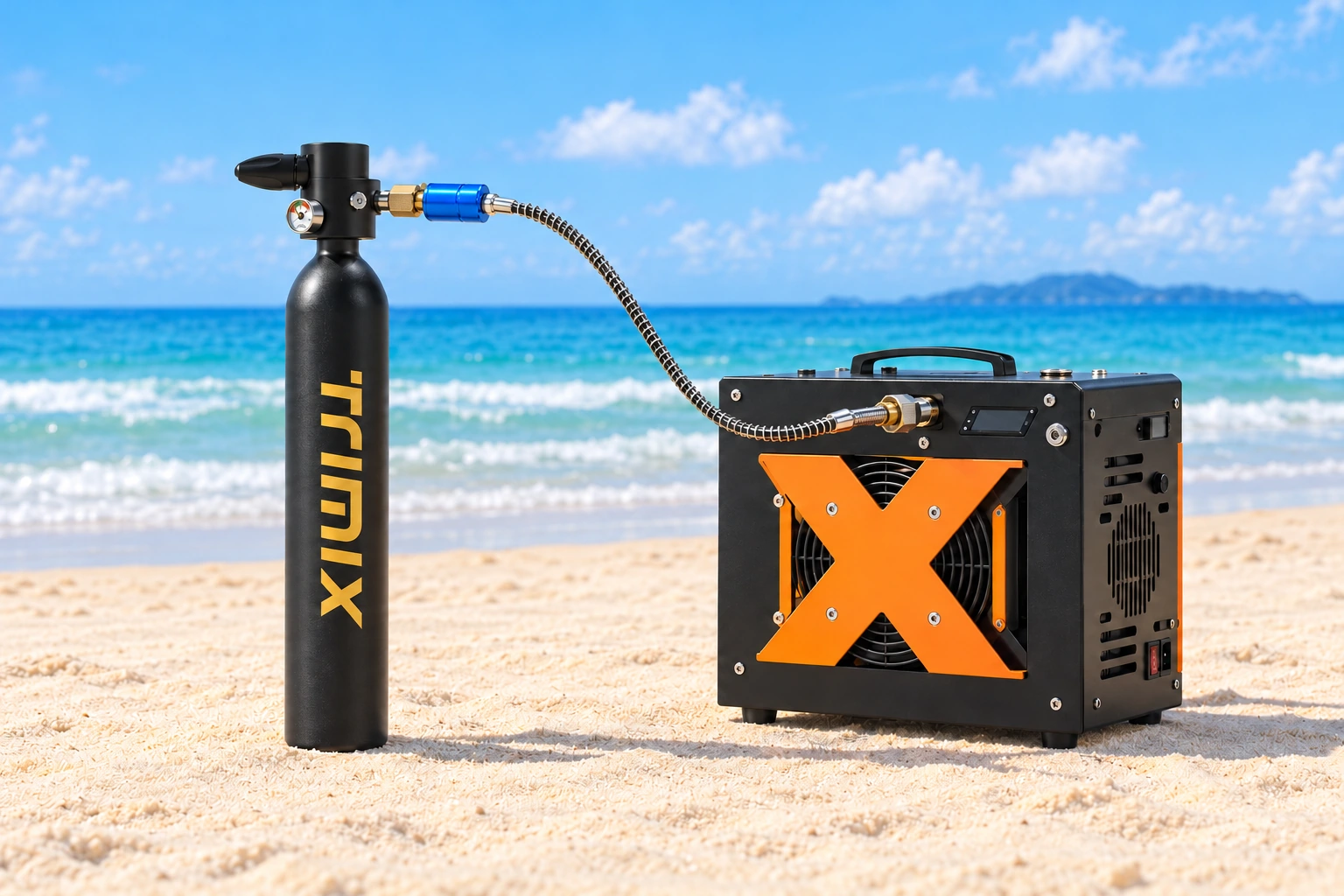
A powered filling option with less manual effort. Use compatible high-pressure equipment that supplies breathing-quality air and the filtration required by the T-500 manual. Monitor the equipment and pressure throughout filling.
02
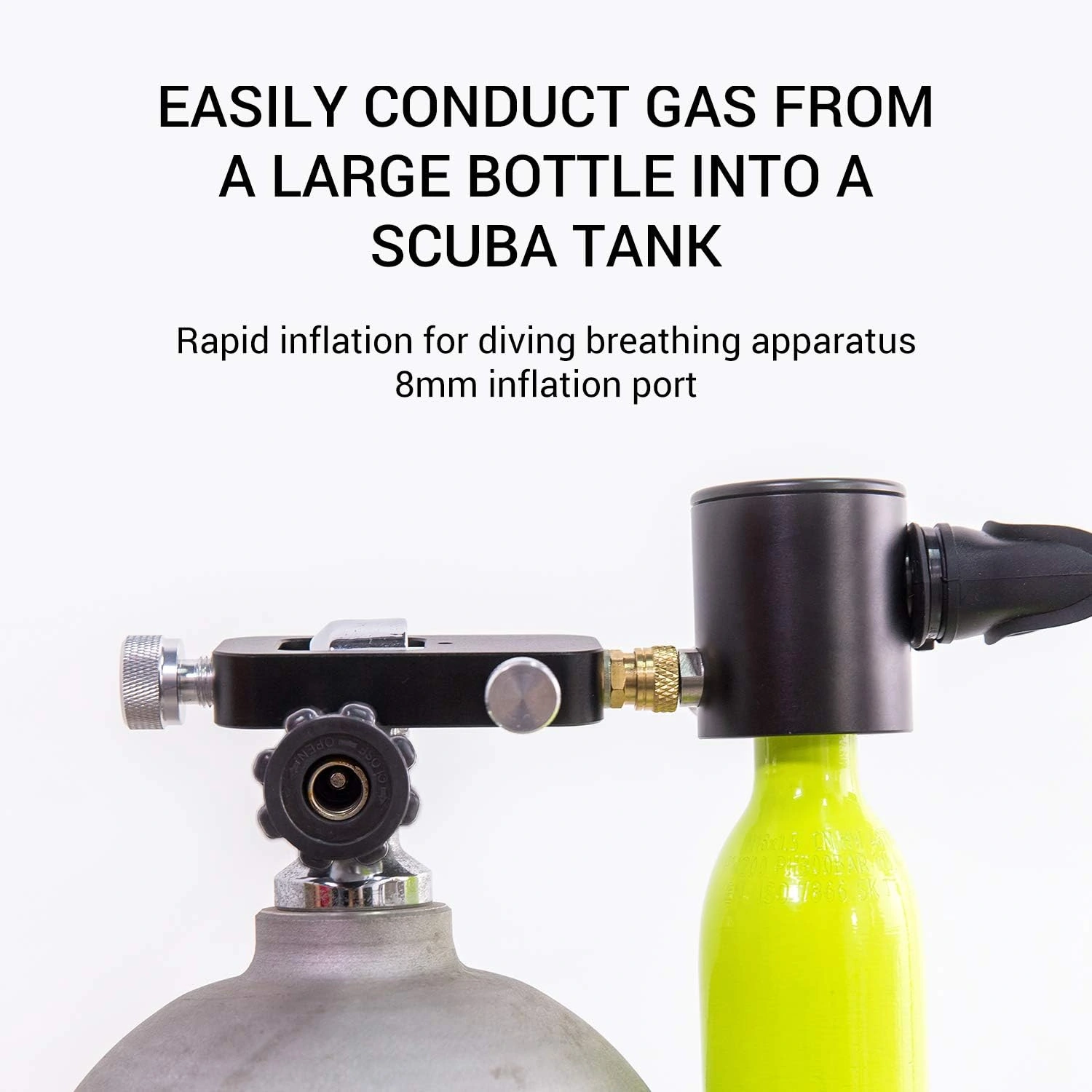
Scuba refill adapter
Approx. 16 seconds*
Transfers air from a compatible, adequately pressurized source cylinder. Source pressure, cylinder capacity and the valve connection affect the result. This is a controlled transfer, not a timed challenge.
03
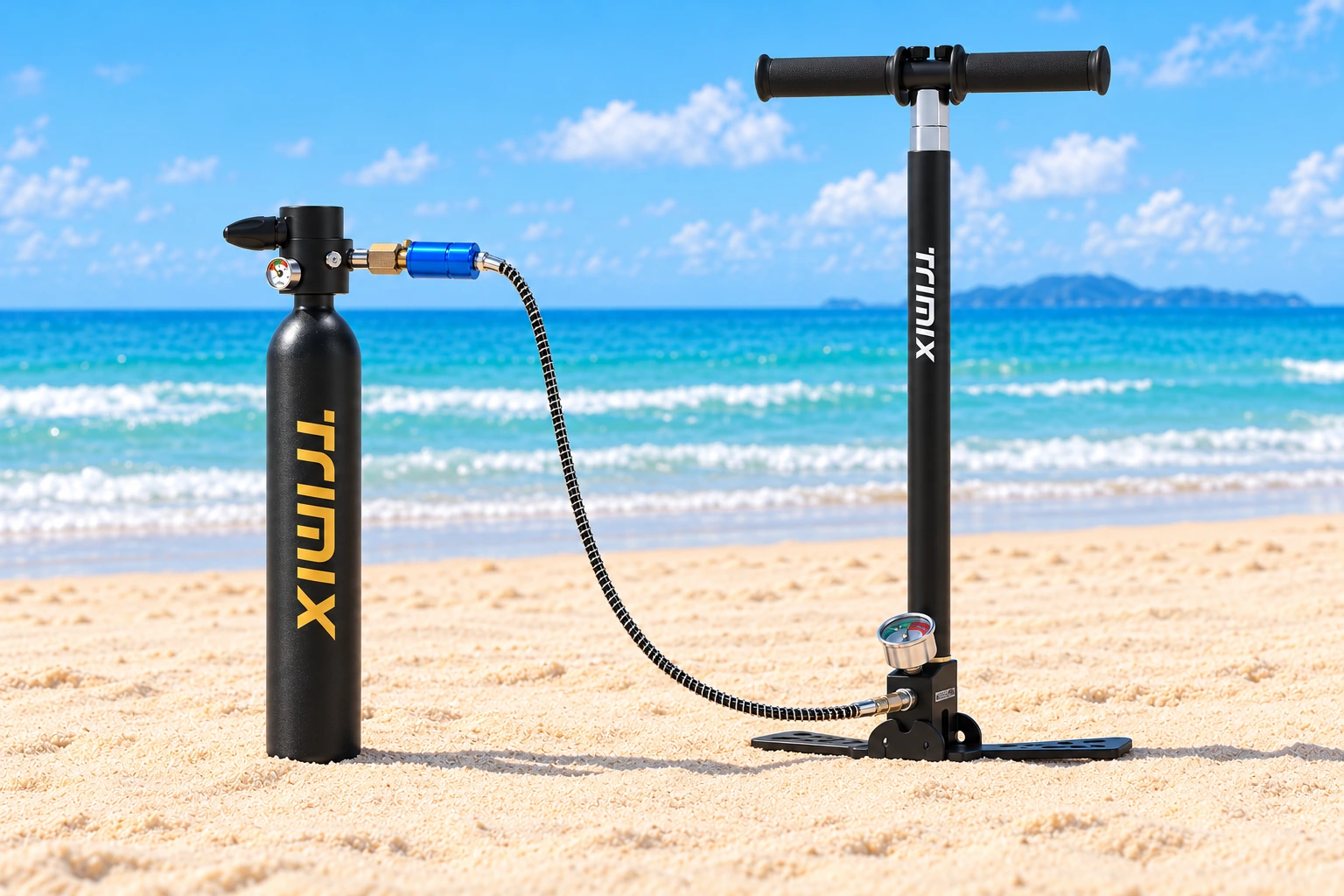
High-pressure hand pump
Approx. 25 minutes*
Requires sustained physical effort and is the slowest option in these reference estimates. Useful as a backup where powered filling is unavailable. Use the specified filtration and follow the pump’s work/rest instructions.
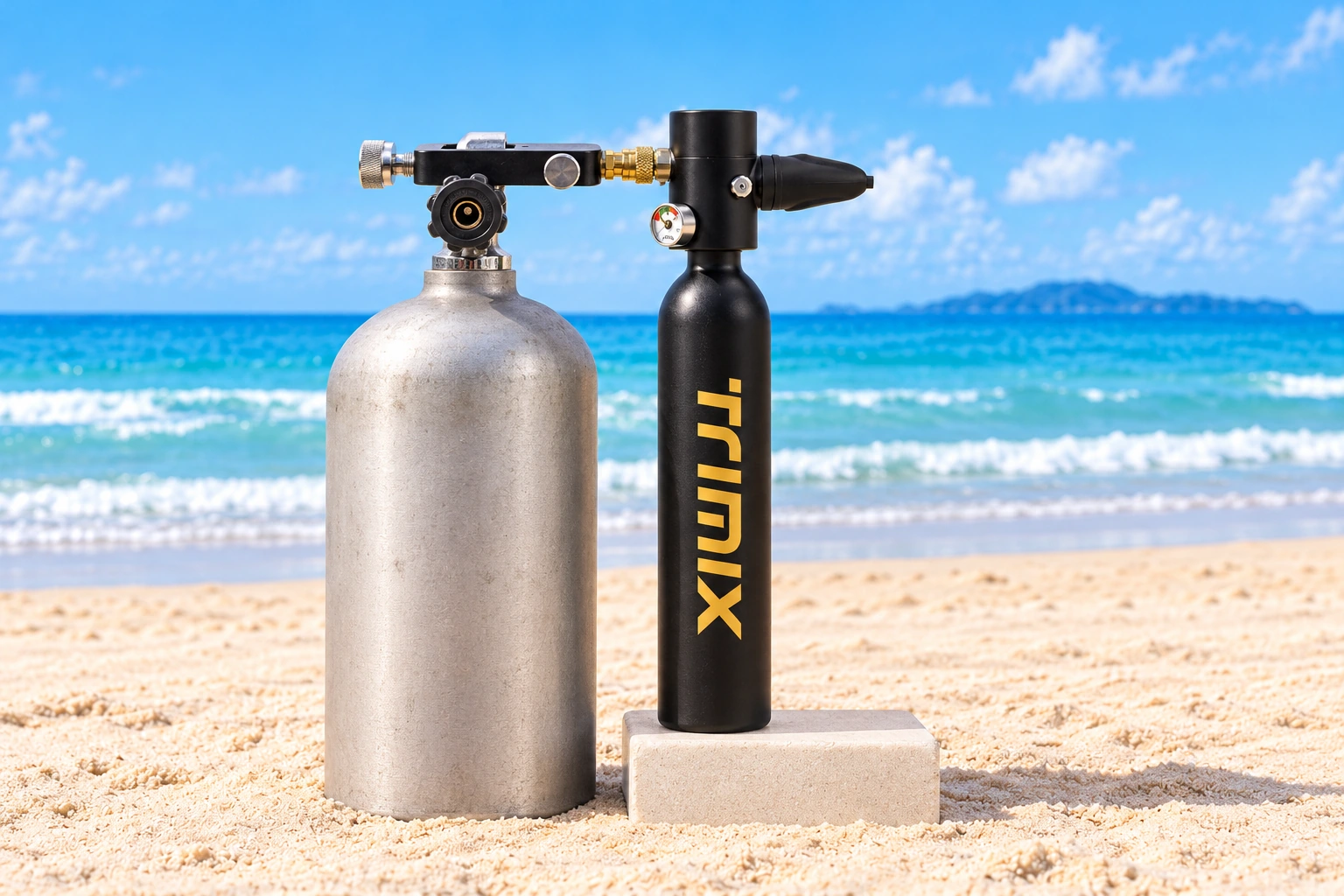
Illustrative refill setups featuring the Black TRIMIX T-500. Confirm compatibility with your actual filling equipment.
*Merchant-provided reference estimates for a 0.5L cylinder filled from 0 to 20 MPa / 200 bar. These are not guaranteed fill times or recommended filling rates. Actual results depend on equipment, source pressure, temperature and operator pace. The video below does not verify these estimates. Follow the cylinder markings and equipment instructions; never exceed the permitted pressure.
See the small adapter connection.
This demonstration shows a compact clamp-style adapter connecting a large source cylinder to a small cylinder, followed by isolation, pressure release and disconnection.
SMACO equipment is shown in this merchant-supplied clip. It is a connection reference, not a TRIMIX performance test. Confirm compatibility with your actual equipment.
41-second demonstration. SMACO branding is retained. Open video ↗
Illustrated connection arrangement. Verify the actual source valve, adapter and fill connection before use.
Small scuba refill adapter
This is the compact adapter offered with the 0.5L kits, separate from the K2 mask connector and the larger adapter used in our 1L and 2L listings.
Working pressure
20 MPa / 200 bar
Cylinder-side fill connection
8mm quick coupling
Materials
Stainless steel and aluminum alloy
Finish
Anodized surface
Overall size
13.7 × 6.3 × 2.5 cm
Net weight
Approx. 0.25 kg
Adapter specifications are supplied by the merchant. An 8mm connection alone does not establish source-valve compatibility. Send us a photo or specification of your source valve before ordering.
What should I check before using a refill adapter?
Have a qualified fill provider confirm that the source cylinder, valve, adapter and receiving cylinder are compatible and in serviceable condition. Use breathing-quality compressed air.
Follow the adapter instructions to secure the connection and connect the receiving cylinder. Check seals, fittings and the gauge before starting.
Control and monitor the transfer. Stop within the pressure limit marked on the receiving cylinder; stop immediately if there is a leak or malfunction.
Close the source valve, release trapped adapter pressure as directed and confirm that the connection is depressurized before disconnecting. Never loosen a pressurized connection.
This overview does not replace the full cylinder, adapter or filling-equipment instructions. Arrange qualified instruction before filling.
Check the selected kit’s packing list. A source cylinder and electric compressor are not included. A hand pump is supplied only with pump-kit listings; the small refill adapter is included only when the corresponding option is selected.
More tutorials
Installation and maintenance.
Additional model-specific installation, care and maintenance videos will appear here as they become available. Use the complete user manual and qualified instruction.