
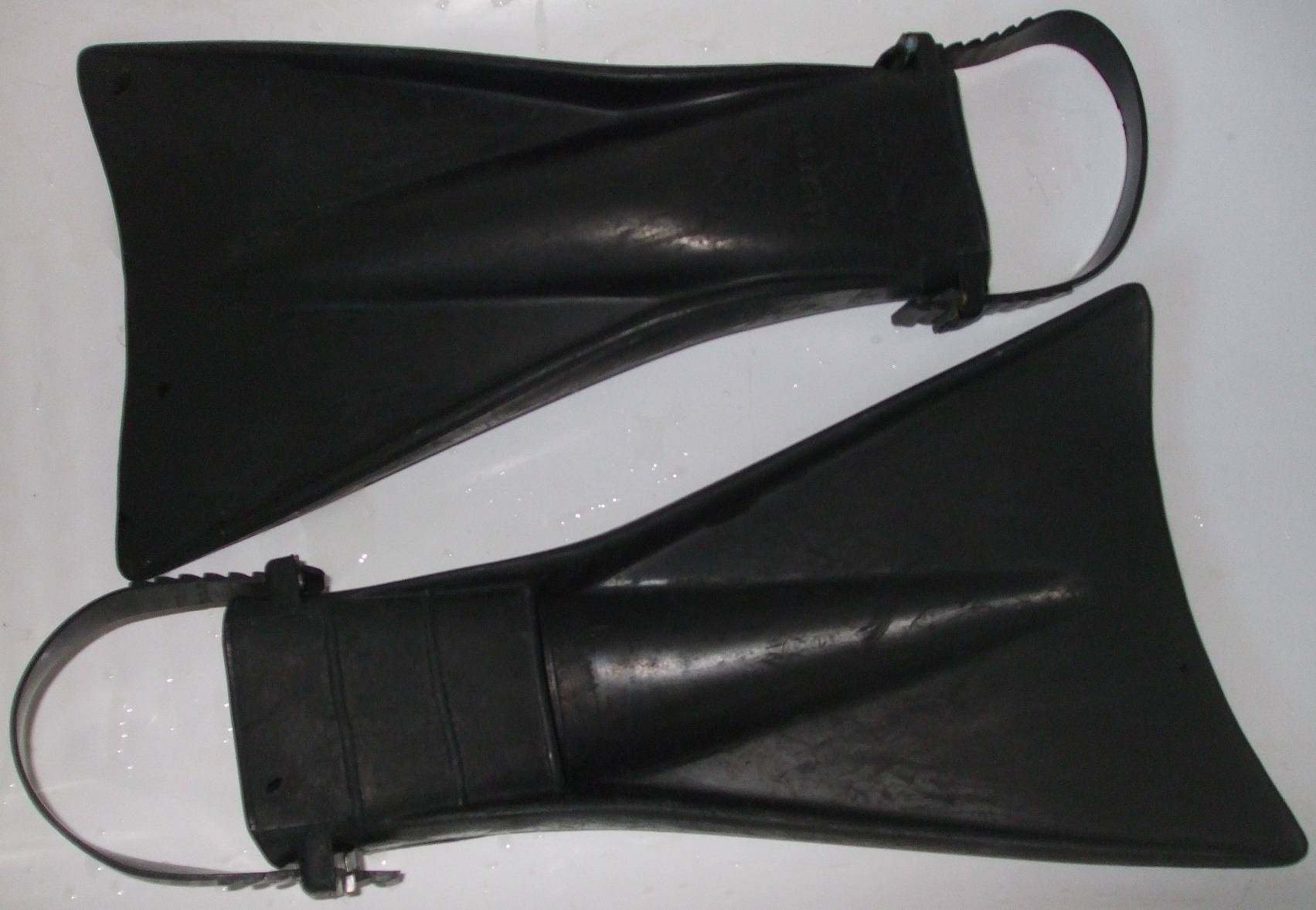
Lightweight describes a product’s mass; it does not by itself state what the fin does when unsupported in water. If buoyancy matters to your equipment choice, look for a separate manufacturer specification rather than assuming a travel label means the fin will float.
Use an explicit buoyancy field
SCUBAPRO’s GO Travel listing labels its buoyancy Positive. The manufacturer’s Twin Jet Max listing labels its buoyancy Negative. These are attributed product specifications, not TRIMIX observations. They show why the buoyancy row must be checked for the exact product rather than inferred from the presence of a heel strap or the material name.
Positive, neutral and negative buoyancy describe different tendencies in water, whereas a weight figure is a mass value presented for the product. A mass figure alone lacks the displaced-volume information needed to establish flotation. Do not convert a lighter listed weight into a percentage flotation advantage or a guarantee that a released fin will remain within reach.
Ask about the specified configuration
Record the full model, size, supplied strap and any documented accessories alongside the buoyancy description. Ask the maker which configuration its statement covers and whether it specifies freshwater or saltwater conditions. If those conditions are not stated, keep them unknown. Do not invent them or extend the claim to another fin in the same family.
When comparing offers, use one row for stated buoyancy and another for stated weight. Also ask whether weight is quoted for one fin or a pair and which size is represented. Unclear units or quantity should be resolved before a baggage calculation; they should not be used as a substitute for buoyancy documentation.
Keep equipment retention as a separate question
A fin that is described as buoyant still needs an appropriate, manufacturer-supported fit and retention arrangement. Do not loosen or release equipment in open water to check a claim, add improvised flotation, or alter straps on the basis of this article. A qualified provider can advise on equipment selection for the actual session. This is a specification-reading guide, not a recovery procedure.
Request the missing information
When asking TRIMIX about an actual proposed fin, include the model and the buoyancy field you need confirmed. The inquiry guide explains the process. An unanswered specification stays unconfirmed; neither these examples nor a current inquiry establishes a listed TRIMIX fin, float test or retrieval guarantee.
Evidence note: Evergreen buying guide checked October 30, 2026. Both primary pages are undated. Manufacturer descriptions are not independent performance tests; no TRIMIX stock, universal fit or compatibility is established.
Join the discussion
Share a question or a useful experience about this article. Every comment is reviewed before it appears.