
A new underwater-robotics preprint makes a useful point for anyone following AI in the water: the meaning of success belongs beside the percentage. A robot reaching or grasping something can be a different result from completing the exact requested task. Read the outcome definition before sharing the strongest number.
What the new paper reports
Embodied at Sea: Imitation Learning for Multi-Task Underwater Manipulation was submitted to arXiv on October 28, 2026. This is a preprint; peer review has not been established. The authors study imitation-learning policies using a BlueROV2 and gripper.
In the full paper’s Table I, the attitude-only DynamicVLA setting in its fourteen-model pool comparison records 72.2 percent strict overall success and 93.3 percent when partial outcomes count. For its coloured-rod task, grabbing the wrong colour can count as partial success. Those two percentages therefore answer different evaluation questions.
Keep the denominator and task with the headline
When reading a result, make a small record with five fields: requested task, what counts as completion, what counts as partial completion, number of evaluated attempts and physical test setting. Then record the particular model or configuration. A single success rate without those fields is difficult to compare with another experiment.
For example, ask whether an object was merely contacted, grasped, or placed as requested. Ask whether an instruction specified a particular target. These are questions for interpreting a test report, not claims that every robotics study uses the same scoring system.
Do not merge different experiments into a league table
The paper separately describes field trials and a tethered computing arrangement; it identifies untethered operation and greater depth among future directions. These limits matter when distinguishing a demonstrated experiment from a fully autonomous product. The work does not establish a shipping consumer device or personal diving-safety capability.
Before ranking two approaches, check whether they attempted the same task mix under the same conditions with a comparable evaluation protocol. Leave unlike results side by side with their qualifications rather than forcing a winner. A field example can demonstrate feasibility while leaving general reliability and wider deployment unanswered.
Save the version as well as the link
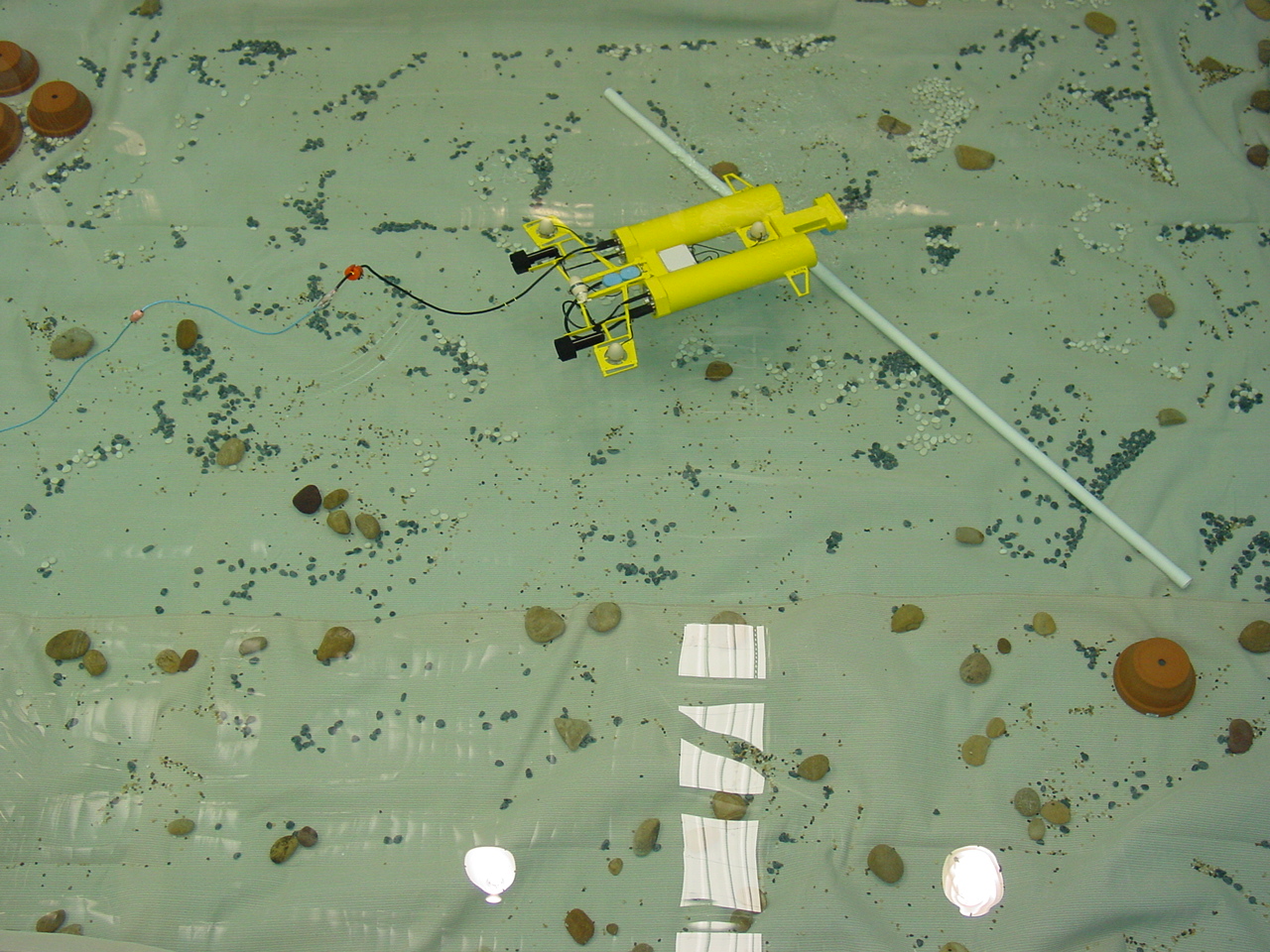
Use the v1 paper and submission date when discussing these results; later revisions may change methods or interpretation. TRIMIX has not reproduced the experiments or tested the hardware. The archival CSIRO photograph shows the different Starbug research vehicle undergoing pool tests in December 2004. It is historical underwater-robotics context, not this paper’s BlueROV2, Malta fieldwork, a current AI experiment or an endorsement by CSIRO.
Sources and verification
Dated research development: arXiv v1 submitted October 28, 2026. Preprint status; peer review not established. Experiment dates are not established as October 28. Checked October 31, 2026.
- Embodied at Sea: Imitation Learning for Multi-Task Underwater Manipulation, arXiv v1. Publication date: 2026-10-28. Checked 2026-10-31.
- Embodied at Sea: full primary preprint, methods and evaluation tables. Publication date: 2026-10-28. Checked 2026-10-31.
Join the discussion
Share a question or a useful experience about this article. Every comment is reviewed before it appears.