
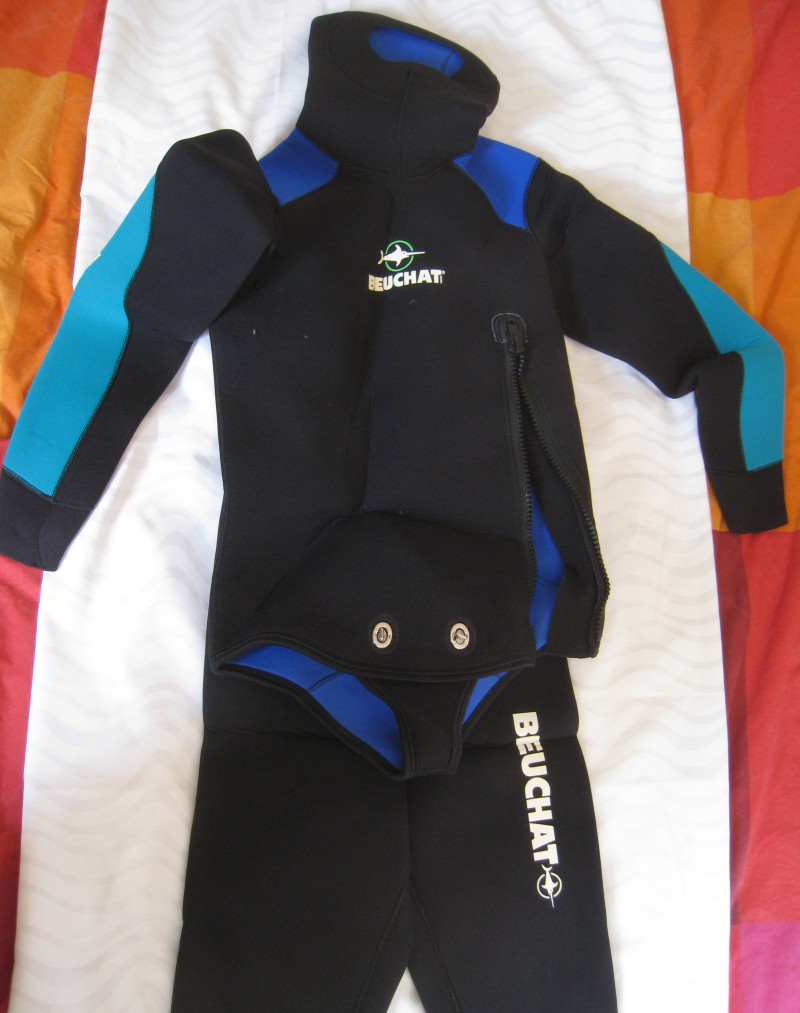
A natural-rubber wetsuit description does not mean every part of the finished garment is natural rubber. The foam, inner textile, outer fabric, seams and closures need their own descriptions. If material choice matters when assembling snorkeling equipment, identify which layer a percentage or certification statement actually describes.
Read two claims at their stated scope
SCUBAPRO’s Everflex YULEX page describes plant-based foam made from FSC-certified natural rubber, while separately discussing its Blue Diamond Span inner fleece lining. The foam description should not be copied into the lining field.
Patagonia’s current UK Regulator page states 85% natural rubber and 15% synthetic rubber by polymer content. It separately describes internal and external fabrics made with NetPlus recycled nylon. The phrase by polymer content matters: it is not a statement that 85% of the complete suit’s weight is natural rubber.
Use a layer-by-layer comparison
| Field | Information to request |
|---|---|
| Foam or rubber core | Named material and the scope of any composition percentage. |
| Interior and exterior textiles | Separate fabric descriptions, including any differences by panel. |
| Supporting claim | Which material, source or manufacturing step a certification statement covers. |
| Ownership | Care instructions and the maker’s service route for that construction. |
Keep the original terminology next to the supplier’s explanation. If a listing uses neoprene-free, do not translate it into plastic-free or entirely plant-based. Ask about each of those claims separately if it affects the purchase. A brand-family description also needs to match the particular suit offered.
Do not infer performance or personal tolerance
These documentation examples do not provide a common test comparing warmth, stretch or lifespan. A material origin alone cannot establish the better suit for an individual or permission for a particular activity. Ask the qualified provider responsible for the outing about appropriate exposure protection.
Do not treat a material label as an allergy assessment. Any personal sensitivity question belongs with an appropriate healthcare professional and the manufacturer’s actual material information. There is no medical assurance, environmental ranking or independent garment test in this comparison.
Keep the information with the offer
Read how TRIMIX product inquiries work and request the layer specifications for the actual garment proposed. Ask the supplier to identify substitutions that change foam or fabrics. The named manufacturers are documentation examples; their pages do not establish TRIMIX inventory, certification or an equivalent construction.
Evergreen equipment guide checked November 2, 2026. The linked source pages are undated unless a printed revision is stated above; current availability is not established by this guide. Manufacturer descriptions are documentation examples, not TRIMIX hands-on tests or guarantees of personal suitability.
Join the discussion
Share a question or a useful experience about this article. Every comment is reviewed before it appears.