
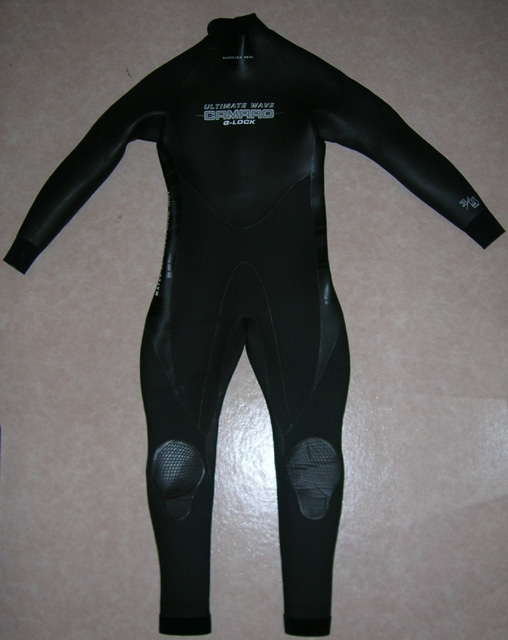
A glossy chest panel does not identify the outside construction of every panel in a wetsuit. When comparing snorkeling garments, ask where a smooth exterior, textile covering or reinforcement is actually used. A simple exterior map is more useful than assigning the entire suit one surface label from a photograph.
Compare documented outside constructions
Beuchat’s Zento Man page describes a smooth exterior and a jersey interior. Its explanation associates the exterior with glide through water. That is a manufacturer’s design claim, not an independent speed result or proof that the suit is suitable for every snorkeling outing.
SCUBAPRO’s Definition 3mm listing identifies Nylon 2 Sides construction and describes abrasion-resistant fabric or printed protection at specified exposed areas. These descriptions show why surface construction and localized protection belong on separate rows. They do not establish a controlled durability comparison with the Zento.
Draw a small exterior map
Record chest and back, arms, legs, knees, seat and shoulders. For each area, enter only the surface description actually supplied by the maker. If a listing simply says smoothskin without identifying coverage, ask for a panel diagram or a written answer rather than extending the label to the whole garment.
Keep the inside on a different page of the comparison. A smooth outside does not establish an open-cell interior, and an internal fleece description says nothing by itself about the outer knees. This distinction matters when two similarly dark suits look almost identical in small product photographs.
Connect the map to the actual session
Tell the responsible provider how the suit will be used and what equipment or seating it may contact. Ask which construction is appropriate for that activity. Do not convert a manufacturer’s hydrodynamic claim into a promise of faster swimming, or a reinforced area into permission to scrape against rocks or marine life.
Request the care instructions for the actual surface and ask how visible damage should be assessed. The construction comparison is not permission to scrub, apply a coating, attach an improvised patch or use a cleaner intended for another suit. If the supplied care label does not resolve the question, use the manufacturer’s support route.
Ask for outside-panel information
The TRIMIX inquiry guide explains how to request equipment details. Ask which exterior panels and reinforcements the proposed wetsuit actually has and include the full model and revision. No TRIMIX garment listing, tested abrasion resistance or equivalence to these examples is established.
Evergreen equipment guide checked November 2, 2026. The linked source pages are undated unless a printed revision is stated above; current availability is not established by this guide. Manufacturer descriptions are documentation examples, not TRIMIX hands-on tests or guarantees of personal suitability.
Join the discussion
Share a question or a useful experience about this article. Every comment is reviewed before it appears.