
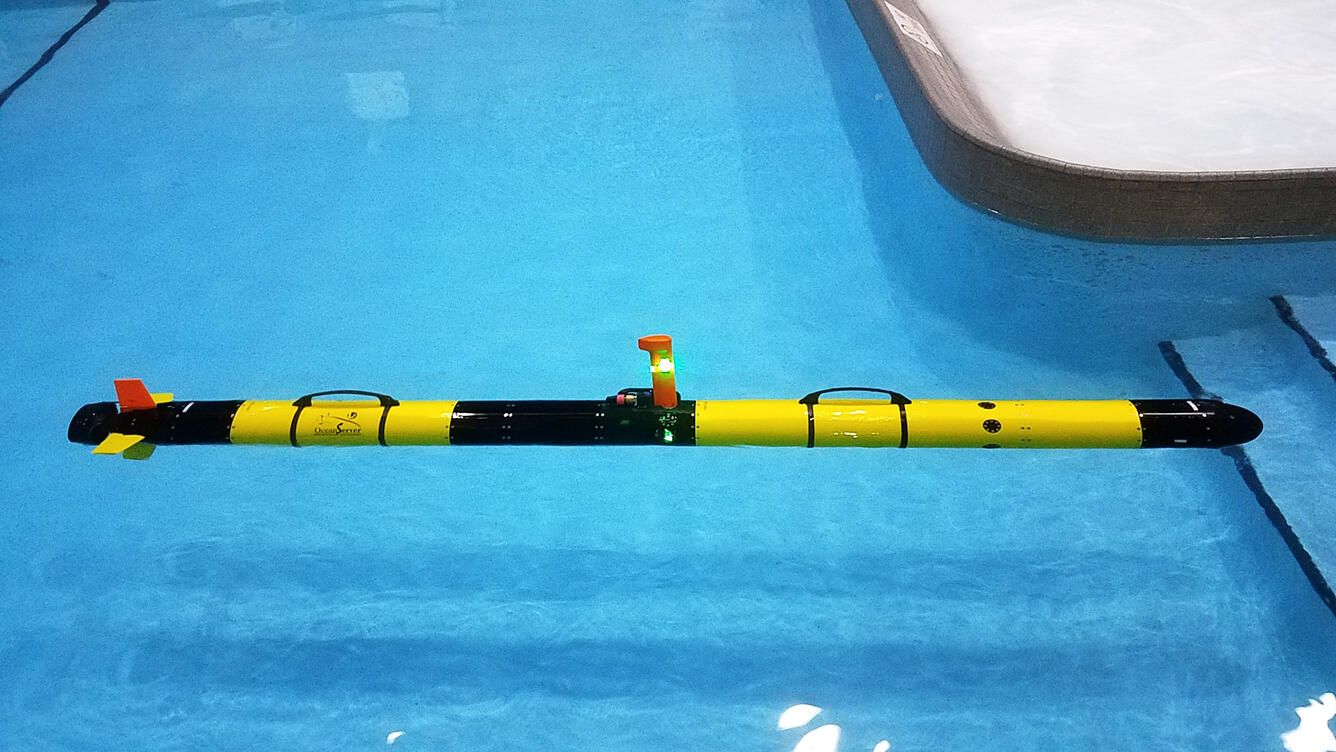
An underwater instrument can have an impressive sensor list while leaving a different engineering question unanswered: how will the research team place and recover the complete platform? The University of Rhode Island’s November 2, 2026 showcase report makes that distinction useful through its discussion of the ALBEX seafloor lander.
A new report about an earlier demonstration
The URI report covers a two-day showcase held in early October at its Narragansett Bay Campus. November 2 is the publication date, not the event date or a claim that ALBEX was first invented that week.
URI describes ALBEX 2.0 as a lighter, more adaptable redesign with updated sensors, simplified loading and a release system incorporating Sonardyne 6G technology. The stated purpose of that release improvement is more precise and reliable recovery. These are the university’s descriptions, not independently measured reliability results from TRIMIX.
The frame and recovery arrangements do different jobs
The research group’s field-equipment page explains the underlying platform architecture. ALBEX provides room for larger instruments, while buoyancy and a drop-weight system allow deployment and recovery without using an ROV to place the entire lander. It also explains that deck operations become more complex for this larger arrangement.
That lab page is established background and contains older project-status references, including plans for spring 2025. It should not be used as a fresh inventory of deployed landers. Here it clarifies the separate functions of carrying sensors and returning the assembly to the surface.
Ask what the redesign changes
A useful reading separates three boundaries. The payload determines which instruments can be carried. The platform determines how those instruments are supported and handled. The release and recovery arrangement concerns how the deployed assembly is retrieved. An improvement described for one boundary does not automatically quantify improvement in the others.
For example, a more manageable loading arrangement is not itself evidence of better sensor accuracy. Likewise, a recovery-system description does not supply a percentage success rate. Ask what was demonstrated in the tank, what has been established in field deployments and which outcomes the published account actually reports.
Read the demonstration at its stated scale
URI says ALBEX was submerged in the laboratory test tank during the showcase. That is a concrete demonstration context. The account should not be expanded into a claim that this event completed a long-duration seafloor deployment or validated every future recovery condition.
For divers following marine instrumentation, the practical lesson is to inspect the whole research platform rather than only the camera or sensor list. The current report concerns research handling and recovery engineering; it does not announce a consumer accessory, a public dive opportunity or a finished scientific conclusion from the observations.
Evidence and date notes
Dated institutional report published November 2, 2026 about an early-October showcase. Research-group equipment page is undated established background with older project-status references; it is not evidence of a new deployment count. Sources checked November 7, 2026. The laboratory-demonstration account is not an independently measured recovery rate or evidence of a completed long-duration field deployment.
Join the discussion
Share a question or a useful experience about this article. Every comment is reviewed before it appears.