
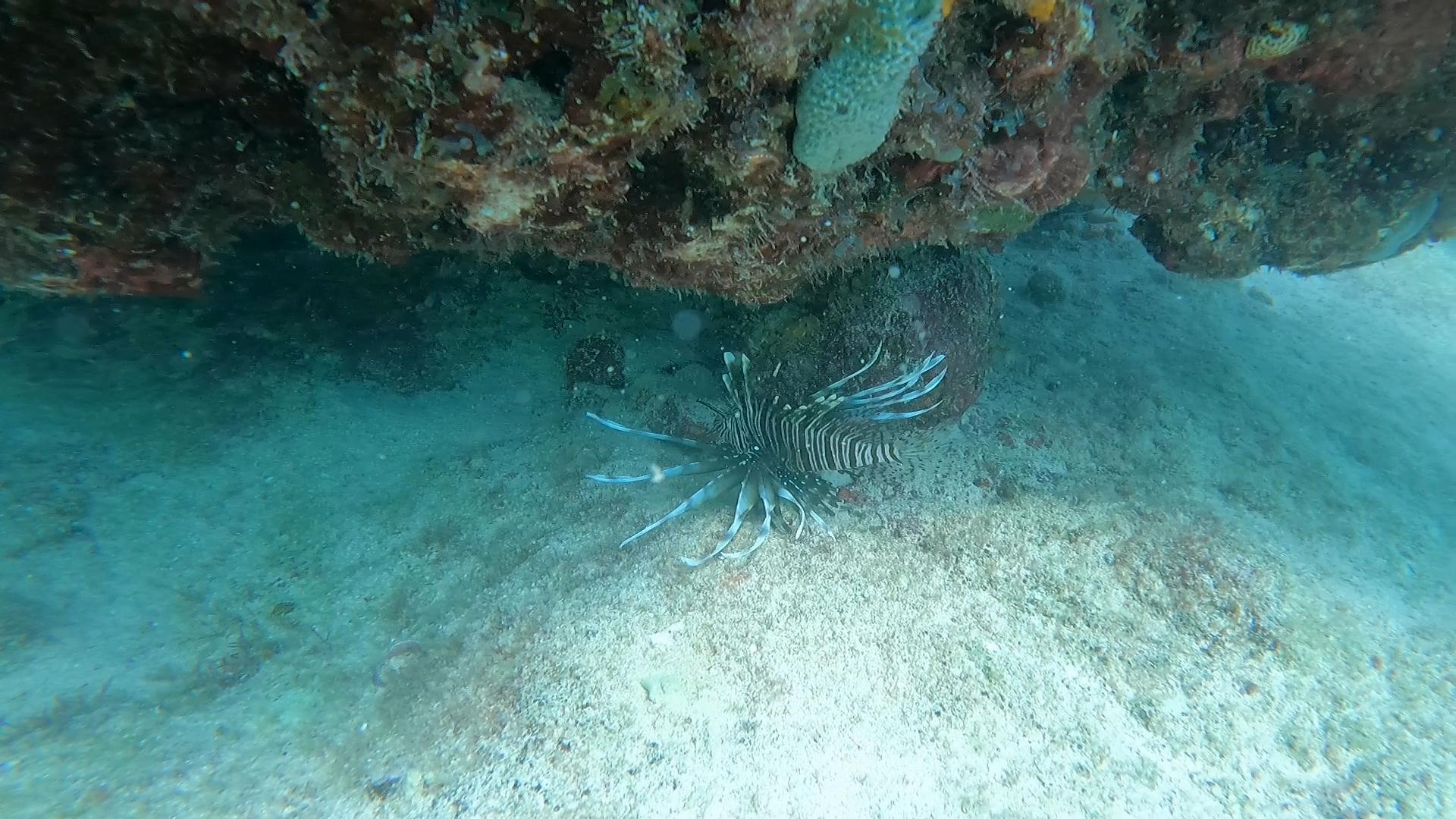
The Reef Environmental Education Foundation scheduled a lionfish lesson for November 14 at its Ocean Exploration Center in Key Largo, Florida. The program description included a dissection demonstration and a discussion of the invasive fish’s spread through the Florida Keys. For snorkelers and divers, the lesson leads to a practical question. If you spot a lionfish during an ordinary trip, what information can turn the encounter into a useful record?
Start with details you can place on a map
REEF’s sighting form asks for the species, where and when you saw it, and observations about the encounter. It also asks whether the sighting was inside Florida Keys National Marine Sanctuary. Write down the site name and the date after you exit the water. Use a site position or map reference you can verify, and distinguish a remembered location from a position recorded at the site. If your dive log gives a reasonable depth estimate, record it as an estimate. A clear underwater photo from the encounter can help document what you saw. Keep the original file with its date and time.
People sometimes return from a trip with a photo whose location is known only to the boat operator. A dated log entry and the operator’s site name can help tie the image to a place. If you could not identify the animal with confidence, say so when you submit the observation. An honest description gives reviewers more to work with than an unsupported identification. Check the form for the details it can accept.
Keep sighting reports separate from removal
The Florida Keys National Marine Sanctuary guidance distinguishes reporting from harvesting. The sanctuary directs visitors to report lionfish seen in sanctuary preservation areas and other locations where they cannot legally be harvested. NOAA also describes authorized work in protected zones with research partners and organized events. Check current sanctuary information about the exact site before planning any collection activity. If your goal is to document a fish you saw during a guided snorkel, your observation and photo can be the entire contribution.
The U.S. Geological Survey’s guide to non-native marine fishes names lionfishes among the documented species and identifies REEF as a contributor to the agency’s records. One report describes one encounter. Site, date and observation quality make it easier for a project to bring many such observations together.
Sources checked November 15, 2026. REEF’s listing gives November 14 as the class date. The form and agency pages were consulted for current reporting context.
Join the discussion
Share a question or a useful experience about this article. Every comment is reviewed before it appears.