
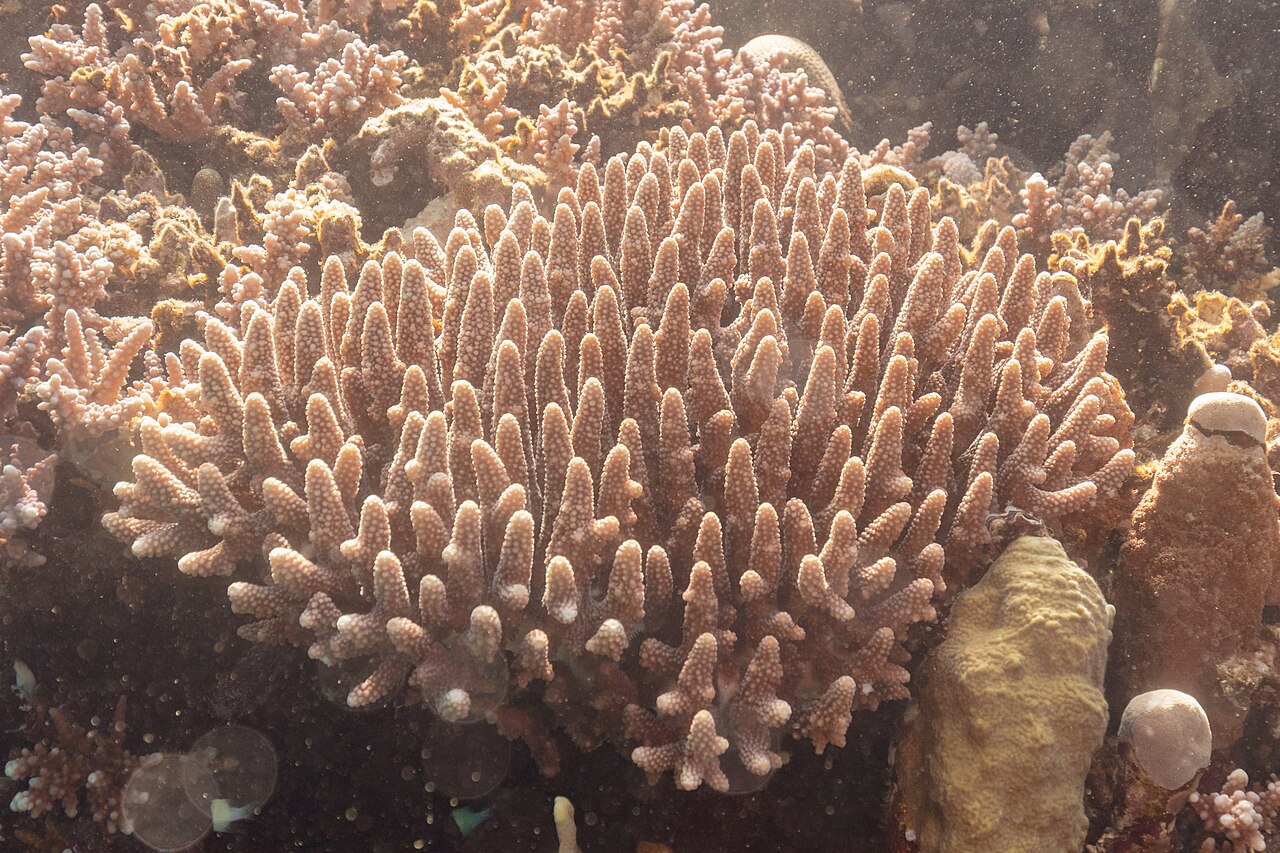
A newly published coral study gives reef photographers a reason to retain the identification source beside a species label. Researchers have reassessed names in the genus Acropora, using evidence that reaches beyond the shape visible in a holiday photograph. For divers and snorkelers, the practical response is to preserve observation records so a name can be checked again as taxonomy develops.
What was reassessed
James Cook University’s announcement, published on November 12, 2026, describes a study of 53 named Acropora species. Forty had originally been described from Australia’s east coast. The team supported 47 as distinct, restored 12 names previously grouped under other species and recognised four previously unresolved species as valid. The university connects the work to historical museum collections and modern genomic evidence.
The original research paper, published online on November 12 in Invertebrate Systematics, explains how the team connected historical name-bearing specimens with material collected from the original localities. It evaluates skeletal features, geographic information and evolutionary relationships together. Its regional sample defines the scope of the findings. A revision of selected named species supplies a different kind of evidence from a survey measuring the amount of living coral at a reef.
Keep the observation useful when a label changes
A photographer can organise a record around three questions. Where and when was the image taken? Which identification source supplied the name? What degree of certainty did that source express? These are editorial record-keeping suggestions drawn from the problem of reconnecting an observation with later evidence.
| Record | What it lets you check later |
|---|---|
| Original photograph, date and recorded site | Which observation a later correction refers to |
| Identification source and version | Which name and species concept the label followed |
| A provisional label where appropriate | Whether the identification still needs expert assessment |
The paper’s method also explains why a guidebook photograph has limits as a way of applying this revision. The researchers anchored names to historical specimens and assessed multiple forms of evidence. A similar colony outline in a recreational image supplies only part of that information. Keep an uncertain observation available for an appropriately qualified identification instead of turning a visual resemblance into a new species claim.
For a reef trip, ask which current identification resource your guide uses and how they record uncertainty. Keeping a name’s source with your image makes that answer usable later. This article reports taxonomic research and offers a record-keeping framework. TRIMIX has performed no specimen identification or field testing for this story.
Research and institutional announcement published November 12, 2026. Both checked November 18, 2026. The photograph is contextual Red Sea imagery, with its separate date, location and attribution shown beside it.
Join the discussion
Share a question or a useful experience about this article. Every comment is reviewed before it appears.