
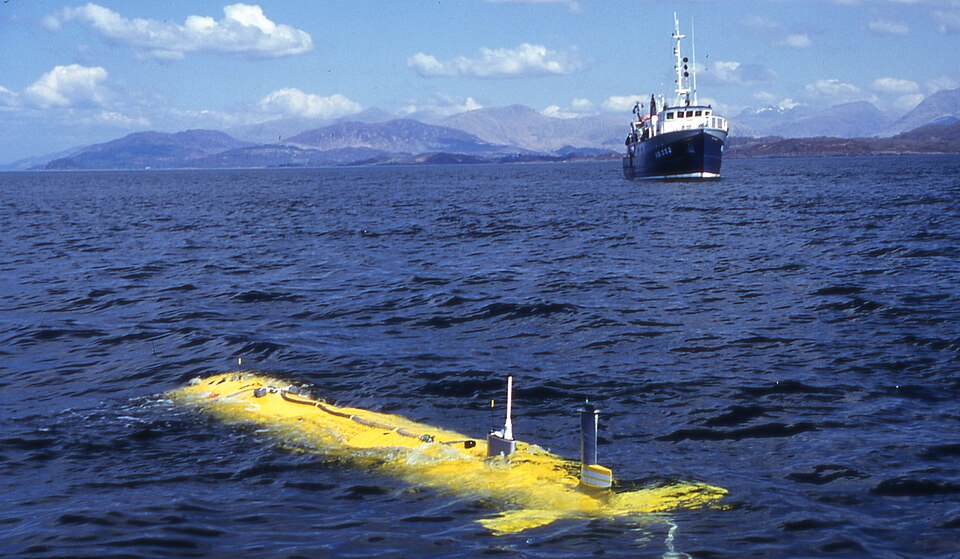
MBARI’s latest robot-fleet demonstration is evidence of a real field campaign, rather than a ready-made consumer monitoring product. For a reader interested in underwater technology, its useful lesson is to ask which biological question each sensor can answer, and which interpretation still depends on later analysis.
Research update, checked November 26, 2026. MBARI published its report on November 19. The reported fieldwork occurred earlier, in August and September–October 2026; the publication date is not a new deployment date.
What MBARI actually demonstrated
According to MBARI’s field report, the team combined an autonomous surface vehicle with long-range autonomous underwater vehicles in Monterey Bay. An initial phase ran August 3–13. A second, September 21–October 15, deployed six LRAUVs in stages. Vehicles carried different combinations of instruments; this was not one identical sensor package repeated six times.
The report describes cameras, acoustic instruments and environmental-DNA sampling as complementary ways to study marine life. It also describes at-sea docking and charging work. These are reported research activities, not TRIMIX tests or claims that an autonomous survey can approve a recreational dive.
Read the vehicle name and the payload separately
MBARI’s undated LRAUV technology page explains the platform and its research instruments. A vehicle’s ability to carry a sensor does not establish that every mission carried that sensor. When comparing this project with another demonstration, first identify the actual payload and the question it was selected to investigate.
| Question to ask | Evidence to look for |
|---|---|
| What was directly recorded? | A stated instrument, measurement and deployment period, rather than a broad label such as ocean health. |
| How were different observations connected? | The method for matching records in time and location, including gaps or unmatched observations. |
| What stage has the work reached? | A field demonstration, a published analysis and a validated operational service are separate milestones. |
| Can the result be transferred elsewhere? | Evidence from the new location and intended task, rather than the assumption that a successful campaign covers all waters. |
What this means for equipment readers
Use this distinction when reading ambitious underwater-technology announcements: separate the carrier, the sensor and the conclusion. A visually impressive robot does not make every possible environmental claim equally established. Ask for the measurement that would change your decision, then follow its evidence trail.
This report concerns ecosystem-monitoring research. It does not establish a new consumer product, a swimming-water clearance system or compatibility with any TRIMIX equipment. There is no directly corresponding TRIMIX product to recommend here; the primary links above are the appropriate next step for readers following the research.
Join the discussion
Share a question or a useful experience about this article. Every comment is reviewed before it appears.