
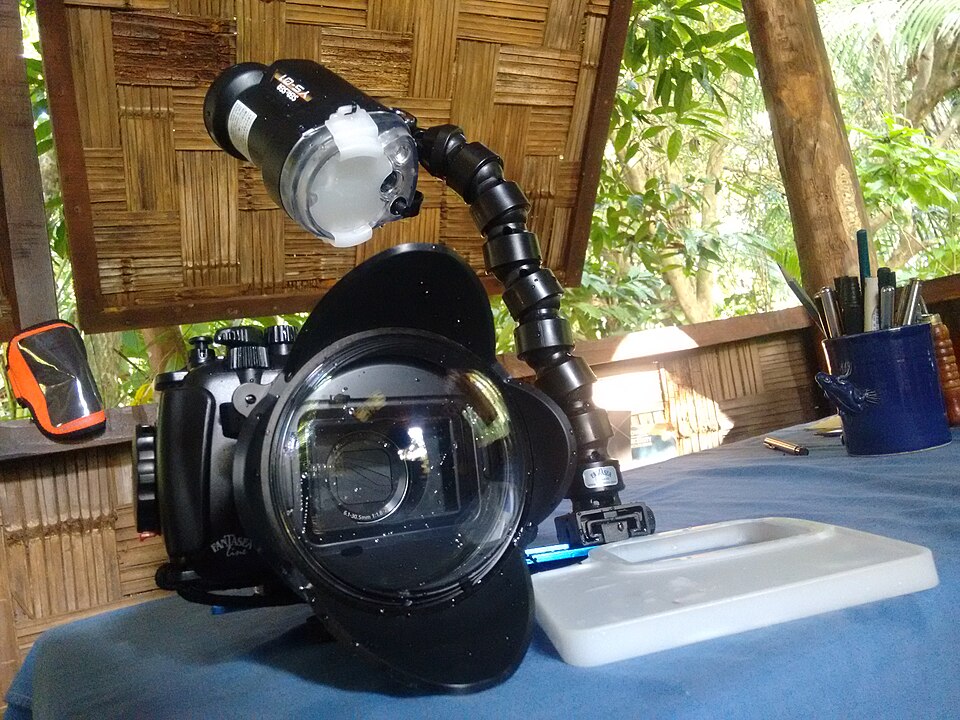
A camera housing’s front port can be more than a protective window. SEACAM’s Optical Precision Port, or OPP, is designed around a correction lens and matching components. Understanding that arrangement is more useful than treating the name as another generic port size.
In an October 10, 2026 field report, photographer Don Silcock described using the OPP with a Nikon Z8 and Nikon AF-S 16–35 mm f/4 during an extended Indonesia trip. SEACAM identifies Silcock as an ambassador. His account is a named photographer’s experience, rather than a TRIMIX test or a wholly independent laboratory comparison.
The correction lens belongs to the system
The manufacturer’s OPP explanation describes a front port in contact with water, a correction lens attached to the camera lens, and a matching extension. The front uses flat glass rather than a conventional dome. SEACAM provides a list of recommended Nikon, Canon and Sony lenses and explains that the correction lens and extension must match the selected lens.
That changes the first compatibility question. Do not stop at “will this port attach to my housing?” Identify the actual camera lens and the corresponding optical components. A mechanical connection alone is not confirmation of the intended optical arrangement.
For a comparison sheet, record each named component on the same row. Ask the manufacturer or its dealer to confirm the combination. It is easier to resolve an unclear part reference before purchase than to discover later that a familiar focal-length range described a different lens.
Two kinds of evidence answer different questions
SEACAM also publishes a technical report by Christoph Gerigk. It describes controlled comparisons in a purpose-built tank using test charts, including other SEACAM ports. That is manufacturer-published technical evidence with a stated setup; it should be read with the test conditions visible.
A field account adds a different perspective: how one photographer used a particular combination on an actual assignment. Neither source makes your own housing, lens and intended subjects identical to the tested arrangement. Separate what the system is designed to do from the evidence available for the precise combination you are considering.
Plan the optical kit before the luggage
Travel convenience is a reason to investigate a system, but first decide which photographic tasks need to be covered. Then compare complete, compatible arrangements. Counting one port while omitting its required correction lens or extension would describe an incomplete packing list.
Our guide to underwater lighting patterns considers another part of that imaging kit. A camera lens, water-contact optics and illumination have connected roles, but each requires its own comparison.
Dates and scope: Field report: October 10, 2026. Manufacturer background pages first published November 7, 2025, and June 22, 2026, respectively; current versions checked October 25. This is a current equipment analysis, not a new-launch announcement or a TRIMIX optical-performance measurement.
Join the discussion
Share a question or a useful experience about this article. Every comment is reviewed before it appears.