
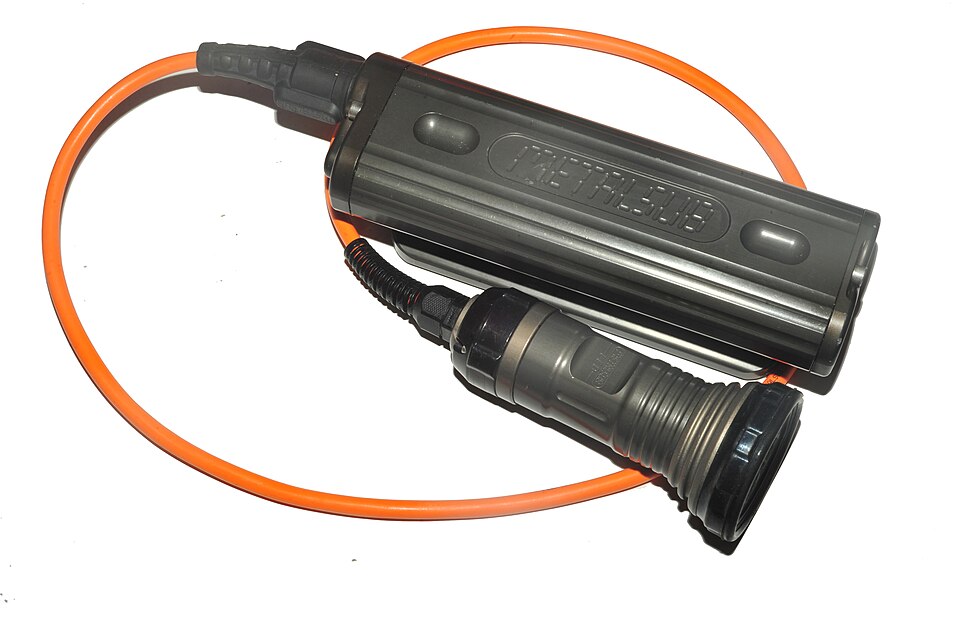
A dive light can have an impressive output figure while distributing its light very differently from the next model. Nanight’s Tech 3, highlighted in October 17, 2026 equipment coverage, is a useful example because its two beam patterns are part of the same light.
Two patterns, two questions
The manufacturer’s complete-system page describes a 10-degree spot with a surrounding corona and a 100-degree flood intended for video and photography. Nanight says a magnetic switch selects the modes. These are manufacturer specifications; TRIMIX has not measured the beams or tested the controls underwater.
The practical comparison begins with the area you want illuminated. A concentrated patch of light and broad scene coverage are different objectives. A single headline brightness number cannot tell you whether the beam will frame the scene you intend to record.
For a camera user, it is helpful to sketch the planned subject and the camera’s field of view. Then ask which lighting pattern suits that picture. For a diver selecting equipment for another task, start with the required role and seek advice appropriate to that diving. An imaging feature does not settle the rest of a lighting plan.
Keep the measurement’s wording
Nanight labels its output figure as emitter lumens. Preserve that wording when making a comparison table, rather than silently replacing it with a claim that two complete lights have been measured in the same way. If another listing uses a different measurement description, ask what was measured before treating the figures as interchangeable.
The manufacturer also explains that its quoted total burn times include automatic output reduction. That makes a useful follow-up question: what output and beam pattern apply during the period you care about? The answer belongs beside the time figure, rather than in a separate footnote that gets lost during comparison.
Check which product the photograph represents
Nanight sells a Tech 3 light head separately. That listing identifies the two beam arrangements but explicitly excludes the battery canister and soft Goodman handle. The complete-system listing describes a different supplied package.
This does not make one listing better than the other. It means the reader should record the exact configuration being compared. A buyer who already owns suitable equipment may have a different question from someone evaluating a complete first setup. Compatibility and component selection still need confirmation for that exact system.
For readers planning phone-based underwater video, our SportDiver app review explains another part of the imaging chain: the camera controls that are actually available. The camera, housing and lighting each contribute a separate set of constraints.
Dates and scope: Recent discussion published October 17, 2026; undated manufacturer specifications checked October 24. This is a current comparison prompted by recent coverage, not a claim that Tech 3 first launched this week. No output, endurance or underwater handling test was performed by TRIMIX.
Join the discussion
Share a question or a useful experience about this article. Every comment is reviewed before it appears.