
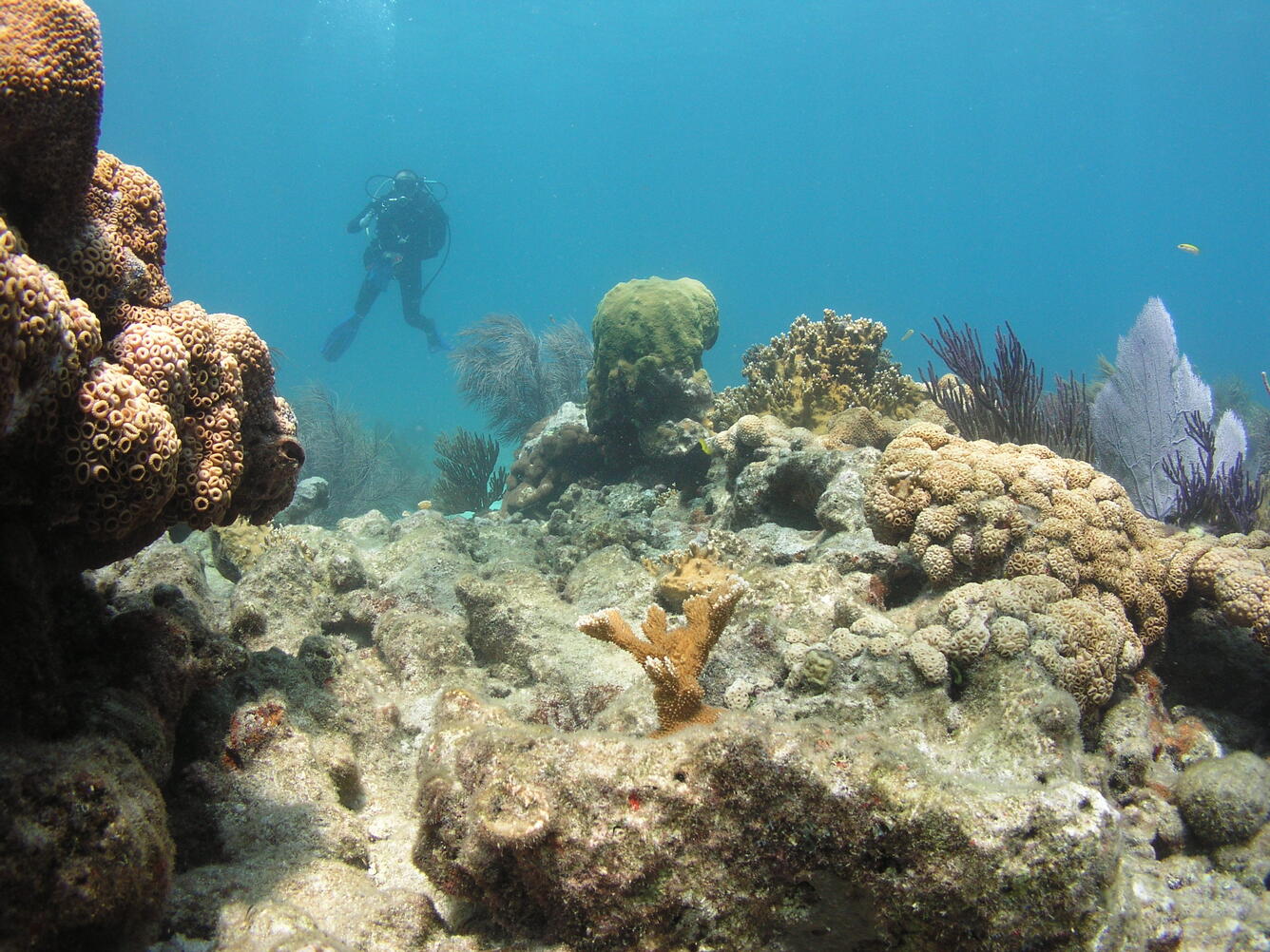
NOAA’s November 10 update on the Dry Tortugas describes widespread bleaching alongside observations of juvenile corals and rare species. These observations answer different questions. Bleaching describes stress in corals the divers saw. Juvenile corals show that some new colonies had become established at surveyed sites. The same mission can record both, and its observations cannot yet establish how many severely bleached corals will recover. Read the NOAA field update.
What the two cruises recorded
NOAA says the last two missions of its 2026 benthic survey season collected data at 142 sites in the Dry Tortugas. Benthic surveys describe organisms and habitat on the bottom. The update reports elevated temperatures from the surface to the seabed at surveyed depths of up to 90 feet, with water temperatures during the mission ranging from 87 to 90 degrees Fahrenheit. The divers saw a range of responses, from paling through more extensive bleaching. They did not observe recent tissue loss or coral death during the reported fieldwork. A future survey can test whether the colonies seen in that condition survived. See NOAA’s account of the findings.
The teams also observed staghorn and rough cactus coral and recorded juvenile colonies. Finding those colonies is useful for tracking the reef’s makeup over time. The update does not give a regional survival rate for those colonies, and the 142-site total describes sampling effort across the cruises. It does not imply that each species or condition appeared at all 142 sites.
What a second observation adds
For a diver reading the report, it helps to keep three observations separate: how many places were surveyed, what was visible there during the visit, and what happens when the site is surveyed again. A single description can capture the condition of a colony on a particular visit. Comparing conditions and colony records across surveys is what makes it possible to ask how much changed and where.
NOAA says its partnership with the Florida Fish and Wildlife Conservation Commission can combine the federal program’s two-year sampling cycle with Florida’s annual collection for coral demographic records. The state’s Disturbance Response Monitoring program explains its role in gathering data after events that affect coral health. Look for the eventual dataset and report before drawing a conclusion about the size or direction of longer-term change. The field update describes research observations. Anyone planning a visit should check current conditions and access with the relevant site operator.
NOAA update published November 10, 2026. Sources checked November 13, 2026, Beijing time.
Join the discussion
Share a question or a useful experience about this article. Every comment is reviewed before it appears.