
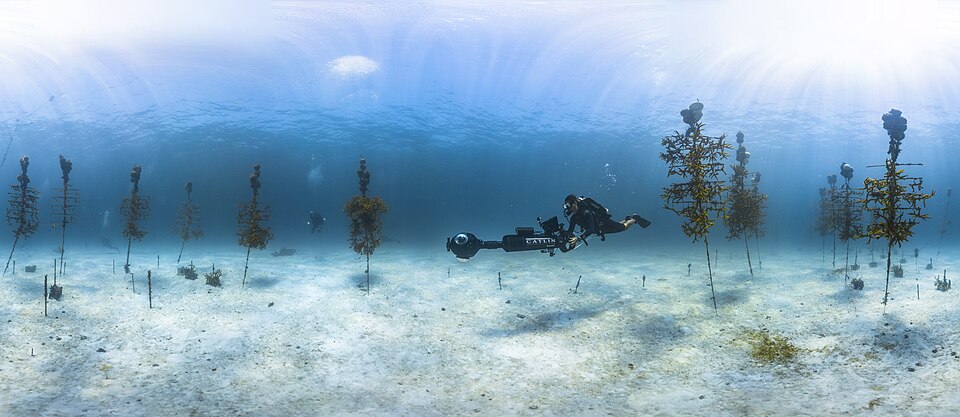
NOAA Fisheries published a November 2 update on coral restoration at Cayo Largo, off Puerto Rico’s east coast. The useful story is a continuing restoration program with a defined area, living material and a follow-up horizon. The funding announcement should not be read as proof that an entire reef has already recovered.
What the update establishes
NOAA’s Cayo Largo report says Sea Ventures is using $5 million in NOAA funding to restore 30,000 square meters of reef habitat. It describes coral nurseries, outplanting and genetic-material preservation, with work continuing through at least 2028. That separates the project’s scale and activities from a completed ecological result.
The report says natural and restored elkhorn corals at Cayo Largo performed comparatively well during the 2023 and 2024 marine heat waves, while the explanation remains unresolved. It identifies several possible influences without establishing which caused that outcome. A promising site is therefore not evidence that its corals are immune to future heat stress.
Distinguish three kinds of progress
| Progress description | Question it answers |
|---|---|
| Work area and investment | How large is the planned effort and what resources support it? |
| Nursery and outplanting activity | What restoration work is being carried out? |
| Monitoring over time | What happens to the restored habitat after the intervention? |
These categories help a reader follow subsequent updates without treating every new planting photograph as a final outcome. A long-lived reef is a changing habitat, so a single date and a single area figure answer only part of the story.
What reef visitors can ask
For broader context, NOAA’s explanation of coral restoration places hands-on restoration alongside reducing threats, improving habitat and supporting coral survival. That framework helps distinguish a managed conservation project from ordinary recreational reef access.
Before adding a restoration visit to a trip, ask the operator which activities are actually open to visitors, who supervises them and what access conditions apply at the specific site. A news report is neither a booking page nor permission to handle coral or enter a work area. Keep those questions separate from choosing a mask or other travel equipment.
For later coverage, look for the monitoring period, the measure used and the particular sites assessed. Those details make an update more useful than a broad success label. TRIMIX is summarizing the official report and has not visited, tested or independently evaluated this restoration project.
Evidence and dates
Source publication: November 2, 2026. Restoration is ongoing; no single new event date is stated. NOAA’s general restoration page is undated. Both checked November 3, 2026. The photograph is separately credited historical context, not this project’s current fieldwork.
Join the discussion
Share a question or a useful experience about this article. Every comment is reviewed before it appears.