
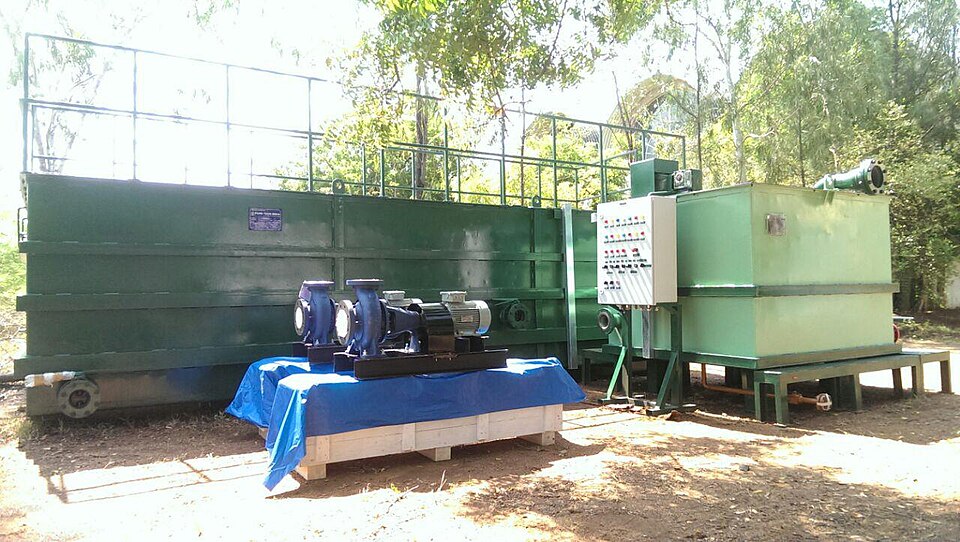
Before buying a compressor for a dive business, establish who will identify and manage the condensate the complete installation produces. Ask about collection, any appropriate treatment and the receiving or disposal arrangement. A drain option on a quotation does not, by itself, answer where the collected material can go.
Separate collection from disposal permission
BAUER’s WOS industrial equipment page describes treatment of lubricant oil in compressed-air condensate. It makes any discharge conditional on local rules. That is a named industrial treatment example, not evidence that a TRIMIX accessory has the same job or that water from another system can enter a sewer.
Ask the equipment supplier to identify the expected condensate stream for the exact machine and approved installation. The person reviewing the site should then establish which local waste or discharge requirements apply. Avoid assigning a disposal classification from the appearance of a liquid or from an unrelated product’s marketing description.
Put responsibility on the quotation
| Ownership question | Answer needed before purchase |
|---|---|
| What is collected? | The identified equipment and the supplier’s applicable documentation. |
| What does the package include? | Any collection components and the parts the installation plan still needs. |
| Who handles the waste? | The responsible operator and an accepted receiving or disposal route. |
| What changes the cost? | Collection frequency, service responsibility and any treatment or contractor charges. |
For a business in England, GOV.UK’s commercial-waste guidance includes safe storage, checking a waste carrier and retaining applicable transfer documentation. It points separately to the other UK nations. This example shows why business waste belongs in an ownership budget; it does not classify the waste from your compressor or establish requirements outside the stated jurisdiction.
Ask about the actual filling setup
If considering the TRIMIX CS3, use support to request the relevant collection and maintenance documentation for the offered configuration. Keep the site location and intended business workload with that request. The supplier’s response should feed into the qualified installation review.
Do not confuse an air-line separator with a wastewater-treatment device because both mention oil and water. Ask what each component is designed to handle. No draining, treatment, plumbing or disposal procedure is supplied here, and no TRIMIX installation or discharge permission is asserted.
Evergreen ownership guide checked November 19, 2026. The BAUER, GOV.UK and merchant pages have no exact publication day used here. England’s business-waste example is not a global disposal rule.
Join the discussion
Share a question or a useful experience about this article. Every comment is reviewed before it appears.