
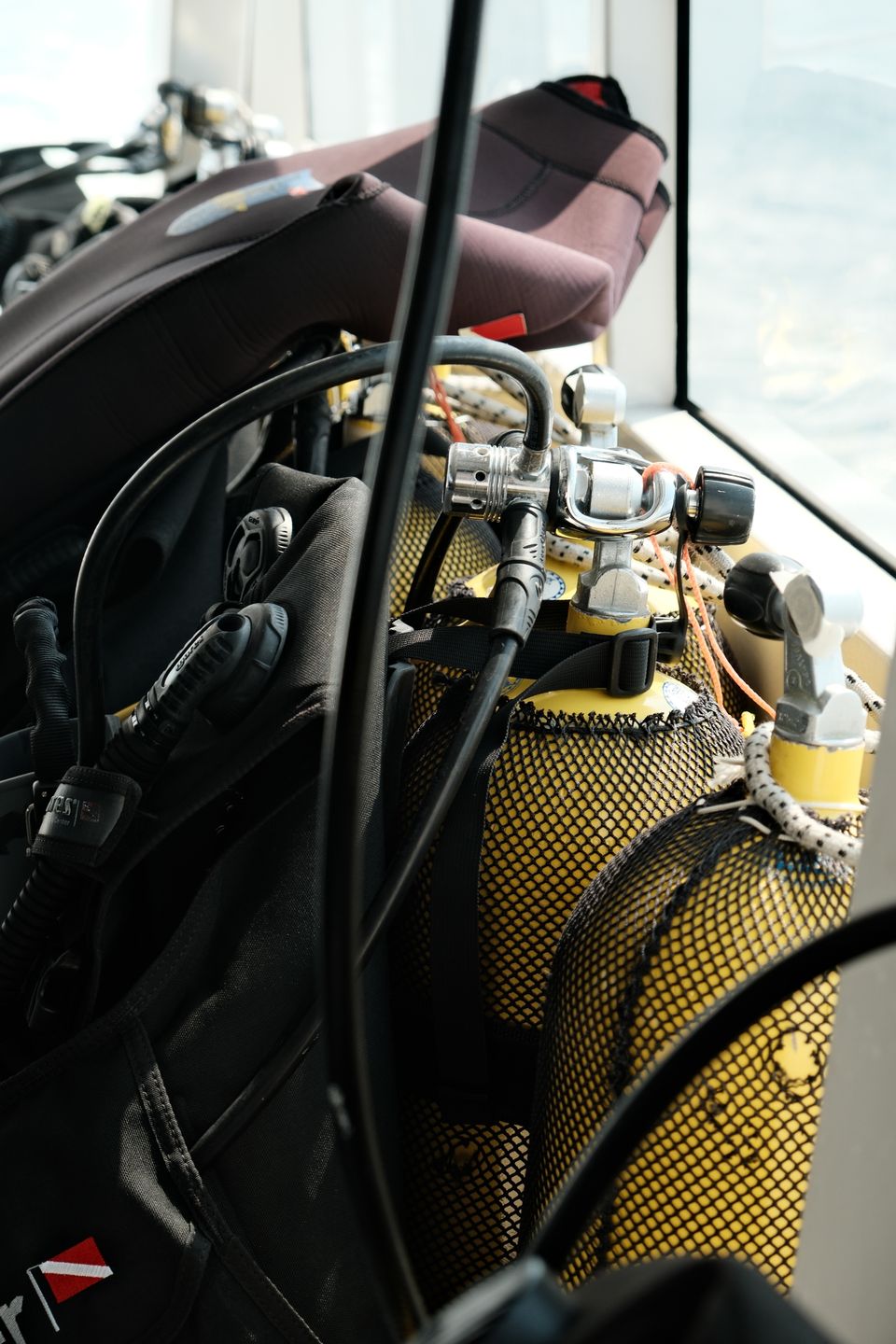
Choose a mini scuba tank by confirming the intended use, the training it requires and who can fill and service the equipment. Then compare the marked cylinder capacity, breathing assembly and exact package. That order helps you avoid buying a kit before you know whether a qualified provider can support it.
Start with the activity
Write down what you want to do, where you plan to do it and which training applies. If the activity is surface snorkeling, start with a suitable mask and snorkel. If it involves breathing compressed air underwater, consult an instructor about training and equipment for the planned activity, then check the manufacturer’s instructions for the exact configuration. The PADI certification guide covers supervised training and dive planning.
A full-size cylinder and a compact cylinder can serve different roles within a trained diver’s plan. The complete equipment and gas plan determine whether a specific compact system has a suitable role. If the intended role falls outside the documented purpose, ask a qualified diving professional which equipment can be evaluated for that role.
Check the fill and service route before choosing a size
Ask a qualified fill provider in the place you expect to use the cylinder which markings, inspection records, valve and fittings they require. Ask who can service the cylinder and the exact breathing assembly, and whether parts are available for that version. Divers Alert Network’s contamination guidance explains why the source and quality of breathing gas matter.
Compare the exact configuration
| What to check | What to ask for | What it helps you decide |
|---|---|---|
| Cylinder identity | Model, marked capacity, pressure and destination-market version | Whether the quoted cylinder is the one your provider assessed |
| Breathing assembly | Exact regulator, hose or integrated assembly, gauge and applicable manual | Whether your instructor and service provider can assess the complete configuration |
| Package contents | A written list of the included carrying equipment, pump or adapter, with any options itemised | Which items you still need to confirm for the refill and service plan |
Use the TRIMIX model and package comparison to see how the assemblies differ. The T-500 single-cylinder listing shows a 0.5 L cylinder with an integrated breathing assembly. The T-1000 uses a hose-connected breathing assembly, as shown in the model comparison. For the T-2000, the T-2000 manual identifies 1.9 L and 2.0 L for different markets. Ask which marked cylinder is being quoted for your destination. Use the T-500 manual for the operating requirements of that specific model. Have a qualified professional assess gas needs and reserves for your intended dive.
Send an inquiry that identifies the setup
When you are ready, use TRIMIX product enquiries to prepare an email. Include your country, the intended activity, the cylinder or kit you are considering and any refill or service requirements your provider gave you. Ask for a written quote that identifies the marked cylinder and exact parts included. Review and send the email yourself.
Model, training and breathing-air sources checked November 12, 2026.
Join the discussion
Share a question or a useful experience about this article. Every comment is reviewed before it appears.