
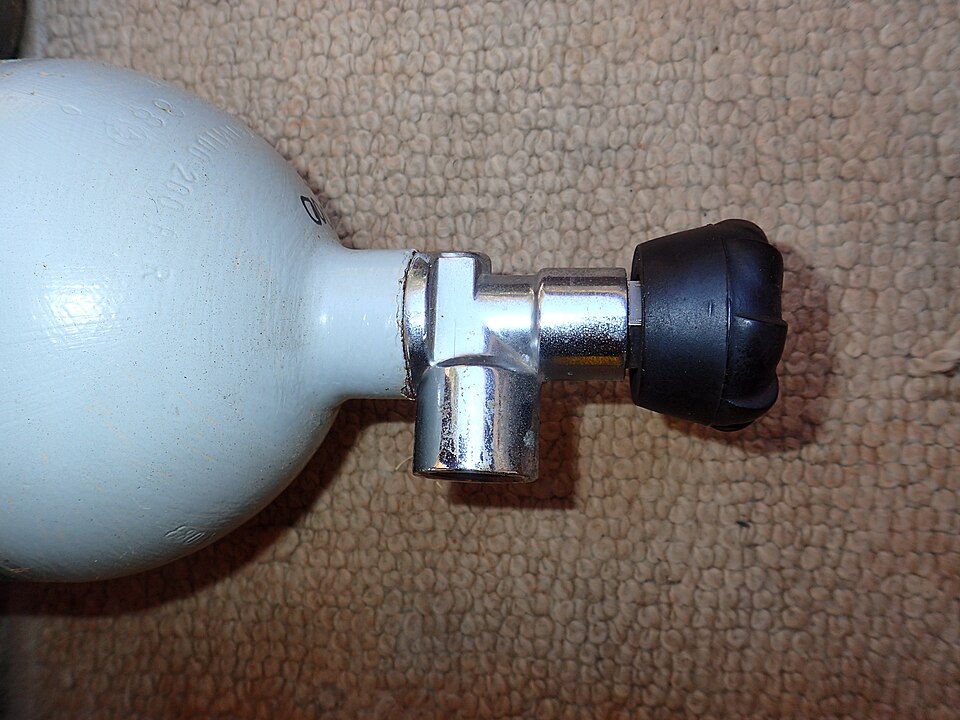
An overpressure-protection component and an operating limit answer different questions. A buyer should ask what protection is documented for the exact assembled product without turning the presence of that component into permission to exceed the manufacturer’s limit. A safety-related label is not a substitute for the supplied instructions.
Separate a component description from a performance guarantee
The T-500 manual labels an external component an explosion-proof valve and describes its purpose as overpressure protection. The same manual states a maximum applicable pressure and tells the user not to exceed the specified filling limit. The component description does not cancel that instruction. It also does not document protection against every fault, temperature exposure, damaged part or incorrect configuration.
Do not infer the device’s exact construction, activation setting or replacement specification from that translated label. Those details need an identified component specification from the manufacturer or authorized service provider. This guide does not identify every compact-system protection component as the same kind of burst disc.
Do not buy extra capacity by exceeding a limit
In its FAQ about extra pressure in aluminum scuba cylinders, Luxfer warns against exceeding a cylinder’s designed and marked service pressure. That page has a specific oxygen-service context; it is not permission to use oxygen in a T-500, whose instructions specify breathing-quality compressed air. The relevant technical point is that an operating limit is a limit, rather than an invitation to rely on a protective device.
Four questions for a purchasing file
- What exact protection component is supplied with this model and version?
- Where is its function described, and what limitations apply?
- Who is authorized to assess or replace it, using which approved part?
- What happens to the equipment’s service status after suspected overpressure or a protection-device event?
Ask for a qualified assessment rather than testing the component yourself, altering it or selecting a higher-rated substitute. A seller’s assurance that a device is fitted cannot establish the present condition of the cylinder or breathing assembly. Clear documentation can help a buyer evaluate the actual design without dismissing useful protective features or promoting them as a guarantee against misuse.
Ask about the documented configuration
Review the TRIMIX T-500 listing, then ask TRIMIX about the identified equipment. Include the model, destination and the particular component or document question. The inquiry prepares an email; it does not send it, place an order or confirm availability. No TRIMIX hands-on test is claimed.
Evergreen buyer guide verified November 4, 2026. Source publication dates: T-500 user manual, English sections: undated; Luxfer: Aluminum scuba cylinders and extra gas pressure, oxygen-service FAQ: undated. Current access does not indicate a new launch. Follow the supplied model instructions, qualified training and applicable local requirements. This is a purchasing framework, not a filling, repair or diving procedure.
Join the discussion
Share a question or a useful experience about this article. Every comment is reviewed before it appears.