
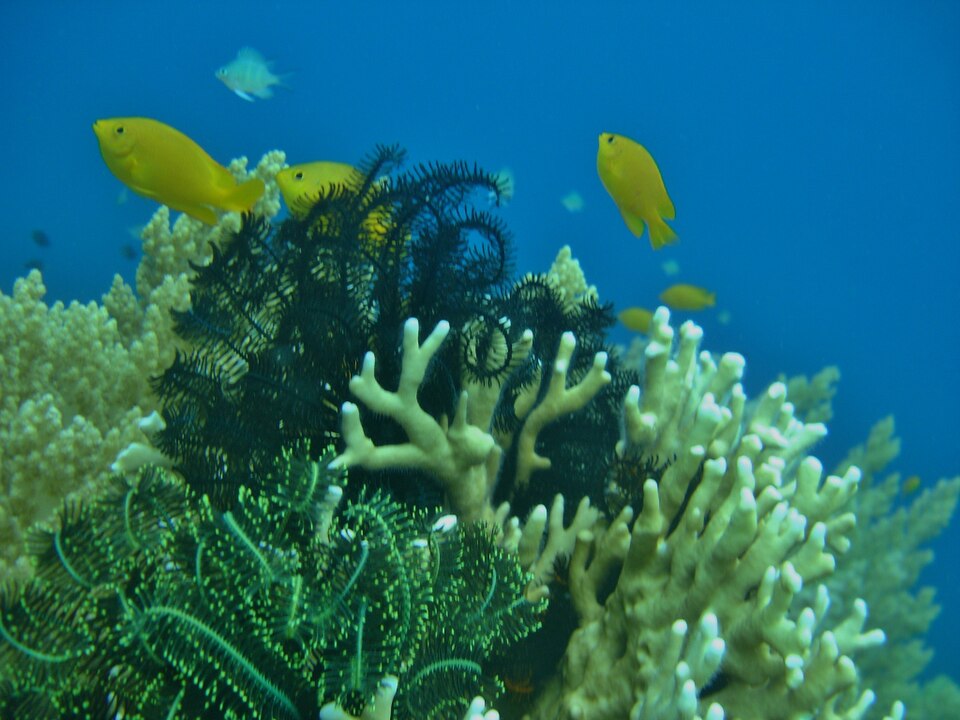
A diver can return with hundreds of reef photographs and still have a difficult question: which images can be compared meaningfully? An October report from the Australian Institute of Marine Science puts that question beside the promise of artificial intelligence, rather than treating faster image processing as the whole monitoring task.
A regional project, reported after its launch
In its October 9 announcement, AIMS describes a four-year Regional Coral Reef Monitoring and Management Project launched in Malaysia in August. Participants came from Malaysia, Indonesia, Vietnam, Brunei Darussalam and the Philippines. The collaboration includes technical capacity, more compatible data and the use of ReefCloud to inform management.
AIMS also reports concerns about data ownership, national priorities and responsible sharing. These are part of the work to be done. The announcement is not a published result demonstrating that every participating country has already adopted an identical survey method or solved its monitoring challenges.
What the software contributes
AIMS’s ReefCloud platform description explains that users can upload survey imagery, apply automated benthic analysis and collaborate using standardized, comparable data. The platform supports monitoring workflows and longer-term comparison. It is an established research and management tool, rather than a newly announced consumer dive camera.
For a photographer, the useful distinction is between an image that is visually appealing and one collected for a defined survey. Both can be valuable, but they are not interchangeable records. A close-up chosen to show a colorful colony and a broader view chosen to represent an area answer different questions, even when taken on the same dive.
Preserve context before asking for an AI result
If a monitoring program accepts your images, follow its instructions for collecting and labelling them. Keep the original files and the associated site, date and method information. A beautiful edited photograph may be suitable for a gallery while the unedited survey record is what a research team needs for its analysis.
When viewing an automated output, ask what categories were measured, what area the images represent and how uncertain classifications are reviewed. A fast label is not the same as a complete ecological explanation. The important comparison is whether the same question was asked in compatible ways across the observations being compared.
Data sharing adds another decision. Having photographed a reef does not automatically establish that every location detail or contributed dataset should be made public. Ask the program about its ownership, access and reuse arrangements before supplying material collected with other people or organizations.
Our coral-counting robot article considers a different AI task in a controlled facility. ReefCloud concerns field-imagery monitoring workflows; the two applications should not be confused.
Dates and scope: AIMS report October 9, 2026; regional launch in August. Official pages checked October 25. This is a recent-month research-development topic, not a new result published today, a consumer product test or a promise that casual photographs determine reef health.
Join the discussion
Share a question or a useful experience about this article. Every comment is reviewed before it appears.