
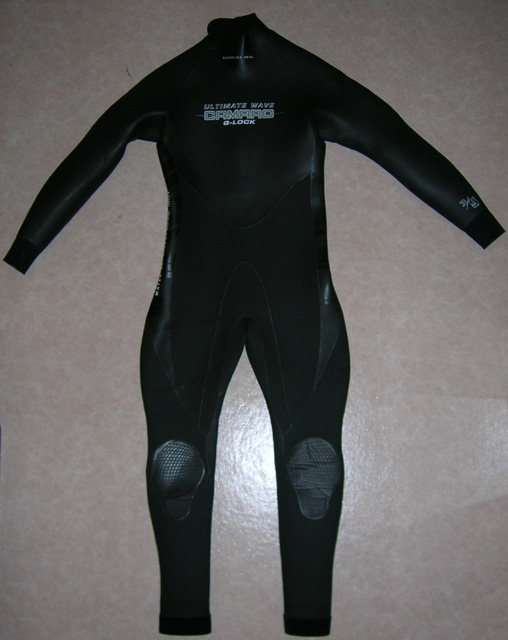
Two wetsuits with the same advertised thickness can have different panel joins. Before deciding from the thickness label alone, identify how the seams are constructed and whether an additional seal or tape is specified. This is a garment-construction question separate from front- or back-zip entry.
Understand the join described by the maker
O’Neill’s seam explanation describes flatlock construction as overlapping panels stitched through the neoprene. Its glued-and-blindstitched, or GBS, construction joins panel edges with adhesive before stitching partway through the material. O’Neill associates the latter with reduced water entry through the seams. Those descriptions explain construction; they do not establish a personal temperature limit or a completely dry suit.
The SEAC wetsuit manual’s English stitching section likewise describes adhesive and blind stitching that does not pass all the way through the neoprene. The manual remains specific to the equipment it covers. It should not be treated as a manufacturing specification for an unrelated suit merely because the seller uses similar words.
Compare three separate rows
For each exact garment, record panel-join construction, any additional seam sealing or tape, and the areas where that extra treatment is applied. If a listing says taped, ask whether that means every seam or selected junctions. If it says sealed, request the maker’s definition. A close product photograph can support a question, but it cannot reliably identify all internal layers.
Keep thickness, coverage, cut and zipper arrangement on their own rows. Otherwise a comparison between substantially different suits can wrongly attribute every difference to the seams. Ask your local qualified provider about appropriate exposure protection for the actual conditions and session; this guide does not choose that protection for an individual.
Include care and service in the decision
Request the current care instructions and ask which service route applies if stitching, tape or a glued join appears damaged. Do not apply a household adhesive, trim loose material or iron a seam based on a description of how it was manufactured. A construction explanation is not a repair authorization.
For an equipment quotation, ask TRIMIX which seam construction the proposed wetsuit actually uses. Include its full name, thickness, size and the seam statement you want clarified. The buying and support guide explains the inquiry route. The O’Neill and SEAC references establish neither a TRIMIX garment listing nor equivalent seam materials or measured warmth.
Evidence note: Evergreen construction guide checked October 30, 2026. O’Neill supplies a relative update label, without an exact publication date. The SEAC PDF has no single overall publication date verified; its /2024/10 upload path is not treated as that date. No personal thermal recommendation or independent testing.
Join the discussion
Share a question or a useful experience about this article. Every comment is reviewed before it appears.