
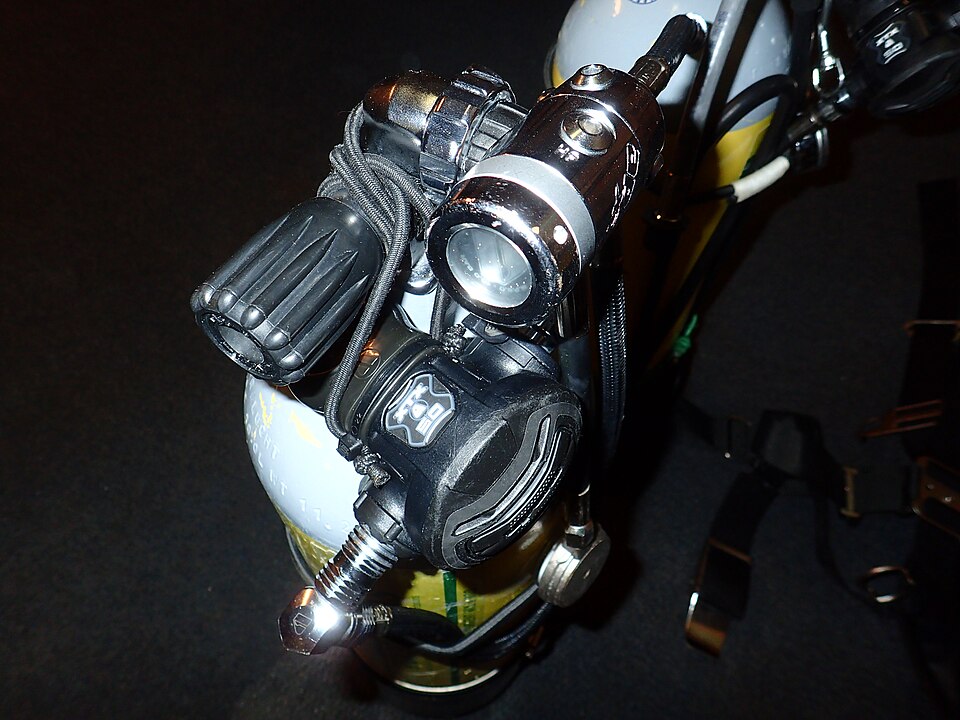
When choosing between the T-1000 and T-2000, ask a qualified instructor how you would see and reach the supplied gauge in your actual equipment arrangement. A dial can be readable under a showroom light and still be difficult to bring into view when the cylinder and carrier are in position. Compare dial visibility and physical access separately.
Start from the documented assemblies
The T-1000 listing describes a hose-connected breathing assembly and a luminescent pressure gauge. The English structure diagram in the T-1000 manual labels the gauge within that assembly. Ask where it sits on the actual configuration offered and request a photo or diagram that identifies its location.
The T-2000 listing describes a back-mounted cylinder carrier and an extended gauge connection. The T-2000 manual also labels its pressure gauge in the product structure. Check the offered assembly rather than assuming both models position the gauge in the same place because both descriptions mention visibility.
| Question | What to obtain |
|---|---|
| Where is the gauge? | The exact manual illustration and confirmation of the supplied gauge connection. |
| Can I read it in my equipment? | An instructor-led assessment of the complete configuration with the equipment you wear. |
| Which parts are supplied? | An itemized list of the gauge and associated fittings or hose where included, with model identifiers. |
Make an equipment assessment part of your purchase
When collecting photographs, ask for one of the product layout and one that shows its supplied carrier or cylinder position, if applicable. A close-up can show the dial clearly while leaving the wearer’s access unanswered. Record the gauge location and the instructions as separate fields on the quote, and have your instructor assess the actual equipment.
Ask what the instructor needs to see about the cylinder position, carrier, exposure suit and other equipment. The answer is specific to the supplied arrangement and wearer. Avoid buying an unidentified longer hose or changing the assembly to answer a fitting question. Refer any equipment change to a qualified provider using the exact model instructions.
Use the T-2000 inquiry if comparing that listed kit against a T-1000 offer. Include the exact options and what other equipment you intend to wear. Request a clear diagram and the supplied gauge identification so the instructor can assess the proposed setup.
Evergreen buyer guide verified November 13, 2026. Sources: TRIMIX T-1000 product listing (2026-09-25); TRIMIX T-2000 product listing (2026-09-25); TRIMIX T-1000 User Manual (undated); TRIMIX T-2000 User Manual (undated).
Join the discussion
Share a question or a useful experience about this article. Every comment is reviewed before it appears.