
The new underwater soft-gripper study reports a laboratory prototype for manipulating a delicate marine organism. Read its component measurements and its complete grasping demonstration separately. That distinction helps readers interested in marine exploration understand which result answers a movement question and which answers a manipulation question.
What the gripper actually demonstrated
In the Scientific Reports article published November 16, three dielectric elastomer actuators form a gripper. The researchers enclosed, moved and released one live cannonball jellyfish, approximately 30 mm across, in an artificial-seawater tank. They report no visible injury or abnormal swimming afterward. They also state that the demonstration used a single individual and did not quantify grasping performance.
The paper’s 10,000-cycle result concerns a separate component-actuation experiment with one actuator. It is not a count of animal captures. For the gripper, the authors identify repeated-trial success rate and quantified grasping force among the evaluations still needed. Their discussion also identifies electrical safety and power-system integration challenges for practical deployment. These are research findings and limitations, not a diver-use approval.
Build a result card around the task
When comparing this work with another underwater robot, start with a short record of what each demonstration asked the hardware to do. A single impressive number can be worth retaining, but attach the experiment’s identity to it. This keeps a comparison useful when the next project reports a different kind of result.
| Part of the comparison | What to record |
|---|---|
| Component measurement | The measured movement or force, the tested component and the stated test setting. |
| Whole-device task | The object, environment and complete sequence the assembled device demonstrated. |
| Repeatability | The number of specimens and trials, with the success definition kept beside any percentage. |
| Proposed application | The extra evidence you would need for your own setting before treating a laboratory task as a supported capability. |
For a future field update, ask whether its evaluation can be connected to the earlier laboratory record. Has the object changed? Are the measurements about the same component? Does a photograph show an entire task or one selected moment? These questions let a reader describe progress precisely while keeping unanswered points visible.
Keep the version with the evidence
An earlier preprint was posted March 24, 2026. The November paper is a peer-reviewed Article in Press awaiting final editing. When saving a claim, keep the DOI and version with it, and revisit that record when an edited publication or follow-up appears. Treat the versions as a research history, rather than counting them as independent replications.
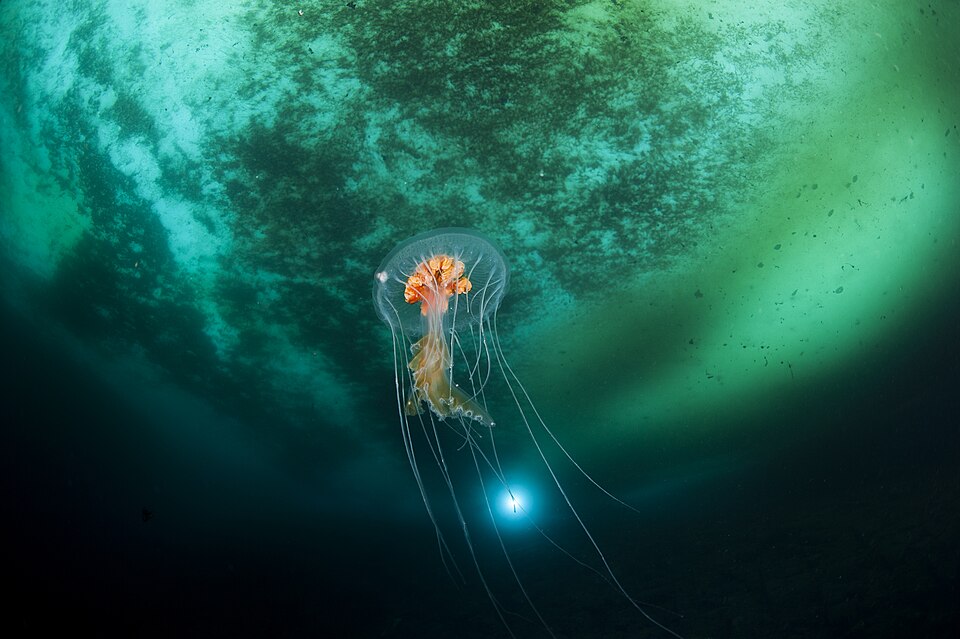
Checked November 19, 2026. The paper was accepted October 28 and published online November 16. The contextual photograph shows an Antarctic jellyfish, not the study organism, prototype or laboratory. TRIMIX has not tested or offered this research gripper.
Join the discussion
Share a question or a useful experience about this article. Every comment is reviewed before it appears.