
Meet the T-1000
A compact cylinder.
A connected setup.
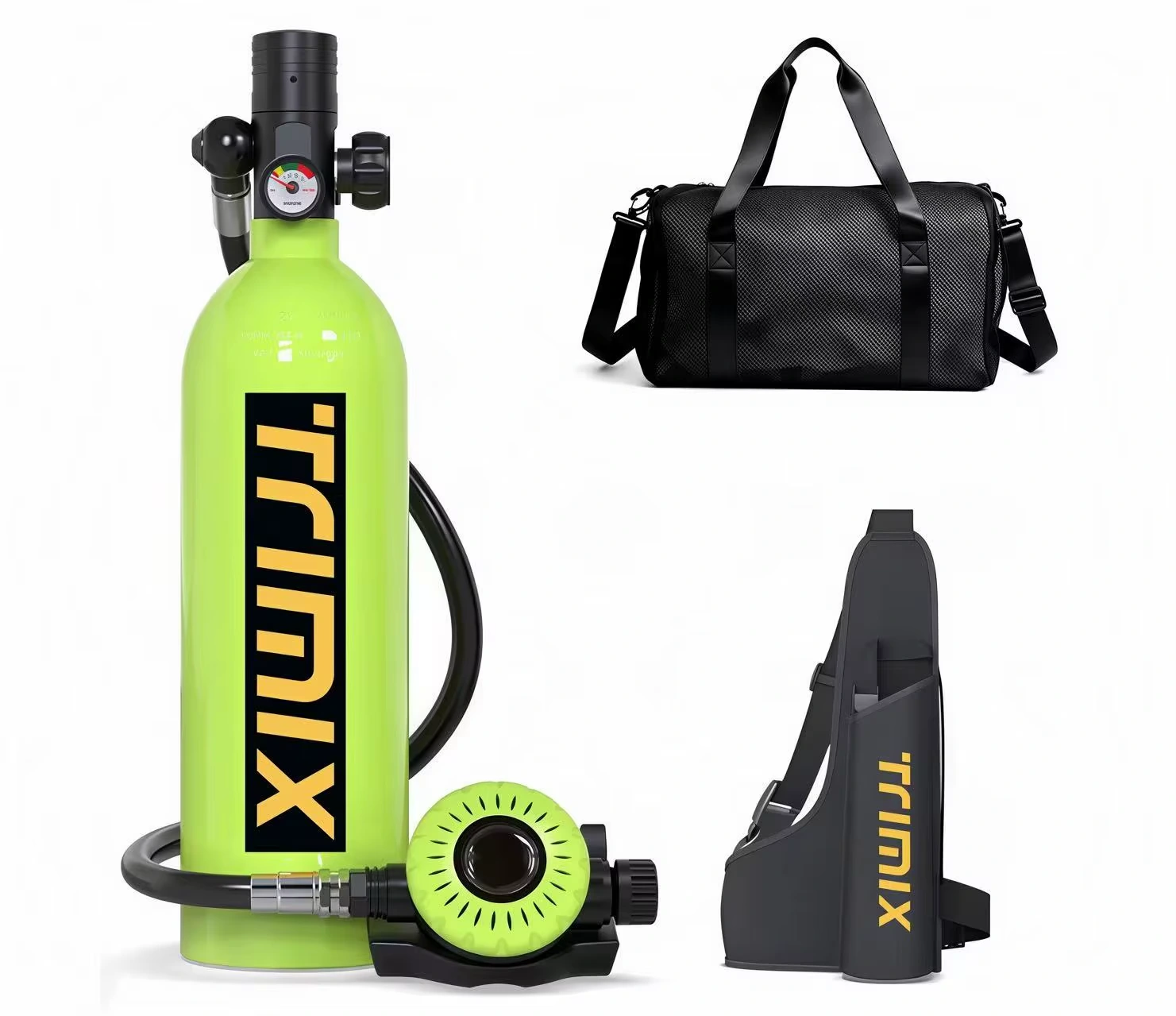
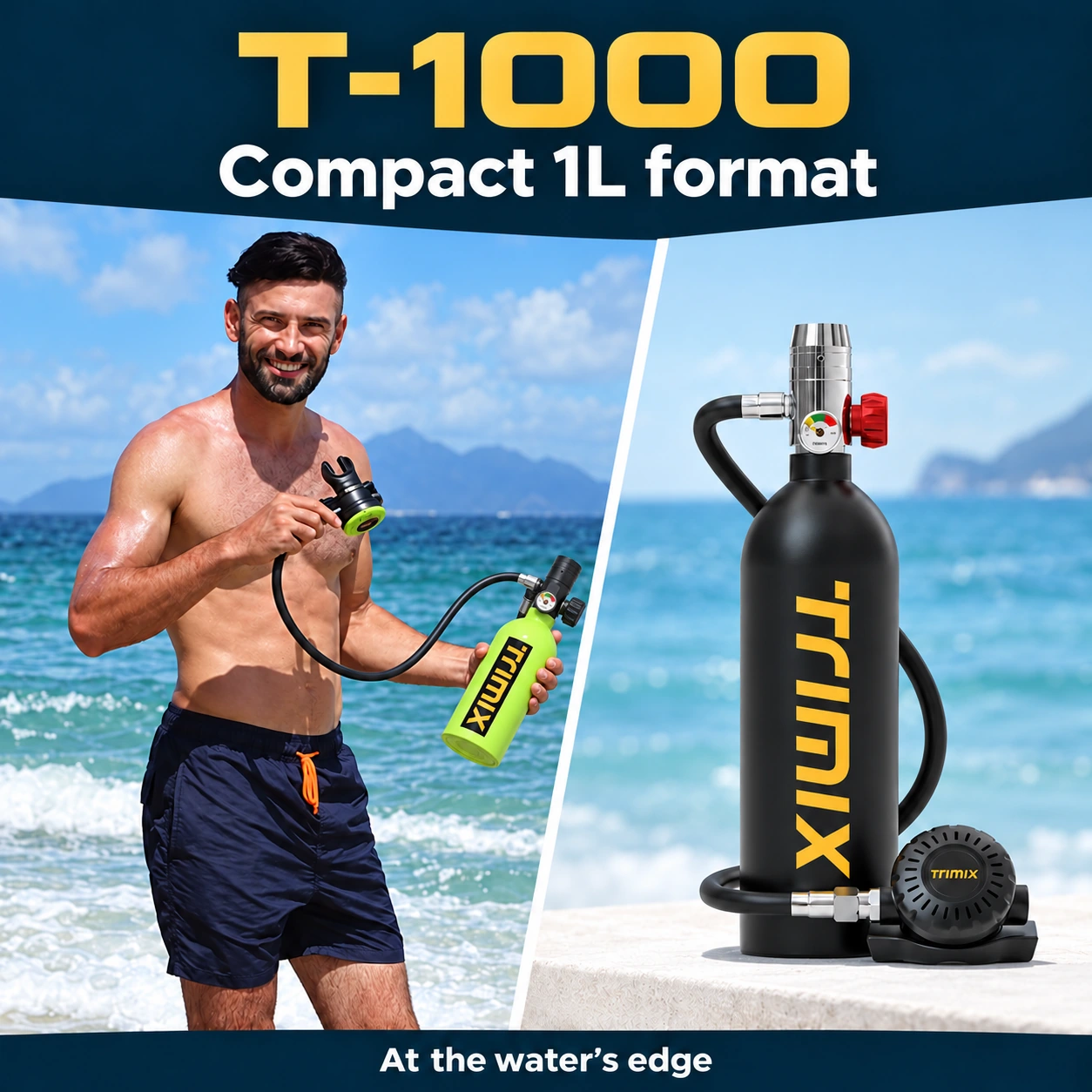
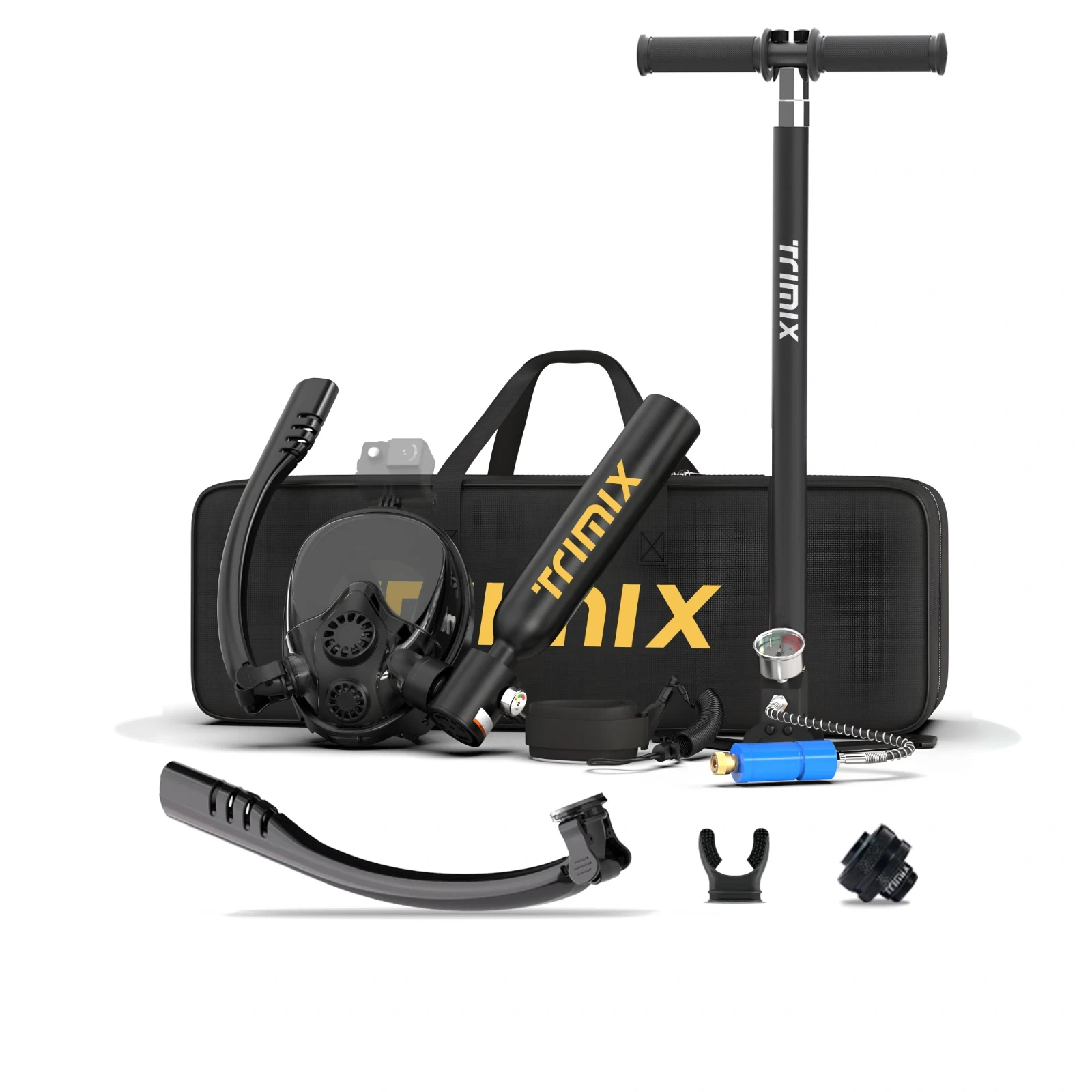
The TRIMIX T-1000 pairs a 1L aluminum cylinder with a first-stage regulator, hose and second-stage breathing valve. Its compact format keeps the cylinder separate from the mouthpiece, while the pressure gauge lets you check the air remaining in the cylinder.
Choose Black or Green, then select your kit with or without a scuba refill adapter.
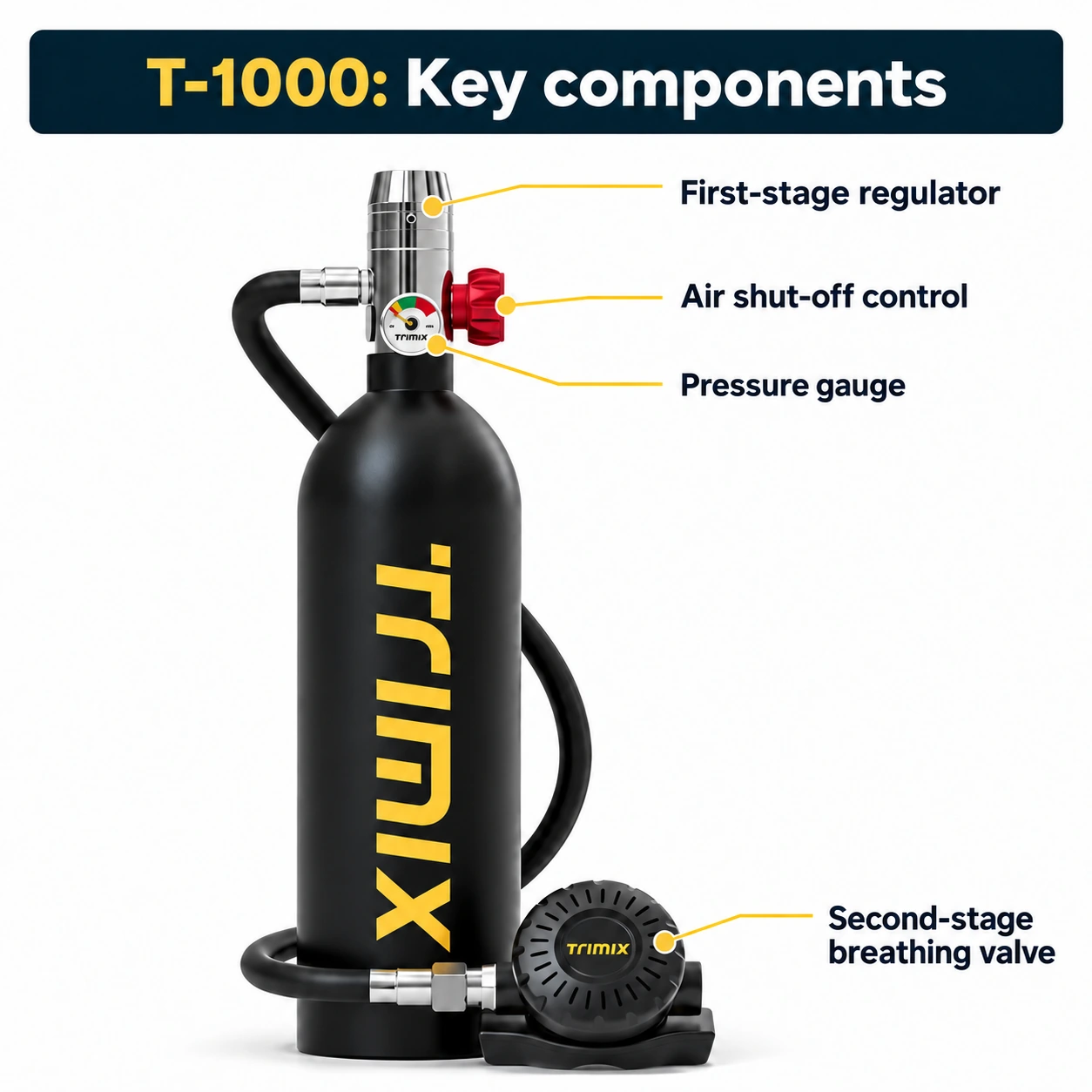
Know the key components
Air control.
Within reach.
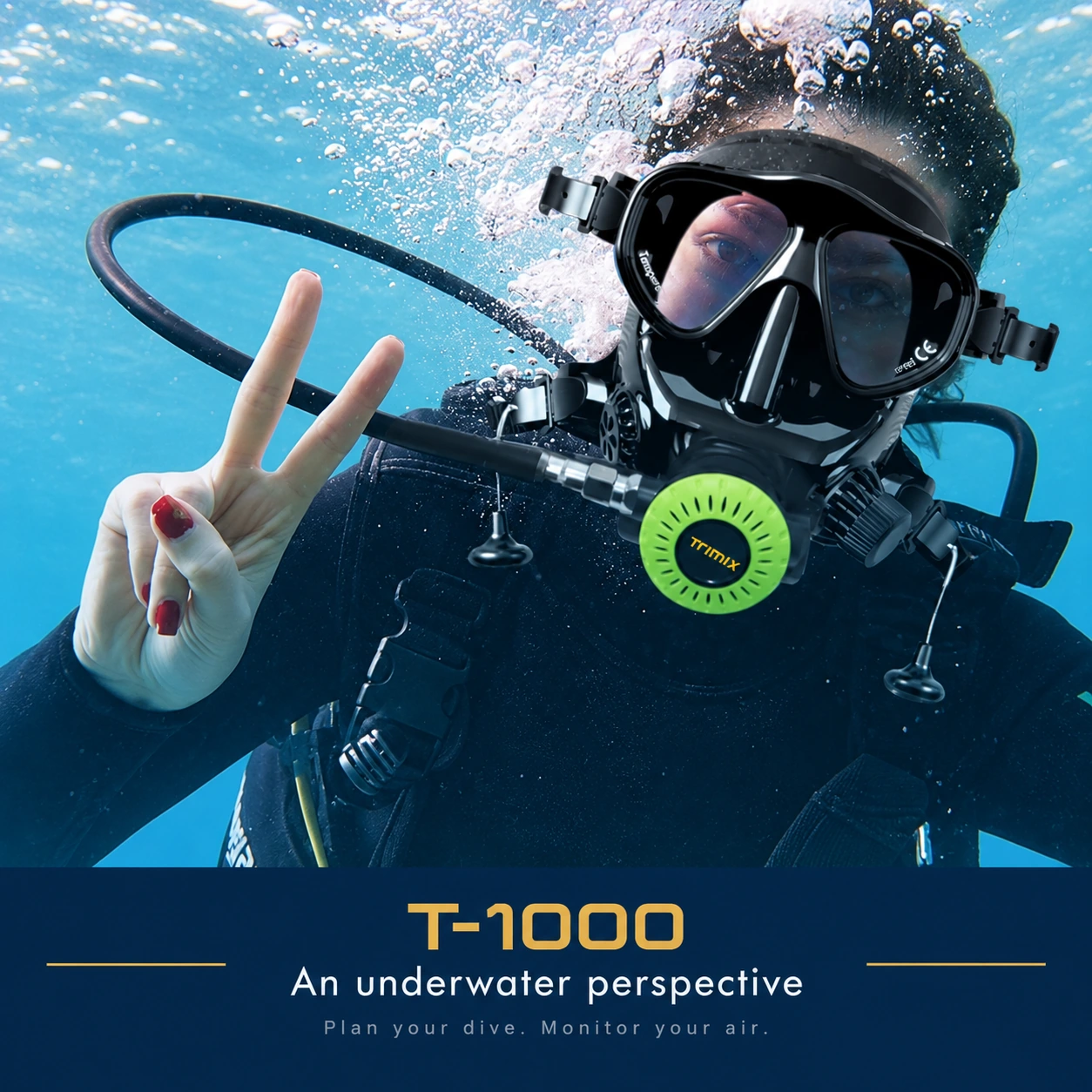
- Two-stage breathing assembly
- A first-stage regulator reduces the cylinder pressure and supplies air through the hose to the second-stage breathing valve.
- Air shut-off control
- The main valve controls the air supply. Follow the manual when opening or closing it and when preparing the equipment for storage.
- Luminescent pressure gauge
- The manual specifies a luminescent gauge to help you read the remaining cylinder pressure in dim conditions. Check it regularly as part of your dive plan.
- 8 mm fill connection
- The filling interface connects to compatible equipment. Have the fittings, pressure rating and breathing-air quality checked by a qualified provider.
Black or Green
Choose your configuration.
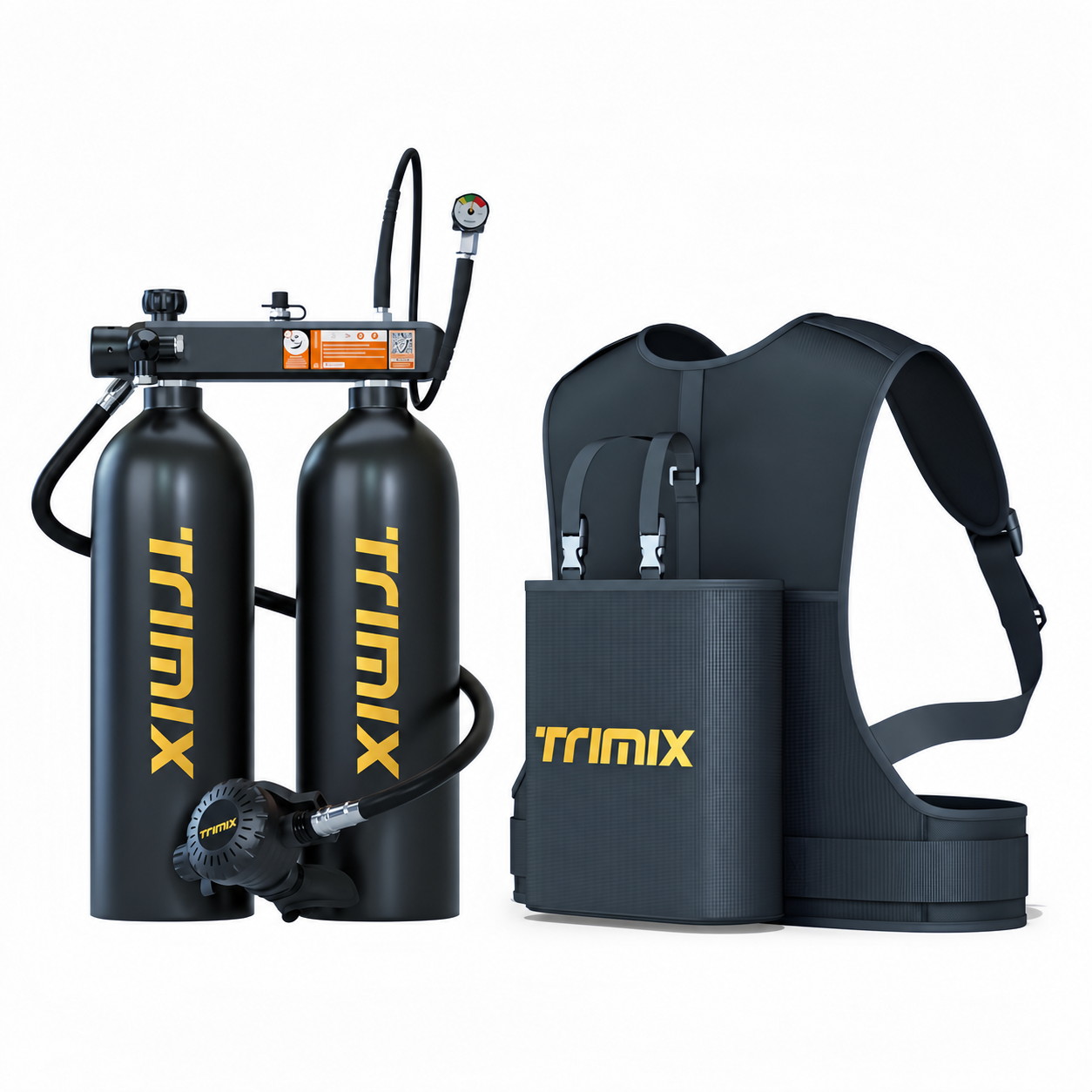
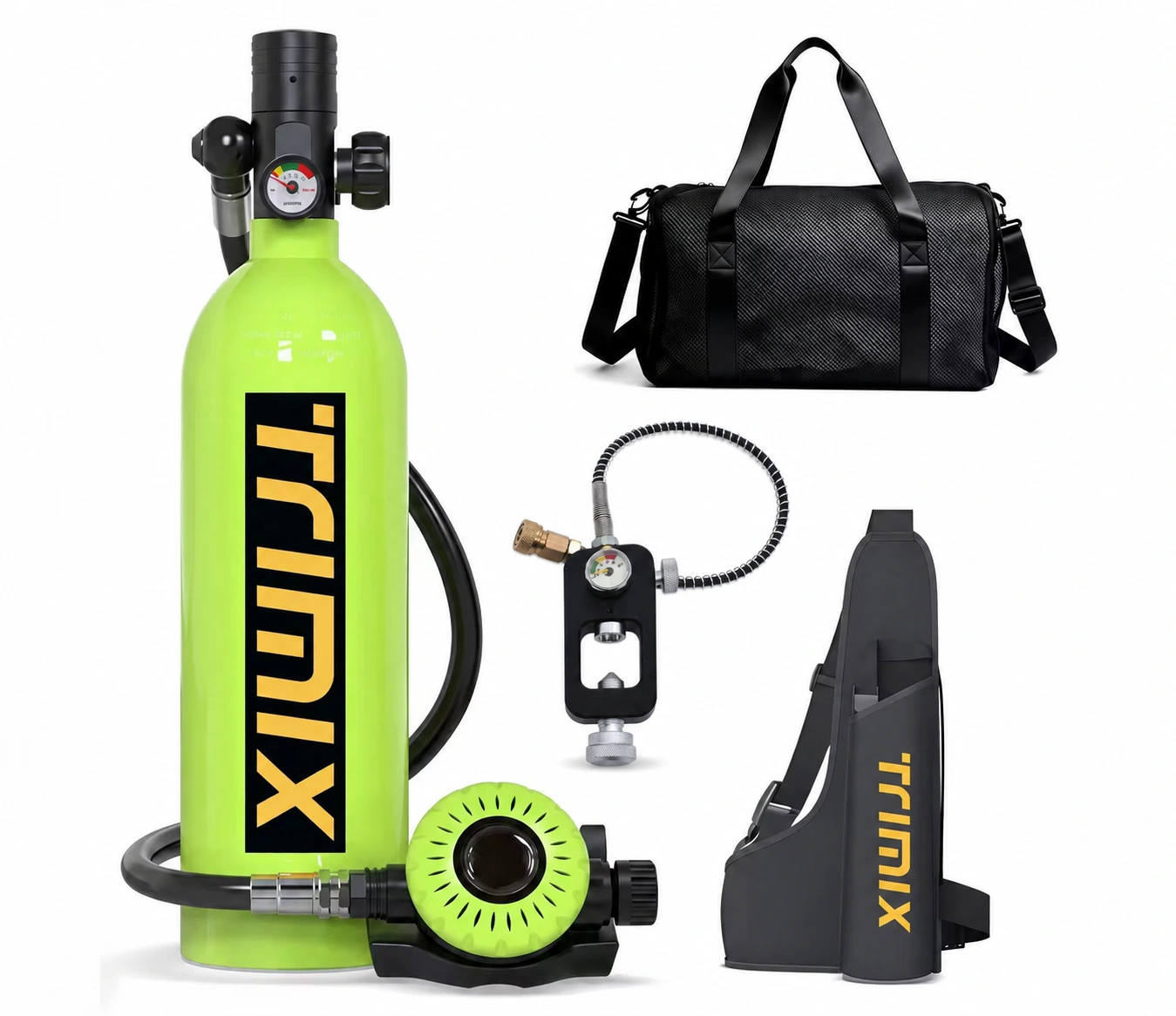
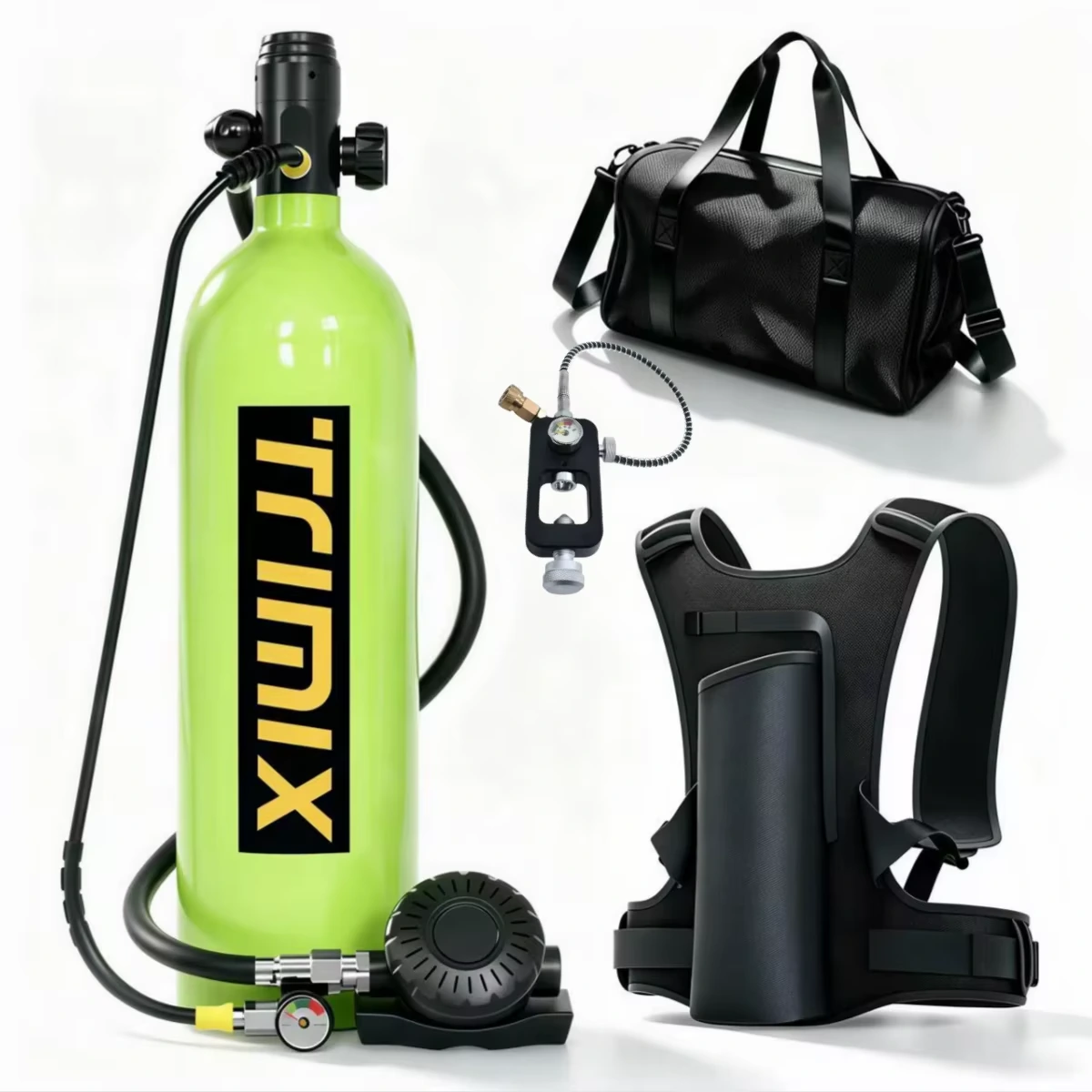
Select both the color and adapter option above to view the exact kit photo. The color-specific photos show the corresponding cylinder and breathing assembly.
Without scuba adapter
Choose the standard configuration if you do not need the optional transfer adapter. The adapter is not included in this option.
With scuba adapter
Add the scuba refill adapter for air transfer from a compatible larger scuba cylinder. The larger supply cylinder is not included.
View the scuba refill adapter →Before arranging a refill
Match the equipment.
Check the air quality.
Breathing-air compressor
A compatible high-pressure compressor must provide air suitable for breathing. A general workshop compressor is not suitable.
Manual pump
The manual lists a compatible high-pressure hand pump as an option and requires an oil-water separator. Confirm the complete setup and air quality before use.
Scuba refill adapter
A compatible transfer adapter connects to a larger scuba cylinder. Use a qualified provider to check compatibility and the filling procedure.
The manual specifies a maximum pressure of 200 bar / 20 MPa. Follow the markings on your actual cylinder. A separator or pressure rating alone does not establish breathing-air quality; see DAN’s guidance on breathing-air quality.
T-1000 manual & essential guidance
Get to know your cylinder before use. Read the complete multilingual user manual, including its English section.
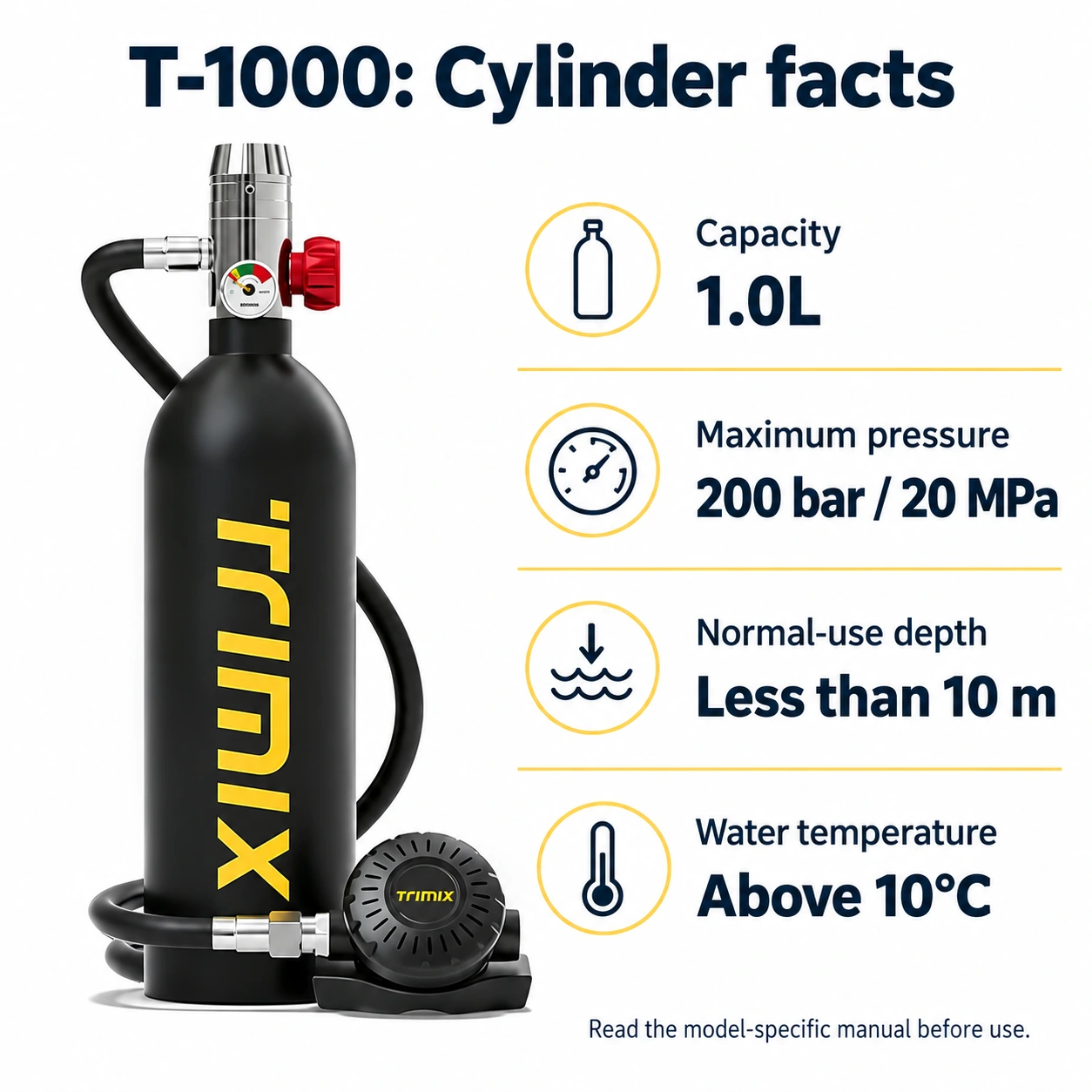
- Normal-use depth
- Less than 10 m
- Maximum pressure
- 200 bar / 20 MPa
- Water temperature
- Above 10°C
- Use suitable breathing air. The manual requires breathing-quality compressed air and prohibits pure oxygen. Use compatible filling equipment and a qualified fill provider.
- Check before every use. Do not fill or use equipment that is damaged, leaking or malfunctioning. Follow the manual’s checks for water or foreign material in the breathing cavity.
- Care for it after use. Clean with fresh water as directed, dry before storage and keep it away from sunlight, high heat and impacts. Arrange annual professional inspection or maintenance.
Why does the manual also mention 30 m?
The normal-use depth in section 1.1 is less than 10 m. The reference to depths within 30 m is only for emergency rescue or a backup air supply for professional diving equipment. It is not a recreational depth rating. Stay within your training and the limits of the complete setup.
How long will a fill last?
The manual does not promise a fixed runtime. Depth, breathing rate, activity, starting pressure and the air reserve in your dive plan all affect available breathing time. Monitor the gauge and plan the return and ascent with sufficient air.
What are the storage and service requirements?
The manual specifies storage at 5–30°C and 40–70% relative humidity, away from sunlight, heat and harmful chemicals. It calls for annual professional inspection or maintenance and cylinder hydrostatic testing every five years. Have a qualified provider confirm the schedule required by the cylinder markings and local rules. Do not attempt unauthorized disassembly.
Find this manual in Tutorials · Read the cylinder FAQs · Download the PDF
Source: T-1000 user manual, sections 1, 4, 6 and 7. Cylinder markings, the full manual and applicable training requirements govern use. These notes are not a substitute for scuba training or a dive plan.
Reviews
There are no reviews yet.