
Meet the T-2000
A compact kit.
Room to explore.
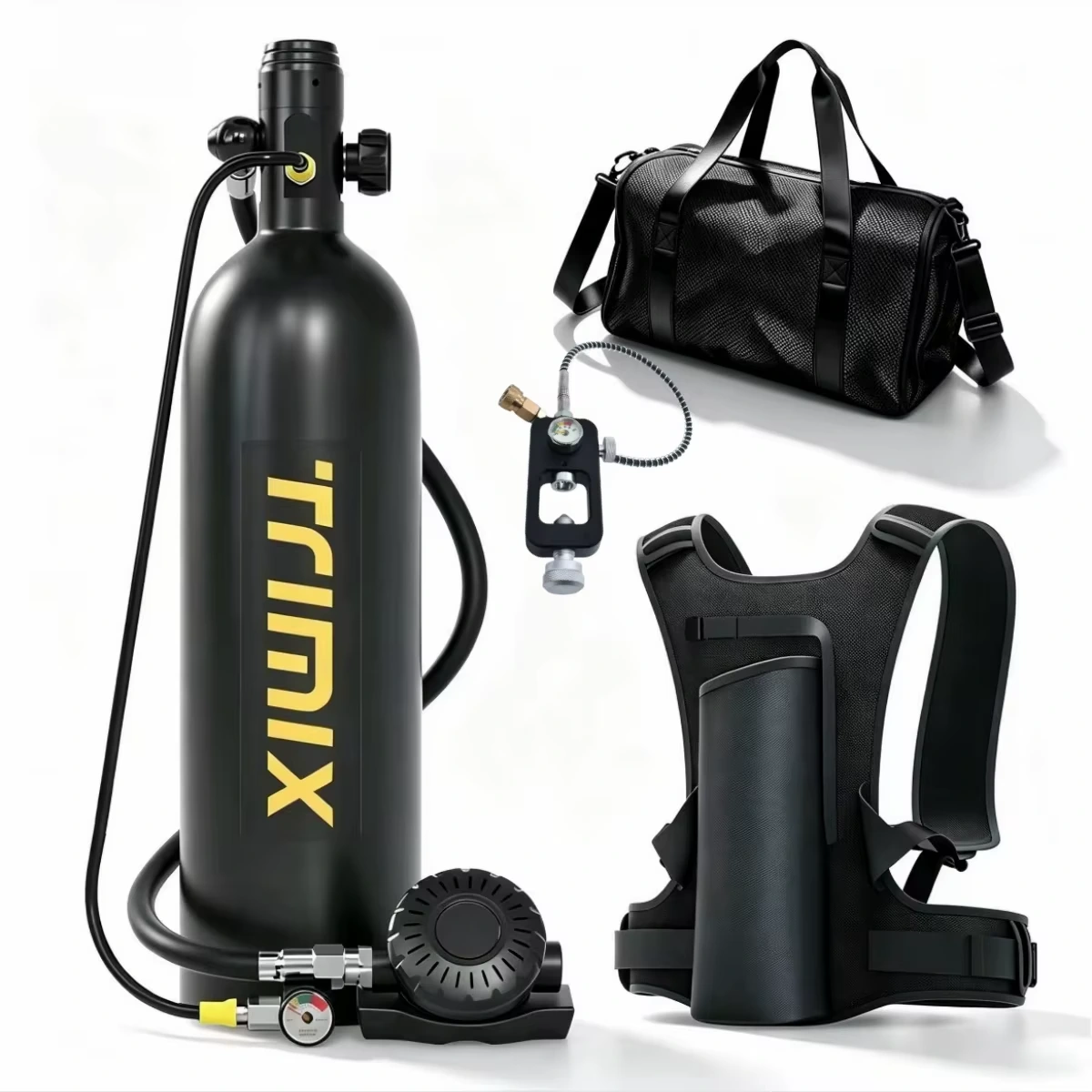
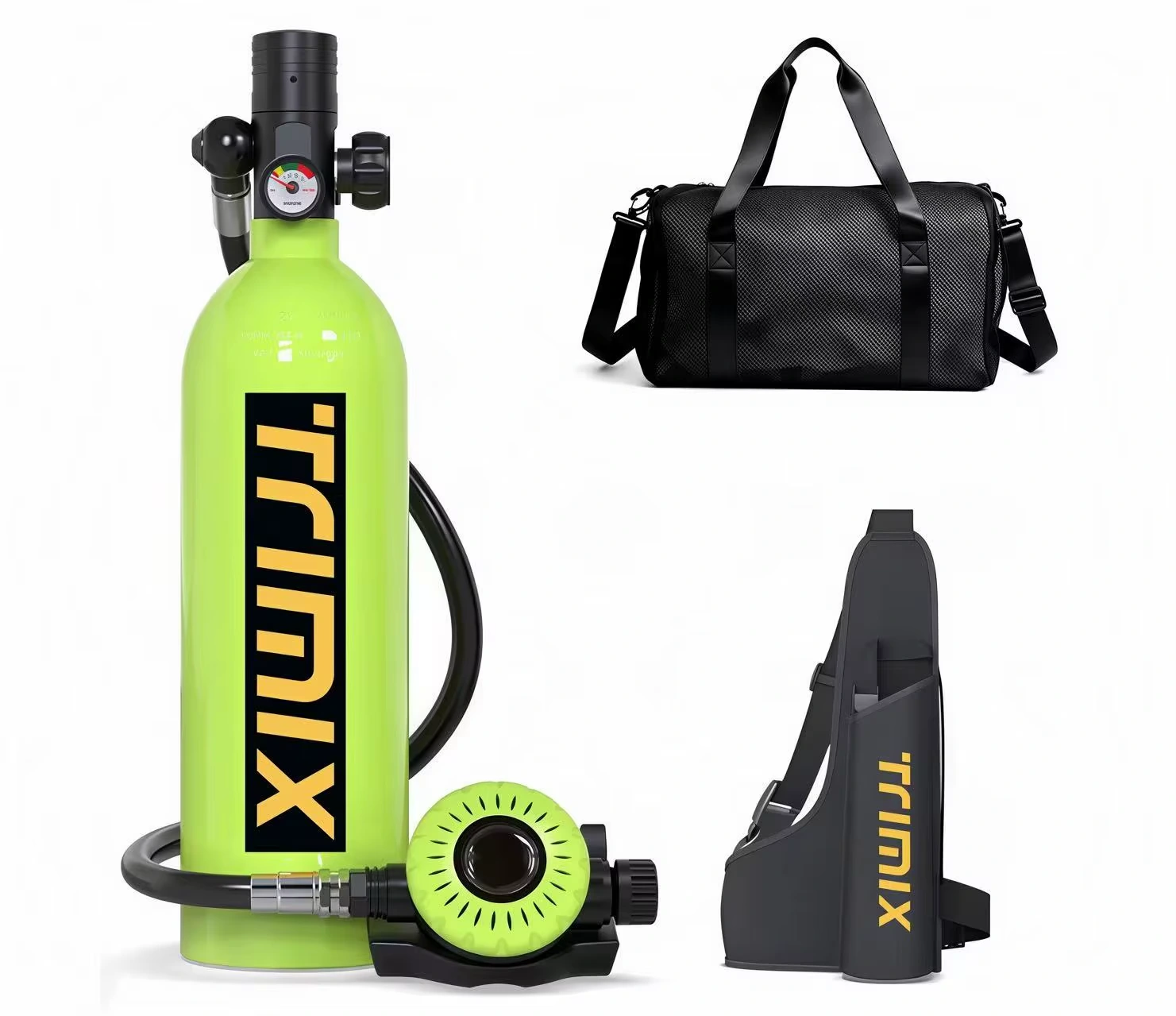
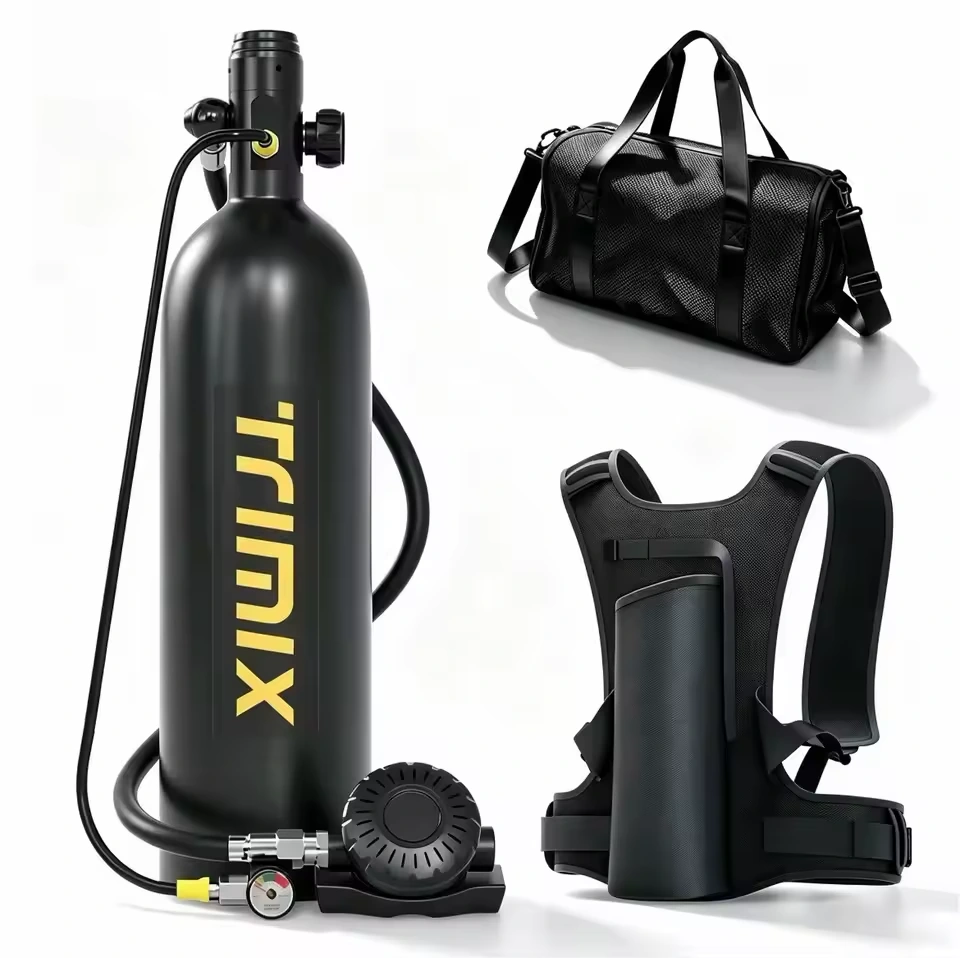
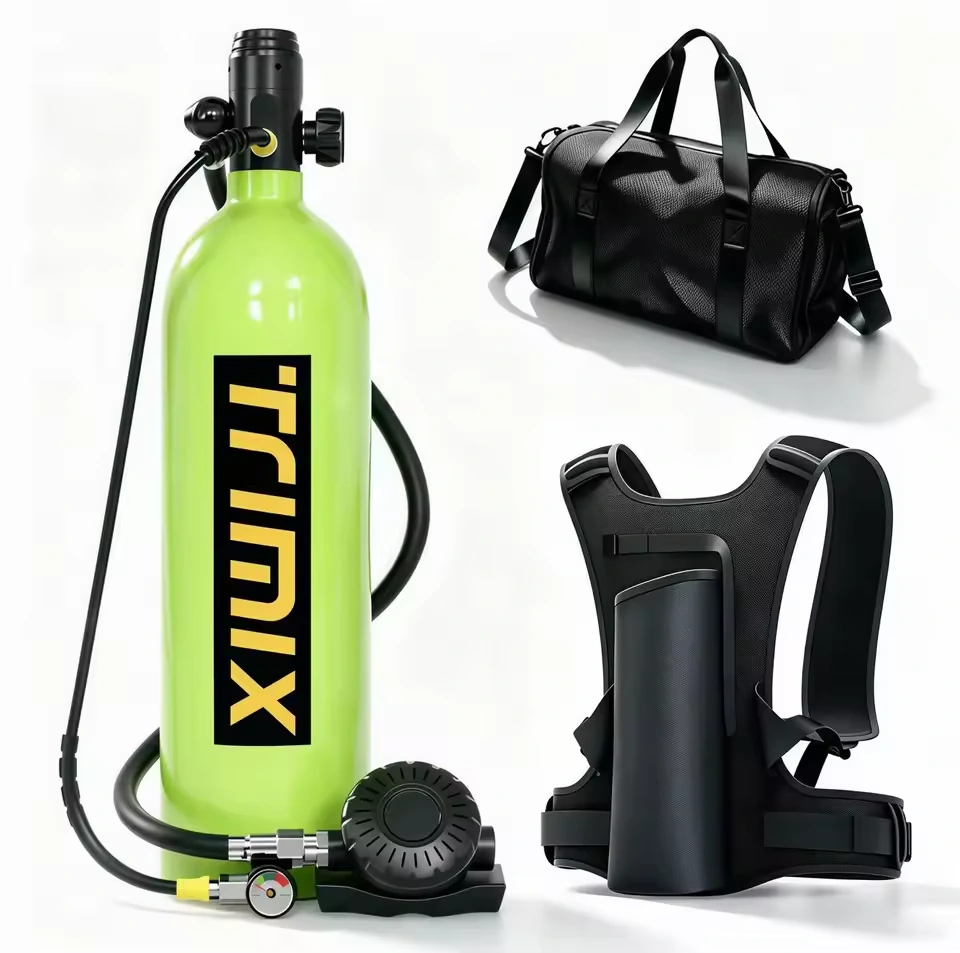
The TRIMIX T-2000 brings a 2L aluminum scuba cylinder, breathing regulator and back-mounted tank vest together in one portable kit. The vest carries the cylinder on your back, while the hose-connected regulator keeps the mouthpiece within reach.
Choose Black or Green, then decide whether to add a scuba refill adapter. The essential kit stays the same in either color.
Designed around the details
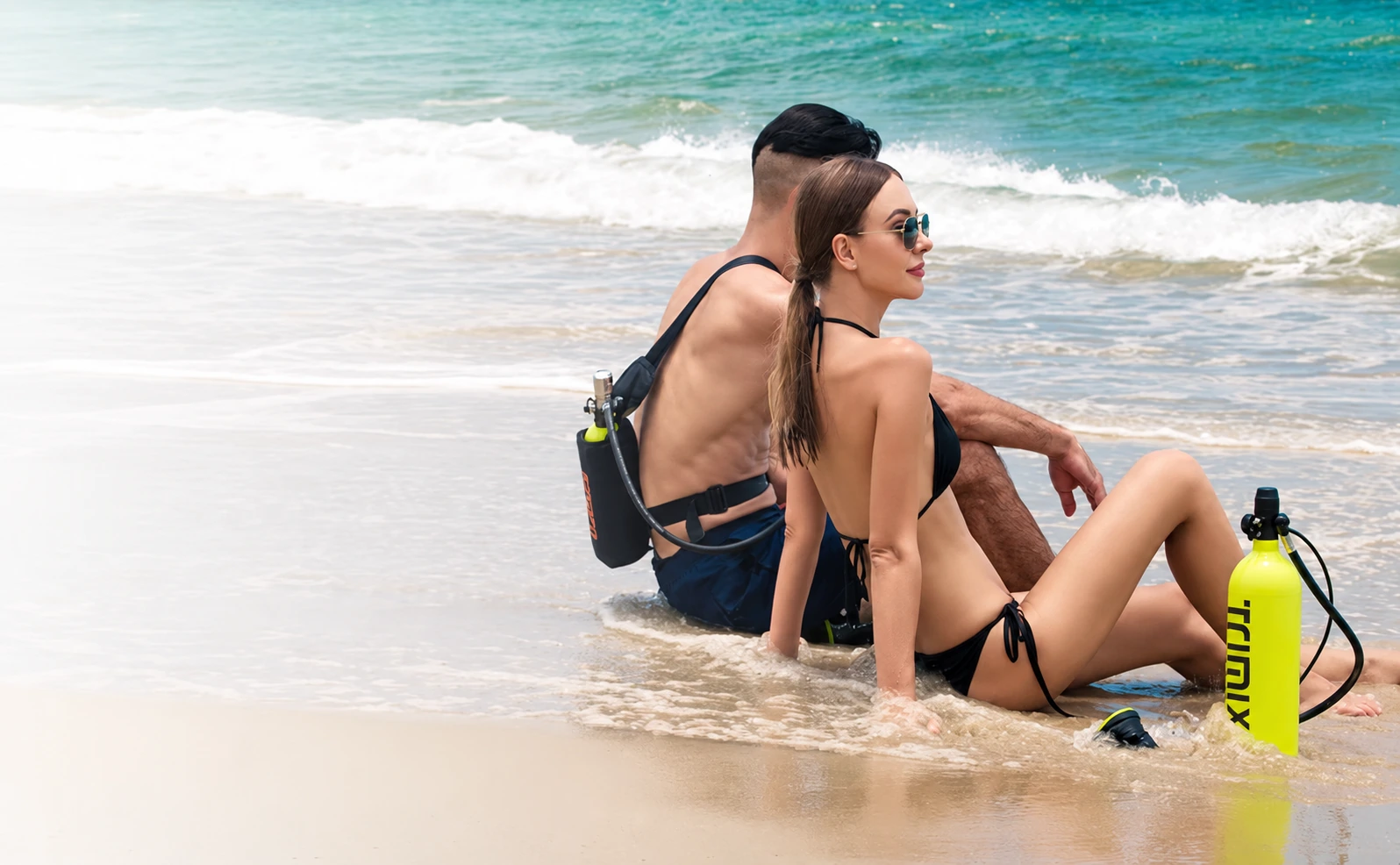
Carry on your back.
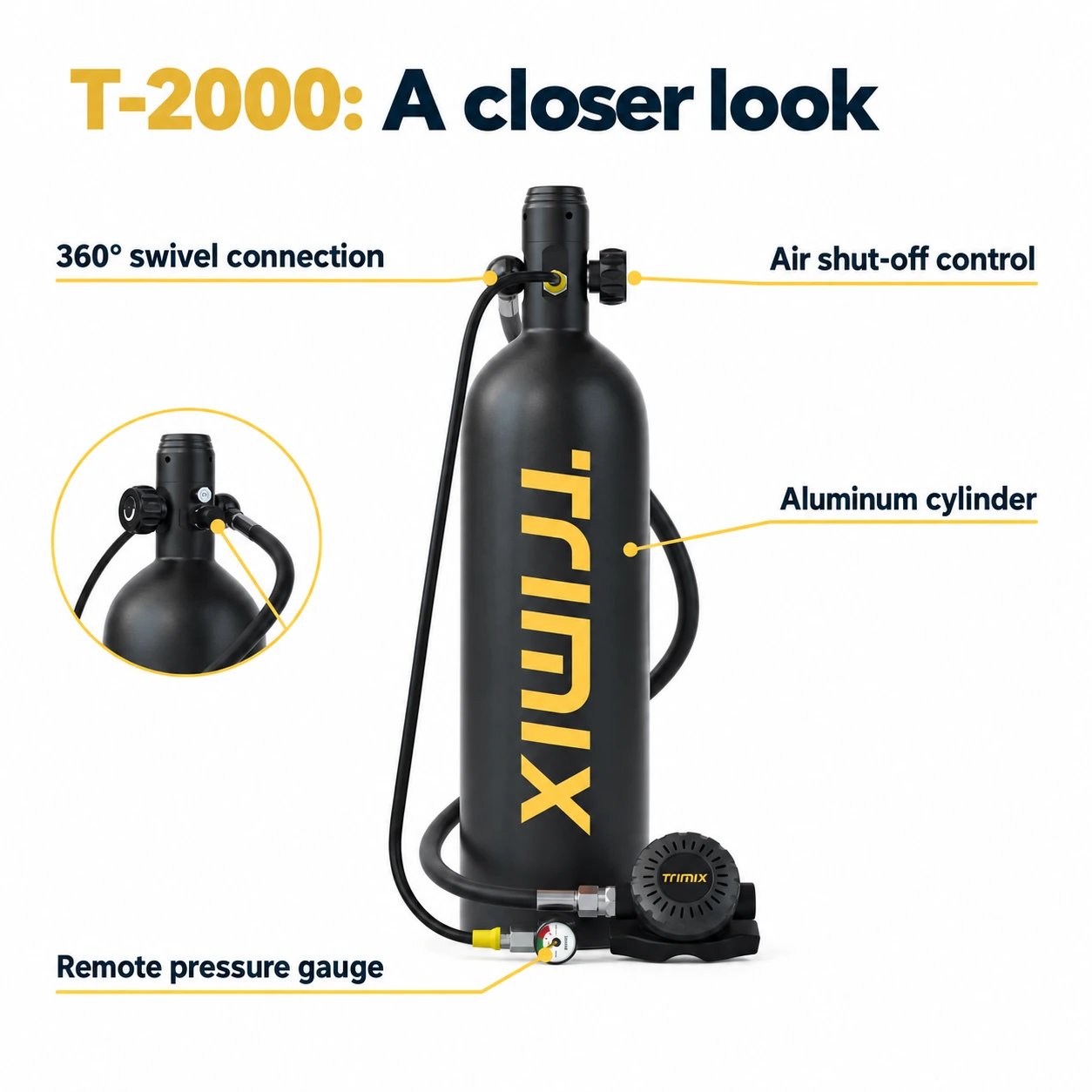
Keep air pressure in view.
- Remote pressure gauge
- The extended gauge connection places the pressure reading away from the cylinder, making it easier to bring into view and check your remaining air.
- 360° swivel connection
- A rotating fitting allows the connected hose to move as you adjust your position.
- Air shut-off control
- A dedicated control lets you open or close the cylinder’s air supply as directed in the user manual.
- Aluminum cylinder
- A coated aluminum body pairs a 2L capacity with a compact format for carrying and storage.
Your color. Your configuration.
Choose the setup that fits.
Both Black and Green are available with or without the optional scuba refill adapter. Select both options above to see the matching kit photo.
Standard kit
The cylinder, breathing assembly and carrying accessories are included. Choose Without scuba adapter if you do not need the optional transfer adapter.
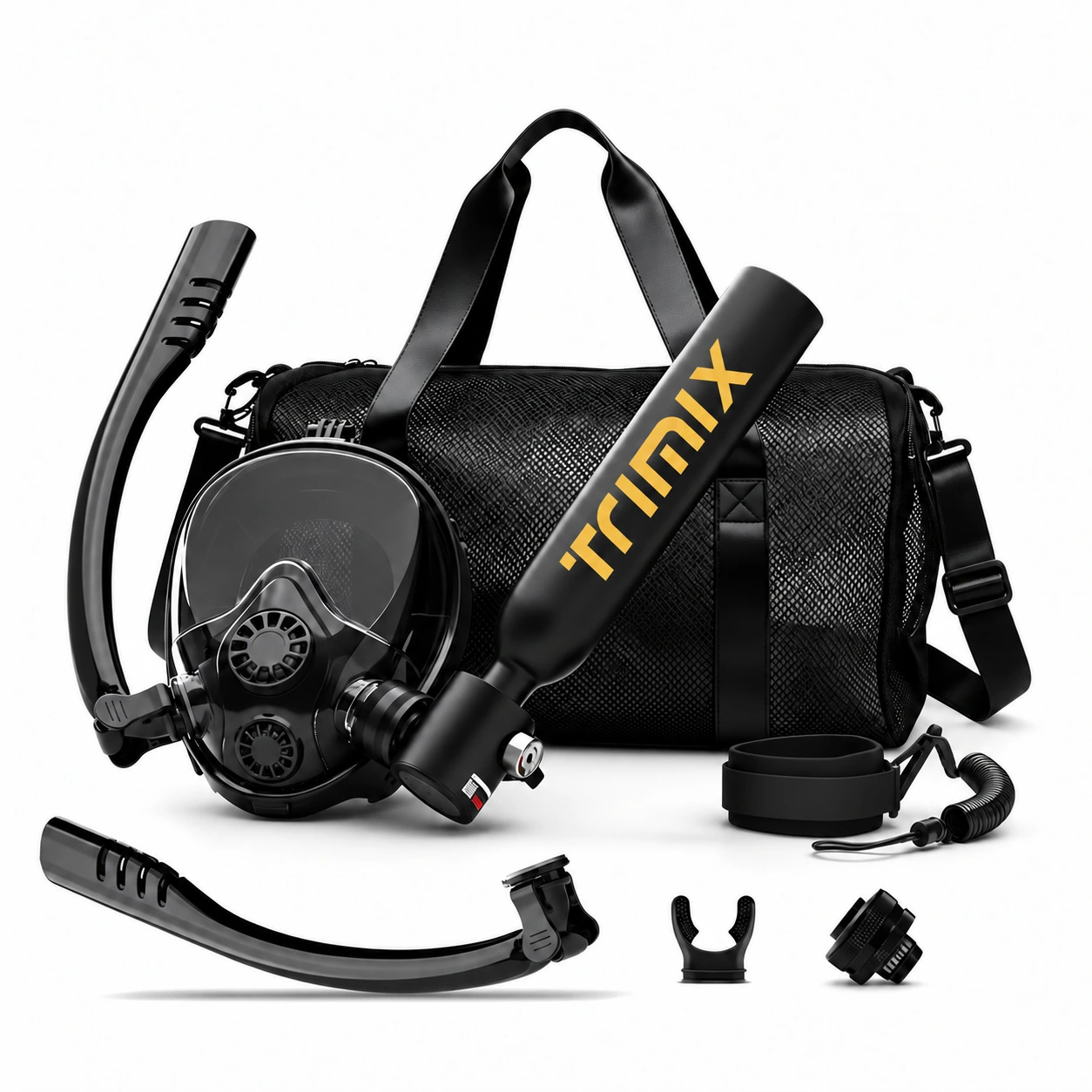
Kit with refill adapter
Choose With scuba adapter to add the adapter used to connect a compatible larger scuba cylinder for air transfer. The larger cylinder is not included.
View the scuba refill adapter →Inside your kit
- 2L cylinder with breathing regulator, hose and pressure gauge
- Tank vest
- Carry bag
- User manual
- Spare parts
The scuba refill adapter is included only when you select the configuration with an adapter.
At a glance
T-2000 specifications
Use the cylinder markings and the supplied manual as the reference for filling, operating limits and maintenance.
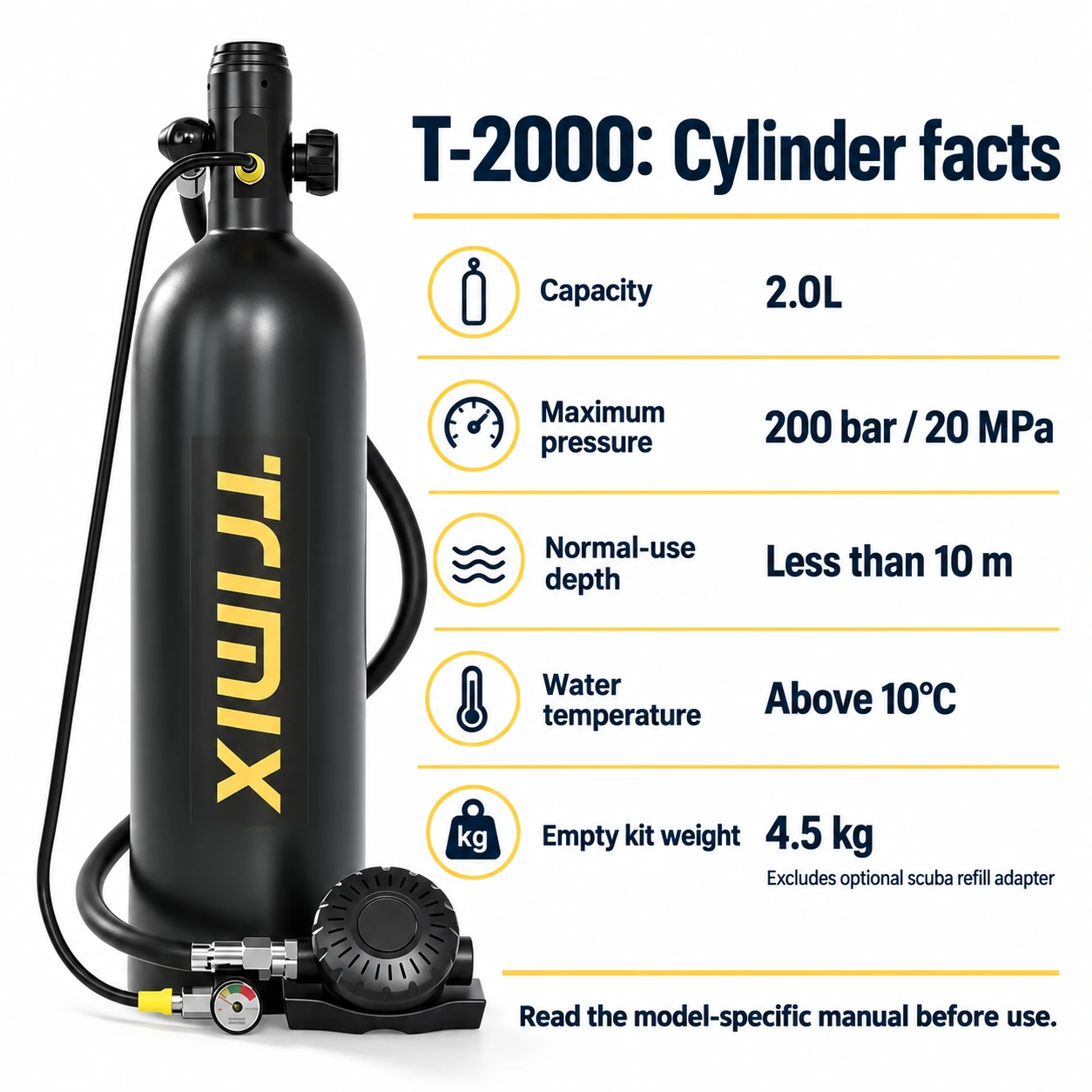
| Model | TRIMIX T-2000 |
|---|---|
| Cylinder capacity | 2.0L |
| Cylinder material | Aluminum |
| Working pressure | 200 bar / 20 MPa |
| Normal-use depth | Less than 10 m, within training and full-setup limits |
| Water temperature | Above 10°C |
| Colors | Black / Green |
| Empty kit weight | 4.5 kg, excluding the optional scuba refill adapter |
| Carrying system | Back-mounted tank vest and carry bag |
| Refill adapter | Optional; select the configuration with an adapter |
Plan your air supply
Three ways to arrange a refill.
Breathing-air compressor
Use a compatible high-pressure compressor intended for scuba breathing air. A household or workshop air compressor is not suitable.
Larger scuba cylinder
A compatible scuba refill adapter allows air transfer from a larger scuba cylinder. Have compatibility and the filling procedure checked by a qualified provider.
Professional fill station
Ask a local dive center whether it can fill your cylinder. Acceptance depends on cylinder markings, inspection status, fittings and local requirements.
Filling equipment and the larger supply cylinder are not included in the standard kit. Use suitable breathing-quality air and follow the equipment’s rated pressure. Read DAN’s guidance on breathing-air quality.
Before you choose
A few useful answers.
How long does a fill last, and how deep can I dive?
The T-2000 manual describes normal use at depths of less than 10 m. Its separate reference to depths within 30 m applies only to emergency rescue or a backup air supply for professional diving equipment, not recreational diving. The manual does not specify a guaranteed runtime: available breathing time varies with depth, breathing rate, activity, starting pressure and the reserve in your dive plan. Follow your training limits and plan the return and ascent with sufficient air.
Is this suitable for a first-time diver?
Breathing compressed air underwater requires appropriate scuba training. A compact cylinder does not replace training, a buddy, equipment checks or a dive plan. Learn to use the equipment with a qualified instructor before diving.
Can I take it on a flight?
Pressurized scuba cylinders are restricted for air travel. An empty cylinder may need specific preparation and inspection, and airline acceptance varies. Check with your airline and departure airport before traveling; have any required valve work performed by a qualified technician. See the FAA’s cylinder guidance.
Where can I check the DOT / CE documentation?
Ask TRIMIX for the model-specific T-2000 documentation before ordering. We can help you check which documents apply to your cylinder and destination, and what your intended fill station needs to see.
How do I look after the kit?
Clean with fresh water as directed and dry before storage. The manual specifies storage at 5–30°C and 40–70% relative humidity, away from sunlight, high heat and harmful chemicals. It calls for annual professional inspection or maintenance and cylinder hydrostatic testing every five years. Have a qualified provider confirm the schedule required by the cylinder markings and local rules.
T-2000 manual & essential guidance
Get to know your cylinder before use. Read the complete multilingual user manual, including its English section.
- Normal-use depth
- Less than 10 m
- Maximum pressure
- 200 bar / 20 MPa
- Water temperature
- Above 10°C
- Use suitable breathing air. The manual requires breathing-quality compressed air and prohibits pure oxygen. Use compatible filling equipment and a qualified fill provider.
- Check before every use. Do not fill or use equipment that is damaged, leaking or malfunctioning. Follow the manual’s checks for water or foreign material in the breathing cavity.
- Care for it after use. Clean with fresh water as directed, dry before storage and keep it away from sunlight, high heat and impacts. Arrange annual professional inspection or maintenance.
Find this manual in Tutorials · Read the cylinder FAQs · Download the PDF
Source: T-2000 user manual, sections 1, 4, 6 and 7. Cylinder markings, the full manual and applicable training requirements govern use. These notes are not a substitute for scuba training or a dive plan.
Reviews
There are no reviews yet.