
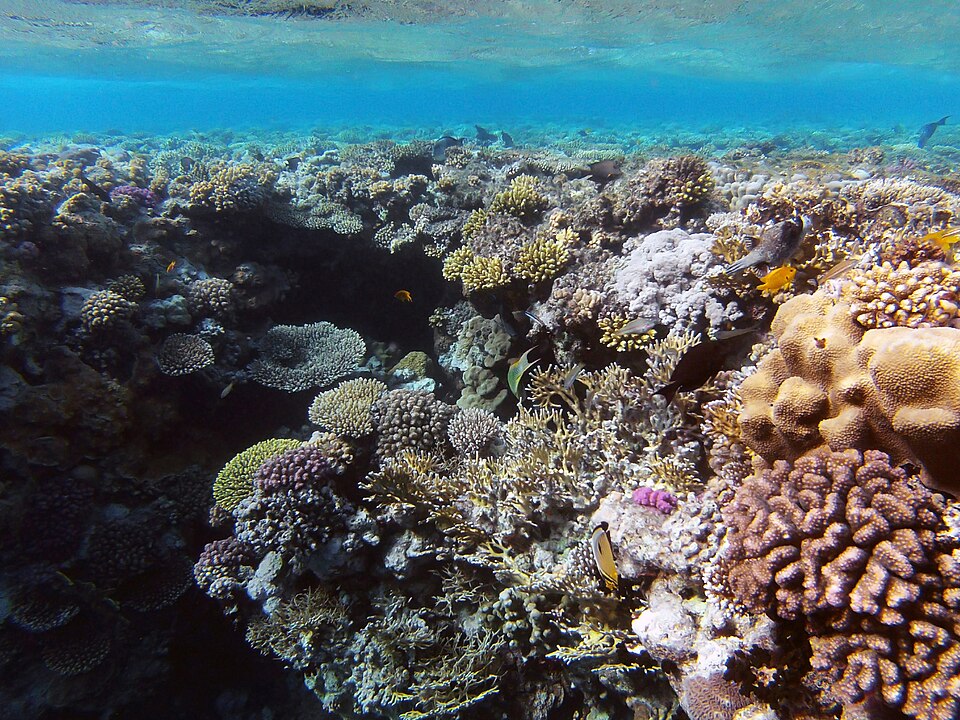
A quiet interval in a reef recording can mean several things. Animals may be calling differently, weather may mask their sounds, or the recording may capture only a short part of a changing soundscape. A newly published Red Sea study makes those distinctions particularly useful for divers interested in acoustic monitoring.
A new paper about a November 2022 storm
The Discover Oceans report published October 22, 2026 examines a severe convective storm that passed Shushah Island in the northern Red Sea on November 29, 2022. Researchers had underwater recordings spanning the event. They compared sound levels around the storm with recordings from corresponding periods in a surrounding ten-day window.
The authors describe weather-related sound masking during the storm and variable changes in frequency bands commonly associated with fish and snapping shrimp. Acoustic levels subsequently returned rapidly toward the reference conditions. This is evidence from one unusual event and its recording window, rather than a finding that every reef recovers from every storm in the same way.
Listening does not isolate one cause automatically
NOAA’s passive-acoustic archive overview explains that recordings can contain biological sounds, physical ocean noise and sounds from human activity. The microphone receives an acoustic mixture. Calling it a reef recording does not make every change a direct measurement of coral health or the number of fish.
A useful way to read the study is to ask what was compared. A reference period gives the event a context that an isolated clip lacks. Matching the time of comparison also matters when the question concerns a changing biological soundscape. These comparisons help make a result interpretable without turning a short observation into a complete assessment of the ecosystem.
What a diver can take from the result
If a project publishes underwater audio, look for the recording dates, location, comparison period and description of its acoustic sources. Ask whether a stated change concerns the sound level, the identification of a particular call or an independently measured ecological outcome. Those are different claims and require different supporting evidence.
This is also a reason to keep weather and access decisions separate from a historical research result. The paper is not a current Red Sea storm warning, a water-quality clearance or permission to enter the study area. A return toward an acoustic baseline does not certify a recreational dive site as safe.
Our Milos sensor fieldwork explainer considers another use of underwater listening alongside mapping. The Shushah study asks a different question: how a particular storm appeared in a reef’s soundscape. Its event occurred in 2022, while the analysis is newly published in October 2026. The original article and NOAA background were checked October 26.
Join the discussion
Share a question or a useful experience about this article. Every comment is reviewed before it appears.