
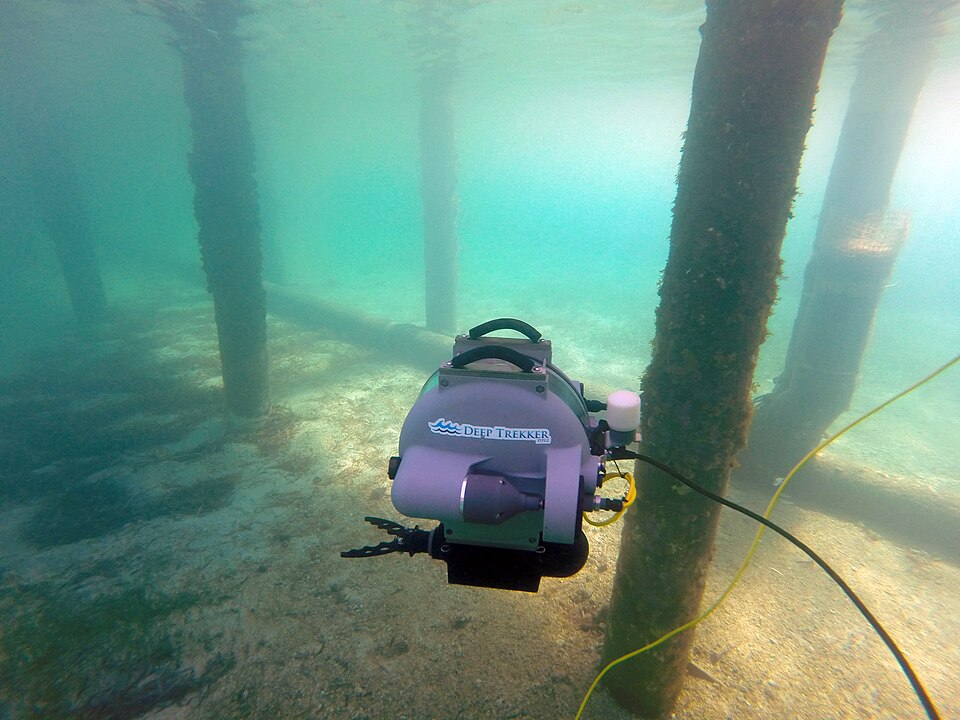
An underwater robot may use AI to label what its camera sees while a different system controls where it goes. Griffith University’s October 14, 2026 project update is a useful case for separating those functions. That distinction matters when readers evaluate claims about autonomous surveys and inspections.
What was reported in the field
The university’s primary announcement describes a collaboration with Cyborg and KJR, alongside partner universities. It combines autonomous surveying, computer vision and AI-assisted review. Reported field locations include Moreton Island and the Port of Brisbane.
Griffith says the team demonstrated maintaining distance from a structure or seabed and identifying underwater objects and organisms from a camera stream. It also says further field validation is the current focus. The announcement does not supply a public error-rate table across different species, visibility levels or operating sites. Its qualitative report should retain that scope.
A platform has several layers
The project partner’s vehicle page separately describes modular sensors, mission logs and image outputs. It lists navigation options including sonar and visual methods, and explains that a tether can provide a higher-bandwidth connection. These are manufacturer descriptions of its platform options, not proof that every listed option was installed in Griffith’s field tests.
The page also describes optional tethering. That is a reminder to ask which operating arrangement a demonstration used. The label on a vehicle does not, by itself, tell a viewer where control decisions happened or how the video reached the surface.
Three results to keep separate
First comes vehicle control: did it follow the intended path or maintain a useful working distance? Second comes perception: did its model correctly detect the target and distinguish similar-looking objects? Third comes the survey result: did the collected record answer the operator’s actual question? Evidence for one is not automatically evidence for all three.
Imagine a camera inspection producing a confident-looking label on a pipe. A reviewer would still want to know whether the target was visible from enough angles and whether the label matched what was present. This is an editorial example, not a scene reported in the Griffith project.
For a dive club or water-sports reader following such work, a valuable next update would report both successes and failure cases under defined conditions. In particular, a statement about difficult visibility becomes more useful when it specifies the conditions tested and the task completed.
The October announcement documents ongoing work with field demonstrations. It does not establish a general replacement for trained divers or a consumer AI accessory ready for any dive. Our underwater technology evidence checklist suggests questions about validation, outputs and the distance between a demonstration and a dependable routine service.
Checked October 26, 2026. University publication: October 14; individual field-test dates are not specified. Partner platform information was checked October 26.
Join the discussion
Share a question or a useful experience about this article. Every comment is reviewed before it appears.