
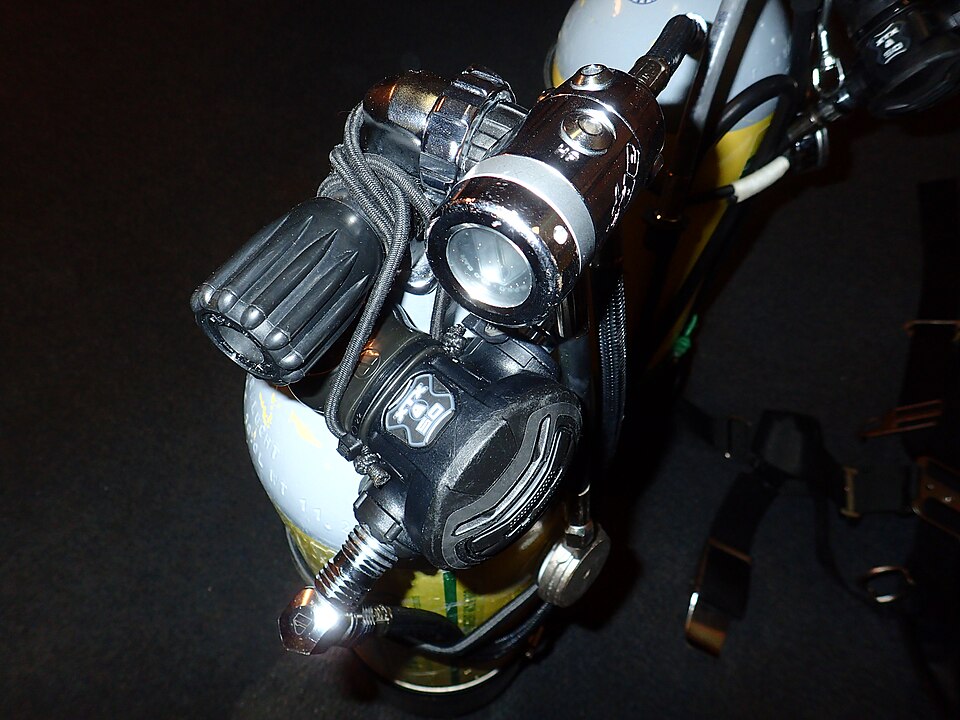
Two compact cylinders can share a brand family while using different breathing assemblies. When requesting a replacement part or comparing kits, start with the exact component diagram. A similar product name or a matching-looking fitting is not enough to establish interchangeability.
The diagrams describe different arrangements
The T-500 manual describes a cylinder and directly attached cylinder-valve breathing assembly. The T-1000 manual describes a primary pressure-reducing valve, cylinder, medium-pressure tube and secondary breathing valve. Those are distinct layouts, rather than merely two capacities of the same assembled item.
A parts request that says only “mini tank regulator” can therefore point to the wrong component. Identify whether you mean the cylinder, the pressure-reducing assembly, a hose, the breathing valve or the fill connection. Use the maker’s diagram labels and keep the model beside each one.
Separate the interfaces in the inquiry
- The cylinder-to-valve connection is one interface.
- The breathing-hose or secondary-valve connection is another where fitted.
- The filling connector and source-cylinder adapter serve different functions.
- A mask attachment, where explicitly supported, adds its own identified parts and instructions.
Do not infer that an 8mm fill-plug description establishes the thread on the cylinder neck or compatibility elsewhere in the assembly. Nor does a part being offered separately establish that an owner should install it without professional support. Request the specific model, part identifier and the manufacturer’s compatibility answer.
Why visual similarity cannot settle compatibility
HSE’s guidance on mismatching valve threads explains that apparently similar connections can be incompatible and cause serious failures. This is an important reason to have qualified personnel confirm cylinder and valve compatibility; it is not a do-it-yourself thread-identification or fitting tutorial.
Keep photographs of markings and the complete existing configuration available for the service provider, using a private inquiry channel. Avoid loosening or dismantling equipment to create a photograph. If the identity cannot be established from safe documentation, ask a professional to inspect it rather than trying parts until one appears to fit.
A complete-kit quotation and a replacement-parts quotation should also be separate requests. Record what the kit includes and what would be reused. That helps the supplier answer a precise commercial question while leaving technical acceptance and servicing with the appropriate qualified provider.
Ask about an identified configuration
Review the TRIMIX T-1000 listing, then ask for the T-1000 information relevant to your decision. Provide the exact model, marked component and the part you need identified. Request a documented compatibility and service answer; a family name does not authorize substitution. The inquiry prepares an email; it is not an order, a sent message or confirmation of availability. No TRIMIX hands-on performance test is claimed here.
Evergreen buyer guide verified November 3, 2026. Source dates: T-500 user manual, English sections 1–7: undated; T-1000 user manual, English sections 1–7: undated; HSE: Mismatching valve threads: updated March 12, 2025. A current download is not evidence of a new launch. Follow the supplied model-specific instructions, qualified training and applicable local requirements; this article is not a dive plan, emergency procedure or filling instruction.
Join the discussion
Share a question or a useful experience about this article. Every comment is reviewed before it appears.