
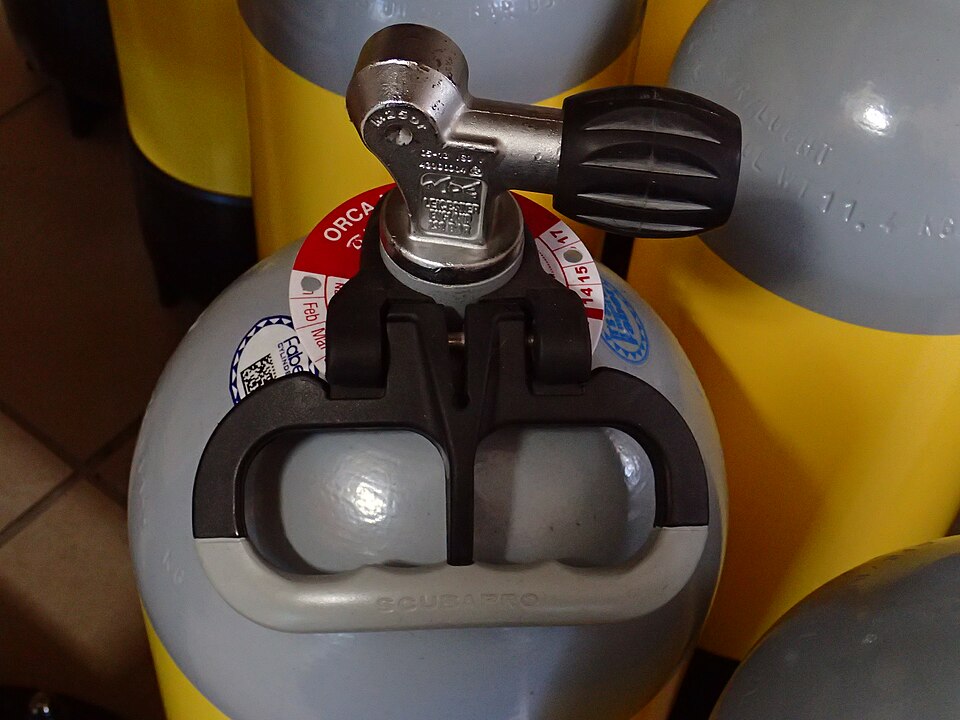
A mini scuba tank fitting inside a bag does not settle whether an airline or security authority will accept it. Cylinder identity, pressure status, the route and carrier conditions matter separately from size. Check these before making travel plans around personally owned equipment.
Read the route-specific authority and carrier rules
The FAA PackSafe outdoor-equipment page classifies pressurized scuba air tanks as hazardous materials at its stated pressure threshold. It distinguishes empty or lower-pressure cylinders for hazardous-material purposes while warning that airlines and screening officials may impose inspection requirements. This is US guidance, not a worldwide baggage approval.
For Canadian screening, CATSA’s compressed-gases entry says no to carry-on for the general category and directs travelers to check with their carrier about conditional acceptance in checked baggage. Those two official pages should not be compressed into a single “mini tanks can fly” rule. Apply the current instructions to the actual route and equipment.
Obtain an answer for the complete item
- Identify every carrier, including connecting or code-share flights.
- Give the carrier the actual cylinder model, markings and complete packed configuration.
- Ask what documentation, pressure status, screening access and packaging its current policy requires.
- Check the departure and transfer security authorities, then retain the carrier’s specific response.
Do not infer permission from an empty pressure gauge, a small capacity or someone else’s journey. This guide gives no depressurizing, valve-removal or reassembly procedure. Any required preparation must be addressed through the exact manufacturer’s instructions and a competent professional, without damaging or compromising the equipment.
Plan the support at the destination too
The T-500 manual describes a high-pressure breathing-air product with maintenance and transportation precautions. Even when carriage is accepted, find out whether the destination’s competent filling and servicing provider accepts that cylinder and its documentation. Being allowed on an aircraft does not prove it can be filled or used at the planned venue.
Ask how any professional preparation and return-to-service assessment will be arranged, who supports the model locally and whether renting an accepted local setup is more practical. Account for baggage charges separately from technical acceptance. A portable format may make carrying equipment easier, but the travel decision remains a chain of permissions and service arrangements.
Recheck the official pages and carrier response near departure because policies and routes can change. Keep an unresolved answer as an unresolved travel constraint; do not let a product’s size stand in for written acceptance.
Ask about an identified configuration
Review the TRIMIX T-500 listing, then ask for the T-500 information relevant to your decision. Request the current model documentation for your carrier and destination provider. A quotation from TRIMIX cannot approve an airline baggage item or local fill. The inquiry prepares an email; it is not an order, a sent message or confirmation of availability. No TRIMIX hands-on performance test is claimed here.
Evergreen buyer guide verified November 3, 2026. Source dates: T-500 user manual, English sections 1–7: undated; FAA PackSafe: Outdoor Equipment / Pressurized Air Tanks: last updated April 13, 2026; CATSA: Compressed gases: date modified December 22, 2022. A current download is not evidence of a new launch. Follow the supplied model-specific instructions, qualified training and applicable local requirements; this article is not a dive plan, emergency procedure or filling instruction.
Join the discussion
Share a question or a useful experience about this article. Every comment is reviewed before it appears.