
A small soft arm can grasp an object when light conditions change, using living algae as part of its mechanism. The development is intriguing for people following underwater robotics, but its timescale matters as much as the movement shown in a video.
TU Delft’s October 22, 2026 announcement describes a laboratory proof-of-concept actuator roughly 2 cm long and 1 mm thick. Demonstrations include lifting a rubber ring and grasping a small metal ball. This is experimental materials research, rather than a commercial underwater manipulator.
Living chemistry produces the bending
The original Nature Communications paper combines the microalga Chlamydomonas reinhardtii with a two-layer, pH-responsive hydrogel. Light-dependent biological activity changes the local chemical environment, making the layers swell differently and bend. In darkness, respiration helps reverse the change.
The reported mechanism is not an AI controller deciding what to pick up. It is an example of a living material responding to its environment. Keeping that distinction visible helps explain what the experiment demonstrates without adding a capability that was not reported.
Starting to move is different from completing the motion
The paper reports an initial response of about 10–20 seconds, while large-amplitude bending develops over 18 hours. Delft labels demonstration recordings as accelerated by 1,800 or 3,600 times. A rapid-looking clip should therefore not be interpreted as a real-time grasping cycle.
These measurements answer different questions. The initial response tells you when a change becomes apparent. The later deformation describes how far the material moves over a longer period. Combining the first number with the final movement would create a performance claim the study does not make.
Why it is interesting, and what remains to be shown
The research explores a route to motion that does not begin with a conventional motor and battery. For underwater technology, that opens questions about gentle manipulation and materials that respond to surrounding conditions. It does not establish that a complete robotic system is ready for a dive expedition.
Before translating a laboratory demonstration into field equipment, readers would need evidence about the actual operating environment, controllability, useful loads and complete movement cycle. A successful small-object experiment is a starting point for those questions. It is not proof that the device can collect marine specimens, tolerate a particular seawater site or replace an existing manipulator.
Our guide to emerging underwater technology separates research demonstrations from available products. The same distinction applies here even though the central innovation is biological and mechanical, rather than artificial intelligence.
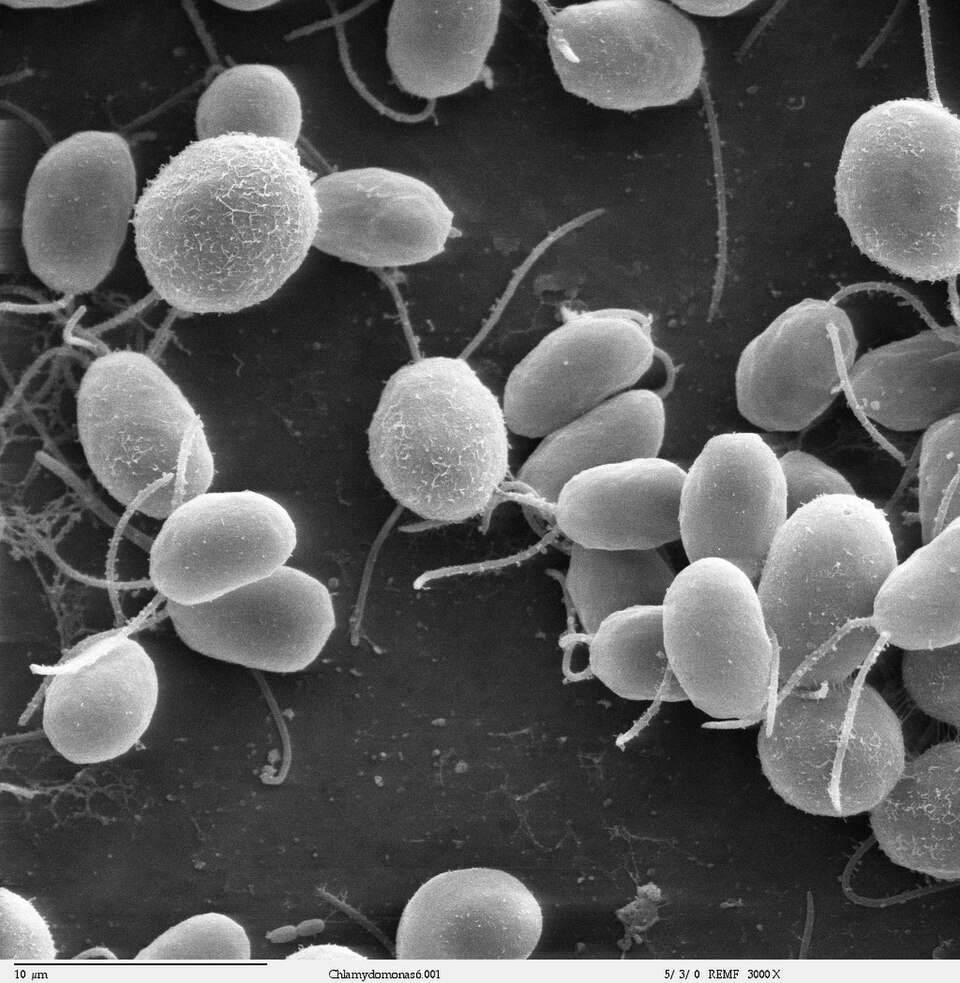
Dates and scope: Research paper and university announcement published October 22, 2026; checked October 25. TRIMIX has not tested the actuator. The accompanying archival micrograph shows the algae species, not this experiment, its materials or its performance.
Join the discussion
Share a question or a useful experience about this article. Every comment is reviewed before it appears.