
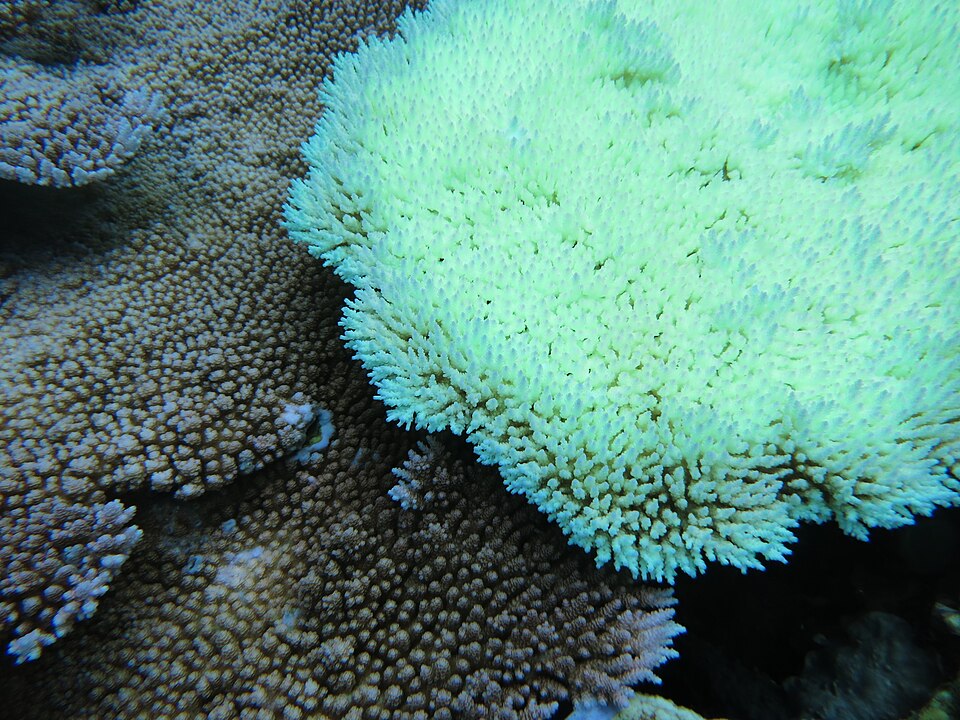
A new coral assessment published in October gives divers and snorkelers a reason to look beyond a destination’s most colorful photograph. Its findings concern the long-term outlook for coral species, a different question from whether one reef looks healthy on the day you visit.
What the assessment found
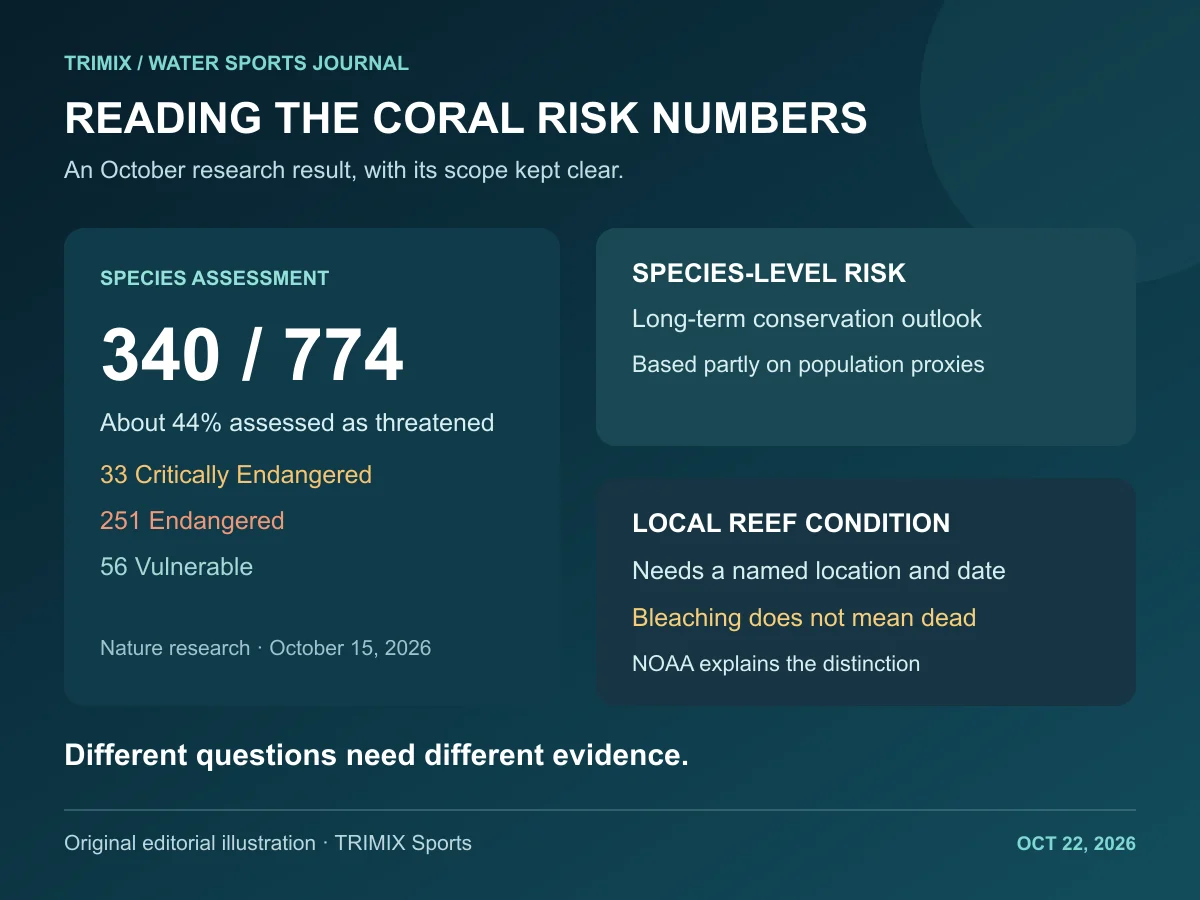
Nature’s official October 16 summary describes research published on October 15, 2026. Of 774 reef-building coral species assessed, 340 were placed in threatened categories: 33 Critically Endangered, 251 Endangered, and 56 Vulnerable. Together, these represent about 44% of the assessed species. The analysis identifies projected heat stress as the main driver for most threatened species. Read the publisher’s research summary.
The authors estimated population reductions using coral-cover trends aggregated across species and projections of severe bleaching under the SSP2-4.5 climate scenario. They identify the use of aggregated cover as a limitation; it is a proxy for species declines rather than direct observation of every population. The assessment also predates the unusually hot 2023–2025 period. These details matter when interpreting the percentage.
Bleaching, mortality and extinction are different
NOAA explains that stressed corals can lose the algae living in their tissues and become pale or white. A bleached coral is still alive, although continuing stress can lead to death. Temperature, light and other environmental changes can contribute to bleaching. Its September 23, 2026 update provides useful background for understanding those distinctions. Read NOAA’s explanation of coral bleaching.
An extinction-risk category describes a species-level conservation assessment. A bleaching observation describes a condition at a particular time and place. Neither should be turned into a claim that 44% of a specific snorkeling bay has disappeared. Conversely, a beautiful holiday photo cannot establish that a species is secure across its range.
Make your next reef visit more informative
Our suggestion is to ask the operator three concrete questions before choosing an itinerary:
- Which reef will we visit? Get a named location rather than relying on a broad destination label.
- When was the most recent local observation? A dated report gives a clearer context than an undated gallery.
- What does the conservation briefing cover? Ask how the operation explains site care, wildlife observation and any current restrictions.
Keep your own trip notes specific, too. Record the location and date alongside photographs, and distinguish what you observed from what a guide or report explained. This makes memories more useful without presenting a recreational visit as a scientific survey.
For equipment questions before a reef trip, ask TRIMIX about the specifications of a listed product. A conservation headline alone cannot determine the equipment or instruction an individual needs.
Source dates: Nature research, October 15, 2026; publisher summary, October 16, 2026; NOAA page updated September 23, 2026. Checked October 22, 2026. Source-based editorial analysis; no field survey or firsthand equipment test.
Join the discussion
Share a question or a useful experience about this article. Every comment is reviewed before it appears.