
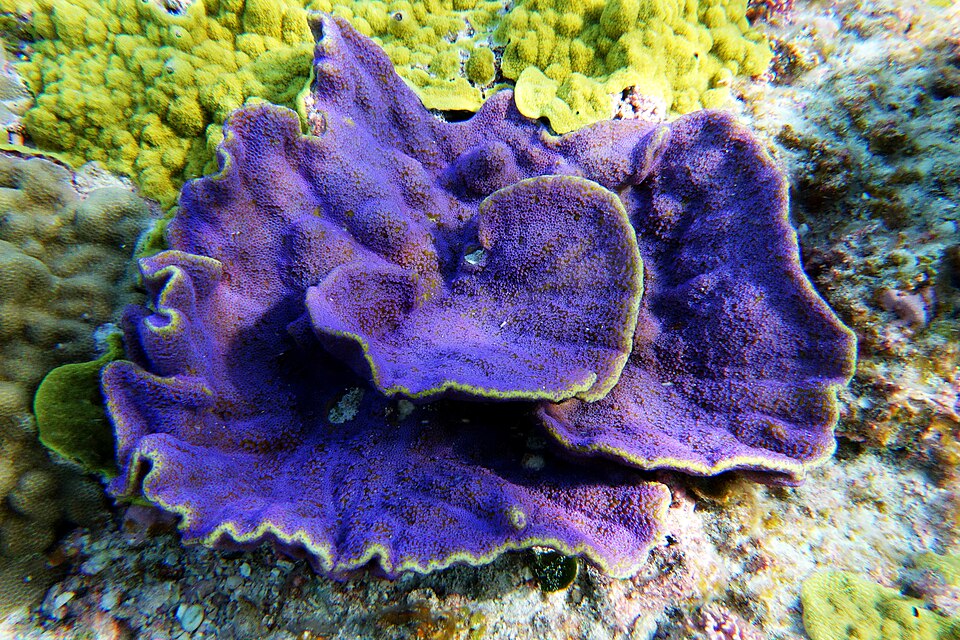
The newest global coral headline uses a different unit from the species assessment we covered earlier this month: whole reef ecosystems. The IUCN Red List of Ecosystems released its global result on October 22, 2026, followed by an explanation from scientific lead Mishal Gudka on October 23. Keeping the unit, time horizon, and meaning of risk together makes the result easier to understand.
What 122 of 127 refers to
The official assessment summary says 122 of 127 shallow-water coral reef ecoregions were classified as Critically Endangered. One, the Western Galapagos Islands, was classified as Collapsed, while four lacked sufficient data for a full assessment. These are ecosystem categories, not a count of individual coral colonies, dive sites, or species.
The summary also separates observed change from future projections. Thirty ecoregions would be Critically Endangered using observed changes alone; projected heat stress over 2026–2075 substantially increases the overall number. That difference is central to the warning. The headline should not be rewritten as a statement that 96 percent of living coral has already disappeared.
How the lead researcher explains the warning
In his October 23 University of Melbourne article, Gudka explains that ecosystem collapse means the loss of a reef’s characteristic structure and communities, rather than the extinction of one species. He emphasizes both the severity of projected warming and the remaining opportunity to reduce pressures. A high-risk category is intended to guide action while ecosystems can still function.
This new assessment complements the earlier TRIMIX explanation of coral species extinction risk. The two percentages answer different questions. One asks about individual species; the other asks about the persistence of functioning reef systems. Combining them into a single percentage would conceal that distinction.
Use three scales when planning a reef visit
At the global scale, use the assessment to understand the direction and seriousness of the problem. It provides a framework for conservation priorities, rather than a trip-specific description of visibility or access.
At the regional scale, read material that identifies the named ecoregion, the period assessed, and the methods used. An impressive photograph from one reef cannot settle the status of every reef in the region. Equally, a global risk category cannot describe the exact condition of every coral in a single bay.
At the trip scale, ask the local operator or managing authority for current information about the actual site. Keep any closures, visitor instructions, and recent monitoring separate from the long-term assessment. That makes it easier to share the conservation news accurately while still making practical decisions about a visit.
When discussing a conservation contribution, ask what action it supports and what evidence will be used to assess the result. A project can address a local pressure without claiming to remove the entire global threat. Sources checked October 24, 2026; this article explains published assessments and does not provide a live reef-condition report.
Join the discussion
Share a question or a useful experience about this article. Every comment is reviewed before it appears.