
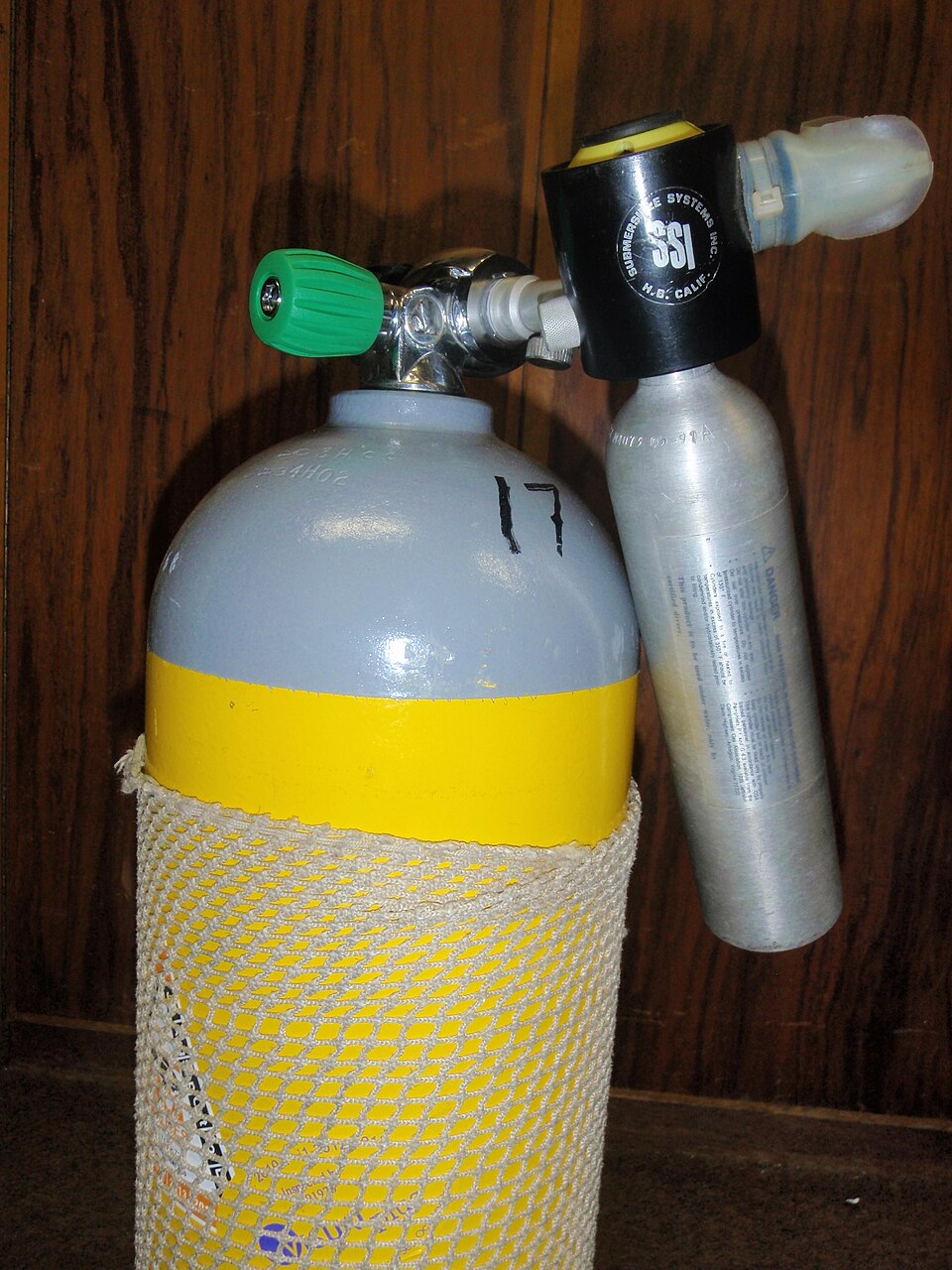
A small scuba cylinder and a full-size cylinder do not have to compete for the same job. The useful buying question is what a particular compact system is documented to do, and whether that role belongs in your trained, complete equipment configuration. Neither dismissing every small cylinder nor treating one as a replacement for normal scuba resolves that question.
Separate a product category from an approved role
The T-500 manual contains its own use descriptions, operating precautions and training warning. Those descriptions do not establish that a T-500 arrangement is an adequate backup for your dive. Capacity, attachment, access, the full breathing assembly and the user’s training still require an exact-model assessment. This guide does not convert the manual’s depth statements into an operating recommendation.
As a different manufacturer’s example, Submersible Systems describes Spare Air as an additional emergency tool and restricts underwater use to certified divers. That illustrates a specific complementary design intention, not a certification of TRIMIX equipment or proof that the two products are interchangeable. We do not adopt its performance claims for a T-500.
Write the role before comparing the size
- Name the activity and the complete primary equipment configuration.
- Identify the exact compact model, supplied instructions and intended role.
- Ask a qualified instructor whether the configuration can be assessed within your training.
- Obtain a documented answer on mounting, access and service rather than copying another diver’s arrangement.
If the proposed role remains vague, buying a larger or smaller compact cylinder does not solve it. A label such as spare, pony or mini is not a gas plan or a universal equipment approval. A qualified assessment may conclude that a different system is required, or that no additional compact cylinder is appropriate.
Take objections as questions to resolve
Concerns about limited gas, unfamiliar controls and maintenance are legitimate purchasing considerations. They deserve evidence, not a slogan that extra air is always safer. An added system brings ownership and configuration obligations as well as a possible documented function. Full-size equipment retains the job established by the dive plan; the compact item must earn a separate, clearly bounded place.
Ask about an identified configuration
Review the TRIMIX T-500 listing, then ask for the T-500 information relevant to your decision. State the proposed supplementary role and the primary equipment model. Request the current manual and configuration information before seeking qualified assessment. The inquiry prepares an email; it is not an order, a sent message or confirmation of availability. No TRIMIX hands-on performance test is claimed here.
Evergreen buyer guide verified November 3, 2026. Source dates: T-500 user manual, English sections 1–7: undated; Submersible Systems: Using Spare Air: undated. A current download is not evidence of a new launch. Follow the supplied model-specific instructions, qualified training and applicable local requirements; this article is not a dive plan, emergency procedure or filling instruction.
Join the discussion
Share a question or a useful experience about this article. Every comment is reviewed before it appears.