
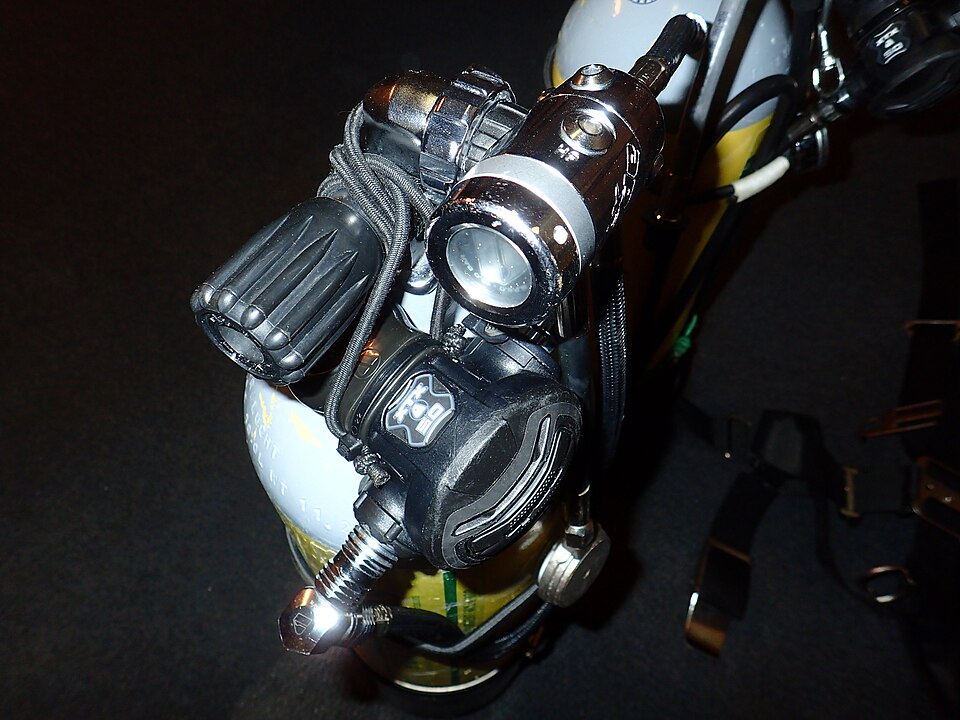
When a mini scuba gauge needs assessment, start with its job in the equipment. A reading on a cylinder gauge, a compressor display and a transfer adapter gauge can refer to different locations. A replacement request should identify which gauge the technician is evaluating before anyone compares diameter or dial colour.
Identify the gauge’s job and exact assembly
The English product structure in the T-500 User Manual identifies a pressure gauge on that model’s breathing assembly. The TRIMIX M10 Pressure Gauge listing supplies one gauge and asks buyers to confirm the connection and required measurement range. The public listing provides no confirmed fit for the assembly in your hands. Keep the product page and your existing part identity as separate records.
Record the units with the numbers
Ask the supplier for a legible dial image and its measurement range, including the units. A bare number copied into an email is ambiguous. The NIST pressure conversion table lists different conversion factors for bar and pounds-force per square inch. It can explain differing units in a quote. The equipment’s own markings and instructions govern its limits.
Capture the operating limit and the gauge’s printed scale as two separate fields. The upper number on a scale describes the display range. It does not establish the approved working pressure of the cylinder, breathing assembly or surrounding fittings. Confirm that the specified gauge is appropriate for the assembly with a qualified service provider.
Ask for a written part match
- Supply the exact cylinder and breathing assembly models and revisions, if known.
- Record the existing gauge location, part reference and scale units without dismantling the unit.
- Request confirmation of the connection, sealing arrangement, range and manufacturer-approved replacement part.
- Ask who will assess the equipment and what checks are required before returning it to service.
Ask a qualified service provider to assess an unexplained reading or a damaged gauge before further use. Replacing a gauge is a service decision, and photographs are identification aids. They cannot verify that the replacement reads correctly.
Ask TRIMIX about the M10 gauge connection and measurement range with the above details and the service provider’s findings. A response identifying a dial scale addresses one field in the request. Keep the part match and assessment in the file as separate confirmations.
Evergreen equipment buying guide checked November 7, 2026. The TRIMIX product listing and manual are undated. The NIST conversion page was created February 1, 2016 and updated August 18, 2025. It presents the Special Publication 811 table. This guide documents the buying decision. It does not establish a product test or approve a specific setup.
Join the discussion
Share a question or a useful experience about this article. Every comment is reviewed before it appears.