
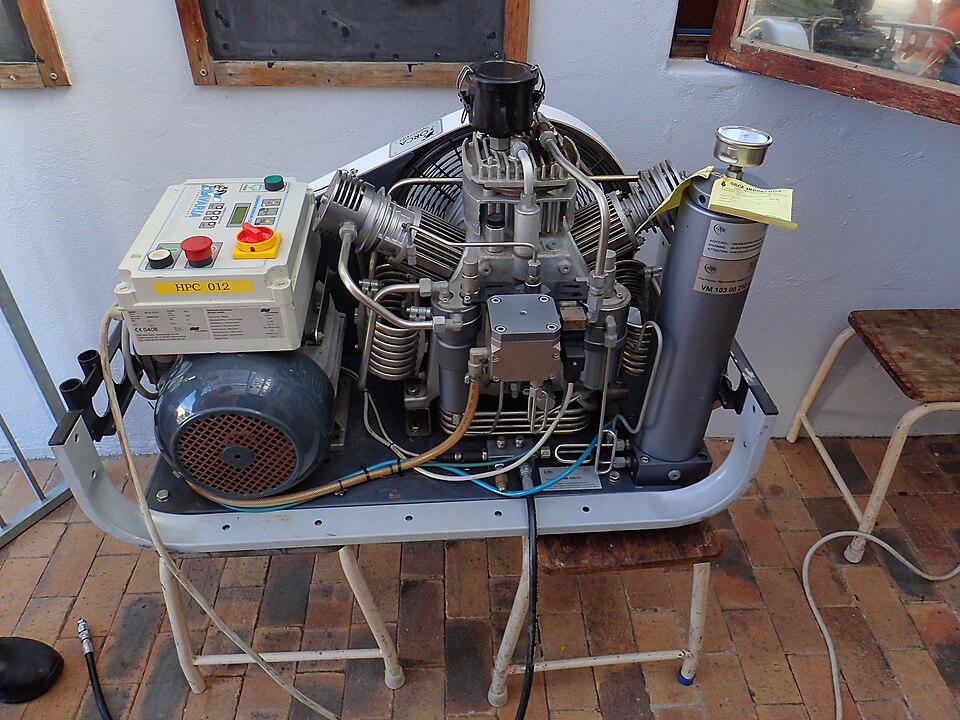
A compressor capable of displaying a high pressure has not thereby demonstrated that its output is suitable to breathe. When considering filling equipment for a mini scuba tank, treat pressure, connection and breathing-air quality as separate evidence questions. A compact cylinder does not reduce the importance of the air supply.
Start with the receiving model’s instructions
The T-500 manual lists filling options and requires breathing-quality compressed air. It also calls for an oil-water separator when an electric or manual pump is used. That is not evidence that any pump with a similar connector, or an unspecified separator, produces compliant breathing air.
Have a qualified provider evaluate the entire filling arrangement against the exact cylinder and equipment instructions. A maximum pressure number is not a recommendation to fill to that value, and a hose physically connecting is not a complete compatibility assessment. This guide gives no filling sequence, adjustment or retrofit instructions.
Ask what proves the output quality
DAN’s breathing-gas contamination guidance identifies contaminants from the surrounding environment and compression process, including exhaust and lubricant-related contamination. It recommends asking about compressor maintenance, gas analysis and records. A clean-looking machine or an absence of smell cannot establish that all relevant contaminants are absent.
- What standard is the complete system intended to meet for breathing-air output in the planned jurisdiction?
- What model-specific instructions cover the compressor, filtration and receiving cylinder?
- Who maintains the system and supplies the appropriate consumables?
- What dated air-quality evidence and operator records support the actual filling service?
These questions concern a continuing process. An old test result for another machine, location or configuration does not describe today’s system. Equally, a filter name without a defined maintenance and testing arrangement is incomplete evidence. Ask for the scope of each document and which part of the proposed setup it covers.
Compare ownership with a qualified filling service
Before buying a compressor, check whether a local competent provider can support the cylinder. Compare the responsibilities of owning a filling system with obtaining accepted fills, including maintenance, testing, consumables and operator competence. We have not tested or certified a compressor in preparing this guide.
A supplier should be able to discuss those evidence requirements without turning a buyer checklist into a home-filling tutorial. If the air-quality case remains unresolved, leave the filling setup unapproved rather than treating a pressure claim as the missing proof.
Ask about an identified configuration
Review the TRIMIX T-500 listing, then ask for the T-500 information relevant to your decision. Include the proposed compressor and filtration model, output documentation and cylinder identity. Ask for an assessment of the complete arrangement rather than a connector-only match. The inquiry prepares an email; it is not an order, a sent message or confirmation of availability. No TRIMIX hands-on performance test is claimed here.
Evergreen buyer guide verified November 3, 2026. Source dates: T-500 user manual, English sections 1–7: undated; DAN: Breathing Gas Contamination: undated. A current download is not evidence of a new launch. Follow the supplied model-specific instructions, qualified training and applicable local requirements; this article is not a dive plan, emergency procedure or filling instruction.
Join the discussion
Share a question or a useful experience about this article. Every comment is reviewed before it appears.