
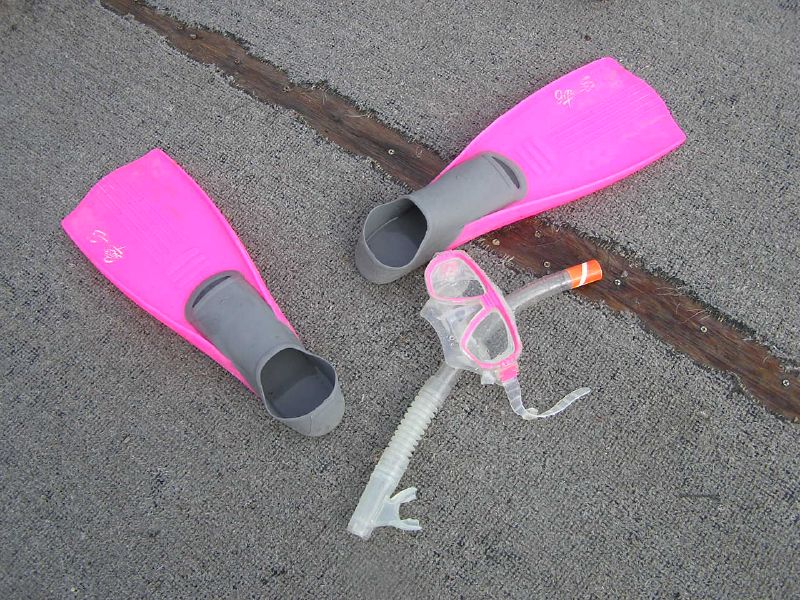
A conventional snorkel and a mini scuba tank can both appear beside a diving mask, but they provide air in fundamentally different ways. Choose the activity and breathing method first. A compact cylinder is not an automatic upgrade to an ordinary surface-snorkeling kit.
A snorkel connects the swimmer to surface air
PADI’s snorkel guide describes a tube extending above the head, with a mouthpiece and mask attachment. Water-exclusion features and folding designs are options within that surface equipment category. Closing a snorkel’s top underwater does not turn it into a stored-air supply.
For someone who wants to observe a reef from the surface, the relevant decisions include the actual snorkel, mask fit, the activity provider’s guidance and site conditions. Adding compressed breathing gas changes the equipment and training question; it is not simply another way to keep water out of the tube.
A cylinder stores compressed breathing gas
The T-500 manual identifies a high-pressure cylinder and a breathing assembly, and requires compressed air suitable for breathing. Its precautions warn about use without professional scuba training. The small physical size does not make that system equivalent to a snorkel, nor does a snorkeling skill automatically cover its operation.
Retail terms can be confusing when a product description uses snorkeling as a broad activity label. Read the actual mechanism: is the user breathing surface air through a tube, or drawing stored gas through a regulator? Decide from the manual and components, rather than the photograph or the marketing category.
Use two separate shopping lists
- For surface snorkeling, identify the conventional tube and mask, fitting needs and venue requirements.
- For a compressed-gas system, identify the cylinder, complete breathing assembly, training, filling provider and servicing arrangements.
- If a mask can connect to a cylinder, request the named mask and adapter instructions; do not assume every snorkel mask supports it.
- Keep rental or guided-activity acceptance separate from what a seller offers.
The two types of equipment can have separate places in a water-sports collection. That does not make a mini tank necessary for surface observation, or prove that a mask-and-cylinder combination is supported. A good purchase matches an identified activity; it does not require replacing equipment that already performs the intended surface job.
Ask about an identified configuration
Review the TRIMIX T-500 listing, then ask for the T-500 information relevant to your decision. Describe whether you mean surface snorkeling or a trained compressed-gas activity. Ask about the exact supplied breathing assembly, not a generic “snorkel upgrade.” The inquiry prepares an email; it is not an order, a sent message or confirmation of availability. No TRIMIX hands-on performance test is claimed here.
Evergreen buyer guide verified November 3, 2026. Source dates: T-500 user manual, English sections 1–7: undated; PADI: Snorkels: undated. A current download is not evidence of a new launch. Follow the supplied model-specific instructions, qualified training and applicable local requirements; this article is not a dive plan, emergency procedure or filling instruction.
Join the discussion
Share a question or a useful experience about this article. Every comment is reviewed before it appears.