
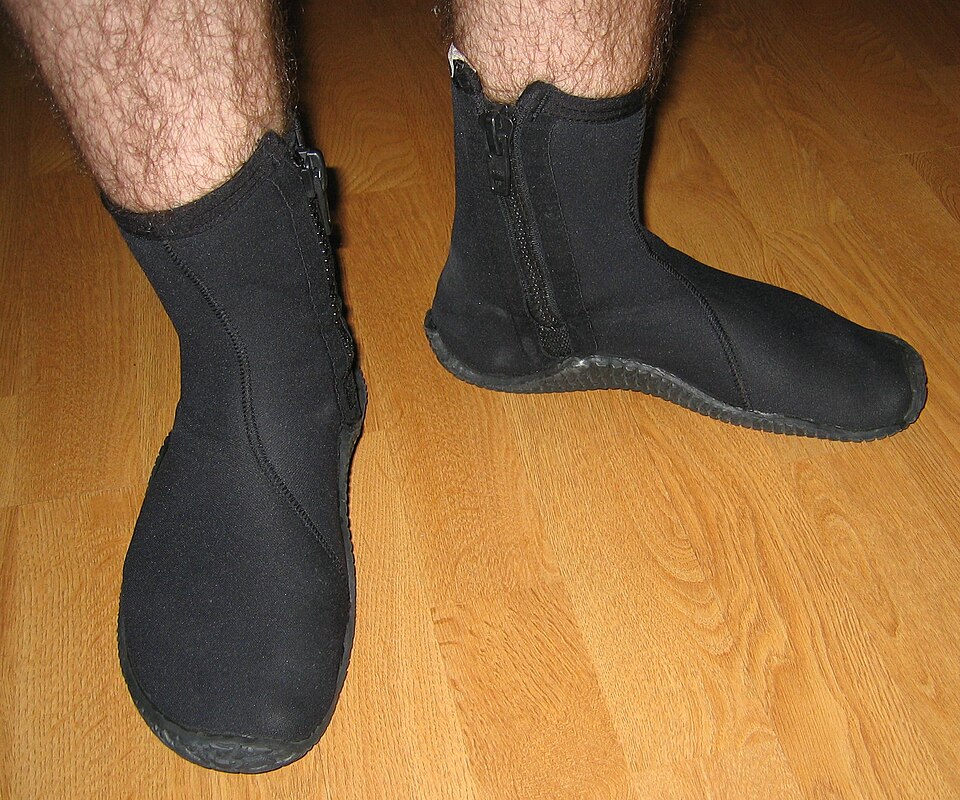
Two neoprene socks with similar thickness labels can have different soles, lining, height and intended combinations with other footwear. For a snorkeling kit, make those separate comparison rows. The millimetre figure alone does not tell you how the sock is constructed or whether it fits comfortably inside your actual fin.
Use named examples rather than a generic sock category
SCUBAPRO’s Hybrid Sock 2.5mm is described with a textured sole, a nylon outer layer and plush lining. The maker identifies use as a full-foot-fin liner or inside a dive boot. Those statements apply to that model; they are not confirmation that every full-foot fin has room for it.
Cressi’s Palma LT page describes a tall 3mm neoprene-and-nylon sock with a rubber grip sole and glued-and-sewn seams. This gives a different construction record to compare. Neither example provides a controlled comparison of warmth, abrasion resistance or traction, and neither establishes a personal temperature limit.
Write a sock-specific comparison
- List the exact model and its available size chart.
- Record thickness and where the maker says that thickness applies.
- Describe the lining, seam construction and cuff height separately.
- Identify whether the sole is textured, reinforced or constructed differently from the upper.
- Name the fin or boot combination for which you need a fitting assessment.
A textured sole is not the same specification as a rigid walking sole. Ask the manufacturer or qualified activity provider what footwear is appropriate for the planned access route. A grip description does not promise that a wet surface cannot be slippery, and it should not become permission to cross a hazardous shore.
Check the whole foot-pocket combination
Take the intended sock to an appropriate fitting, or ask how the supplier assesses that combination remotely. Keep your existing fin model and size in the question. Do not simply order a larger fin on the assumption that every additional millimetre requires the same size change; different foot pockets and sock constructions are not standardized equivalents.
If you are replacing worn socks, record which model and size previously worked, but check whether the replacement is the same version. Ask for its own cleaning and drying instructions as well. A useful purchase record explains the intended combination and maintenance information without turning a comfort problem into a diagnosis or promising blister prevention.
Ask for the missing model information
The TRIMIX buying guide explains how to prepare a list. Ask about actual fin-sock availability and documented combinations, including the sock, fin and any boot model. These third-party references do not confirm that TRIMIX lists either sock or that a combination has been tested.
Evergreen equipment guide checked November 3, 2026. Source pages are undated unless a printed revision is stated above. These are manufacturer documentation examples, not TRIMIX hands-on tests, current stock confirmations or personal suitability assessments.
Join the discussion
Share a question or a useful experience about this article. Every comment is reviewed before it appears.