
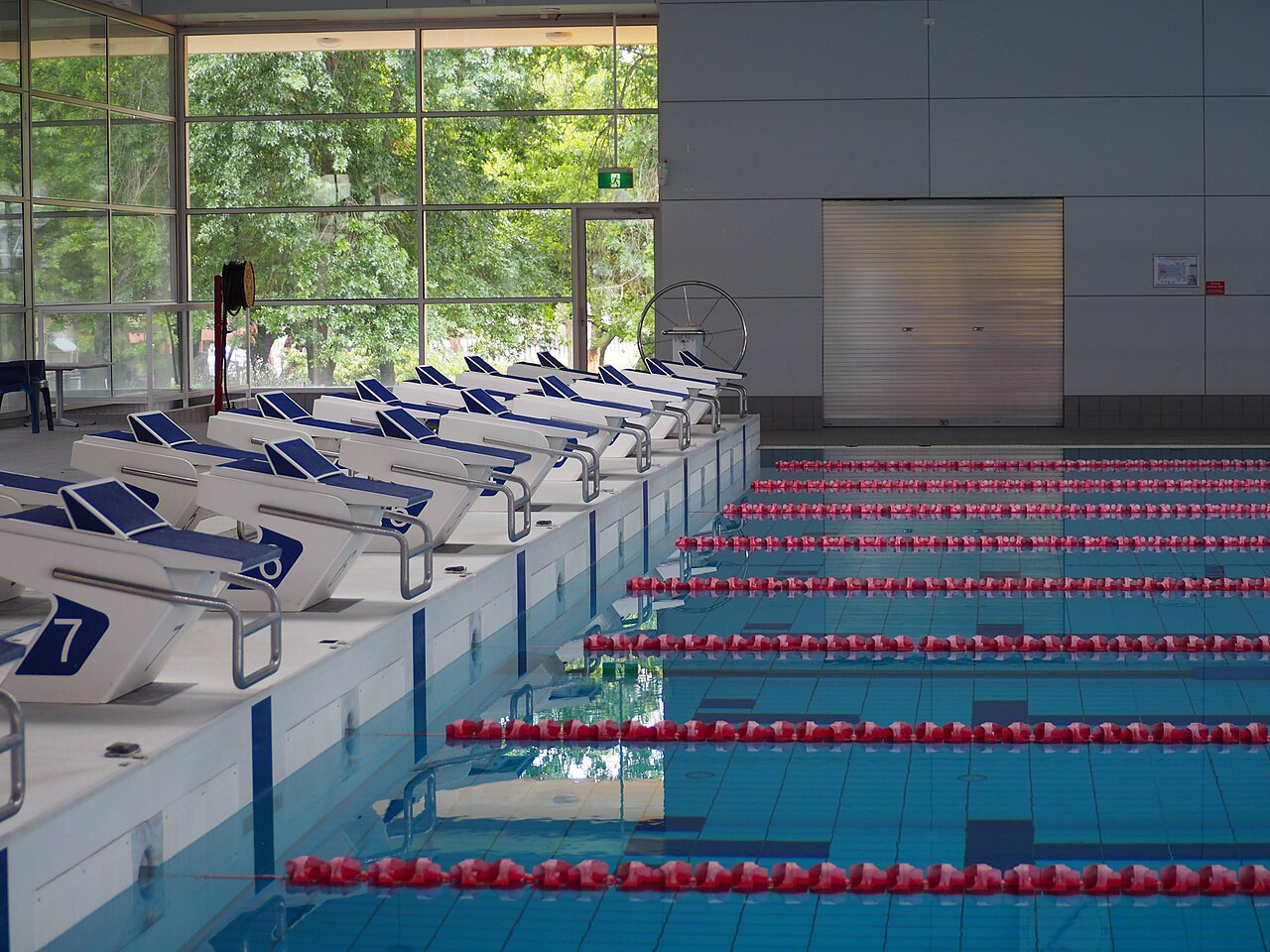
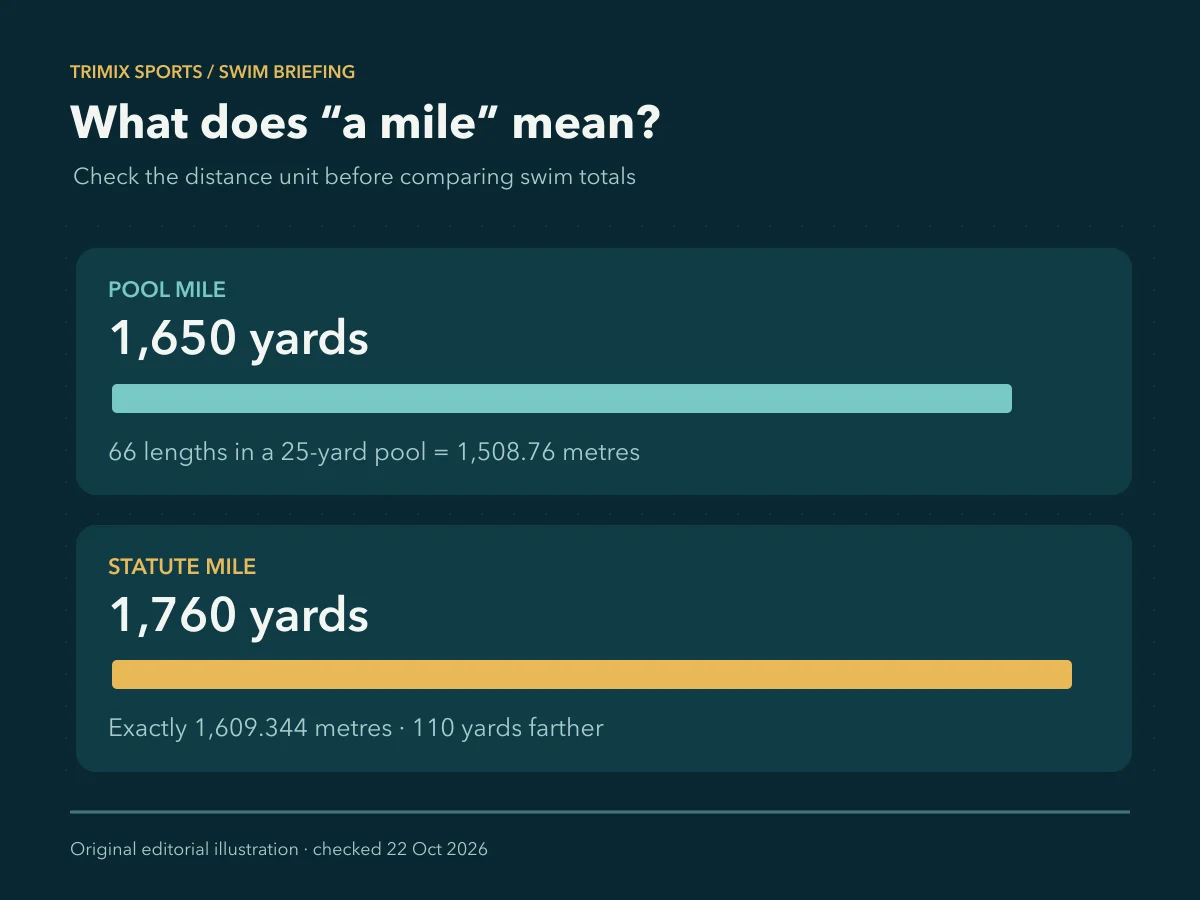
A “one-mile swim” can mean different distances depending on where the phrase appears. U.S. Masters Swimming’s October 6, 2026 workout article explicitly uses a 1,650-yard pool mile, shorter than the 1,760 yards in a statute mile. That distinction is useful before you copy a distance into a watch, swim log or training conversation. Read the original USMS workout article.
Keep the three numbers distinct
The USMS article presents five sessions, each totalling 1,650 yards, with different objectives such as pacing, efficiency and race preparation. This is a description of those sessions, not a conversion rule making every mile equal to that distance. For the full sets and their coaching context, use the original article rather than a shortened repost.
The NIST Handbook 44 unit tables give one international mile as exactly 1,609.344 metres and 1,760 yards. A yard is exactly 0.9144 metres. These relationships let us calculate that a 1,650-yard pool mile covers 1,508.76 metres: it is 110 yards, or 100.584 metres, shorter than a statute mile. Those are unit calculations, not measured swimming results.
Count lengths before comparing totals
In a 25-yard pool, 1,650 yards is 66 one-way lengths. In a 25-metre pool, 66 lengths is 1,650 metres. The number of lengths is identical, while the distance unit is different. Recording only “66 lengths” therefore leaves out information another swimmer would need to understand your session.
Similarly, a device set to the wrong pool length can produce a neatly displayed total that describes a different distance from the one intended. Before a session, check the pool’s actual configuration and the distance unit selected in the device you use. This article does not test a watch or promise that any particular tracker detects lengths correctly.
A compact note for your swim log
Our suggested log entry keeps the pool length and unit beside the total distance: for example, “25-yard pool; 66 lengths; 1,650 yards.” Add the session’s purpose separately. This makes later comparisons clearer without changing the workout itself or prescribing a personal training load.
When reading an event listing, use its stated distance and rules. Do not automatically replace a published open-water mile with the pool convention, or assume that an informal nickname establishes a course measurement.
Ask TRIMIX about a product’s actual specifications when comparing swim accessories. A clear description of where and how you swim is more useful than an ambiguous “mile swimmer” label.
USMS source: October 6, 2026. Unit reference: NIST Handbook 44, 2026 edition, Appendix C. Sources checked October 22, 2026. Original arithmetic illustration; no personal training prescription or firsthand device testing.
Join the discussion
Share a question or a useful experience about this article. Every comment is reviewed before it appears.