
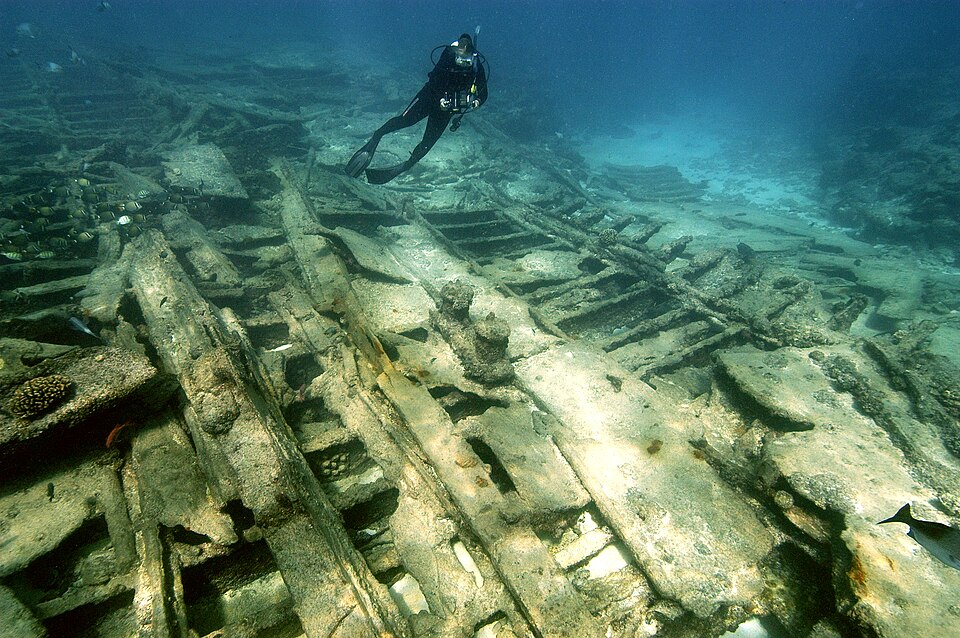
A Stony Brook University feature published October 8, 2026 introduces marine robotics research focused on making detailed three-dimensional records of underwater environments. For divers who enjoy wreck photography, it is a useful reminder that a convincing image and a dependable survey are different achievements.
The research problem behind the model
The university profile of Katherine Skinner describes work on underwater robotics, restoring underwater imagery, and producing high-resolution 3D models. Shipwrecks are a particular interest because their structures can be complicated and can change over time. The feature discusses ongoing work and plans for a research group, rather than announcing a newly completed survey of a particular Long Island wreck.
Blue-green images familiar to divers are part of the technical problem described in the feature. Correcting an image for a research purpose involves more than choosing a pleasing appearance. A model must be useful for the question its users want to investigate.
How photographs become a spatial record
NOAA’s photogrammetry overview explains how overlapping photographs or video frames can be processed into a 3D representation. It describes applications in documenting archaeological sites and other seafloor features, including the value of a record that can be examined without repeatedly visiting or disturbing the site. This is established background, originally published in 2020 and updated in 2024, not an October 2026 invention.
For a viewer, a useful first question is what the model is intended to support. A public virtual tour, an educational reconstruction, and a measurement record do not necessarily have identical requirements. The creator’s stated purpose should guide how much confidence to place in particular details.
What to look for before sharing a model
Look for the collection date, the source imagery, and any explanation of missing or uncertain areas. An apparently smooth surface may be easier to display, but it should not be assumed to contain information that was never recorded. A model is a representation of evidence, not a replacement for its provenance.
When comparing two surveys, ask whether differences in appearance might come from processing or coverage. A change in color or detail does not automatically demonstrate damage, recovery, or a new archaeological finding. The scientific interpretation needs its own explanation.
If you hope to contribute photographs to a documentation project, ask its organizers for requirements before a trip. They can clarify whether visitor images are useful, what permissions apply, and what information should accompany a submission. A news feature does not authorize entry, artifact handling, or collection at a protected wreck.
TRIMIX has not field-tested the research systems discussed here. Keep requests about consumer equipment separate and identify the exact model through TRIMIX Support. Sources checked October 23, 2026; this article is a past-month research explanation.
Join the discussion
Share a question or a useful experience about this article. Every comment is reviewed before it appears.