
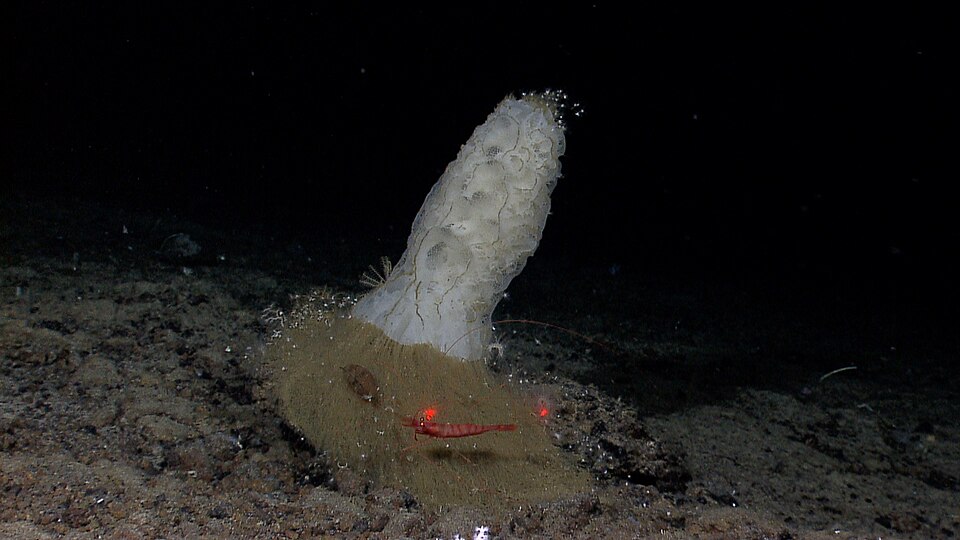
A vivid red animal in deep-sea footage can look conspicuous. Yet the lighting used to make that image may be the reason its colour becomes visible to us. A scientist’s recent account from E/V Nautilus offers a useful reminder that an underwater image records an interaction between the subject, its environment and the observing system.
New observations published after an earlier expedition
In an October 21 Ocean Census field account, participant scientist Bella Iannotta Vignette discusses colours seen during expedition NA182. Her participation ran September 22–October 12, 2026, around the Hawaiian Archipelago. She contrasts the appearance of animals encountered in abyssal environments with those seen in shallower, twilight-zone habitats. This is a newly published reflection on that completed field period, rather than a live report from today.
The Ocean Exploration Trust mission page identifies the expedition’s use of ROV, mapping and telepresence systems to investigate offshore habitats around the Hawaiian Islands. The observations concern specialist research systems and deep environments, not a recreational route or a consumer camera comparison.
Colour depends on the available light
NOAA’s explanation of red deep-sea animals describes how water removes red wavelengths relatively quickly while blue light penetrates farther. A red animal can consequently appear dark where the light it would normally reflect is absent. White artificial illumination changes the light reaching the animal and the camera.
A bright red appearance in a lit frame therefore does not show that the same animal stands out against its natural surroundings. It also does not, by itself, demonstrate digital recolouring or an AI effect. Both the source of illumination and any later processing belong in an account of how an image was made.
Read a caption as carefully as a colour
When following deep-sea footage, look for the expedition, location, depth information and observation method supplied by the researchers. Distinguish an identification made by the science team from an impression based on colour alone. An image can be informative while leaving questions about identity, behaviour or ecological function open.
The same care applies when reusing an older photograph to explain a newer report. The image’s own location and date should remain visible. A contextual photograph is not evidence that a particular organism was filmed during NA182, and an attractive image does not establish a new species or a new equipment capability.
Our underwater technology claim checklist asks readers to connect a claim to the evidence actually supporting it. Here that starts with the lighting. The October 21 scientist’s account, the operator’s mission record and NOAA’s established optical explanation were checked October 26. The historical expedition dates and the later publication date remain separate.
Join the discussion
Share a question or a useful experience about this article. Every comment is reviewed before it appears.