Practical guides and source-backed updates on diving, snorkeling, swimming and water sports technology.
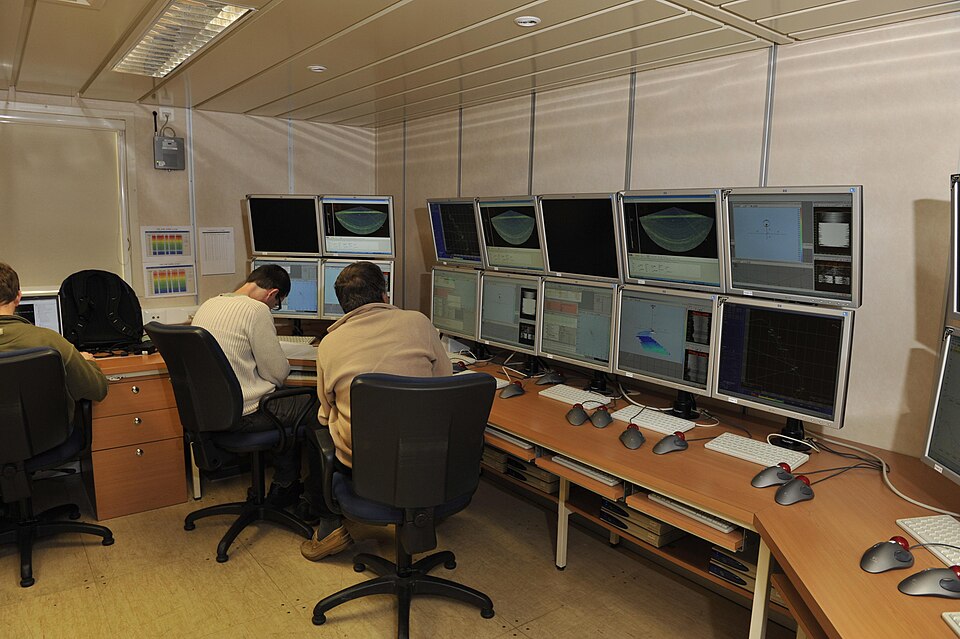
Photo: Stephane Lesbats / Ifremer · Source · CC BY 4.0An archived equipment-room photograph from the December 2008 ESSRESON08-2 multibeam-echosounder mission aboard Pourquoi pas? The archive describes the mission as December 8–13; the exact capture day is not independently confirmed. This is acoustic-survey context, not an Echoview 17 screenshot or a test of its features.Original: Campagne ESSRESON08-2 - Evaluation des enregistrements des sondeurs multifaisceaux du Pourquoi pas ? (Ifremer 00552-66378 - 46279). None by TRIMIX. Commons-provided proportional JPEG thumbnail bytes retained without editing.
Echoview 17 lets analysts preserve several detection configurations. Its September release offers a useful way to understand how processing choices accompany underwater sonar results.
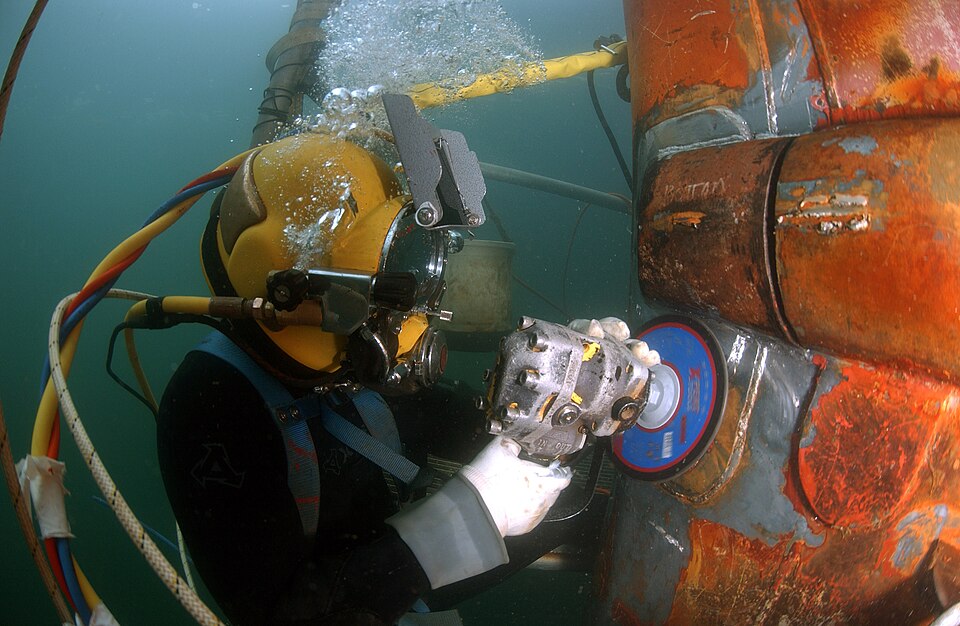
Photo: Andrew McKaskle / U.S. Navy · Source · Public domain - US Navy official workA US Navy surface-supplied diver at work on USS Ogden in San Diego, January 4, 2007. Historical diving-operations context; this does not depict the Saltenna RF experiments, wireless hardware or a test of that technology.Original: Working Diver 02. None by TRIMIX. Commons-provided proportional JPEG thumbnail bytes retained without editing.
Saltenna's recent radio coverage raises a practical question: which interface carries the signal? Read the conference dates alongside an explicitly older experiment and its depth conditions.
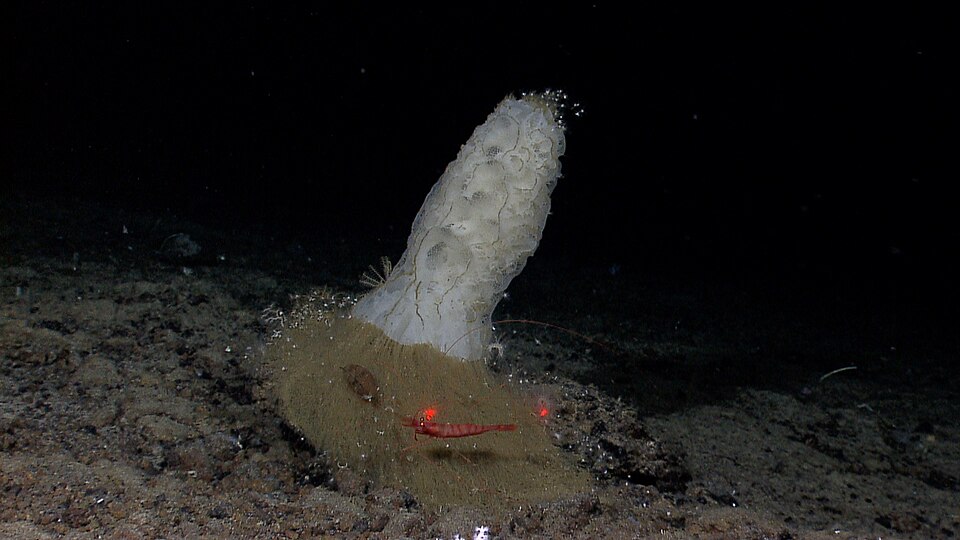
Photo: NOAA Okeanos Explorer Program, INDEX-SATAL 2010 · Source · CC BY 2.0A glass sponge with a red-striped shrimp during NOAA’s INDEX-SATAL 2010 expedition; the source description dates the photograph July 28, 2010. The exact dive site is not specified on the file record. This is historical context from a different expedition, not Nautilus NA182 or the 2026 Hawaiian observations.Original: Expl5625 (9734253995).jpg. Source-provided 960 x 540 px JPEG reproduced unchanged. TRIMIX made no additional cropping, retouching, overlays or other image edits.
A scientist’s October 21 NA182 account connects deep-sea colour with observation conditions. Artificial white light and natural visibility tell different stories.
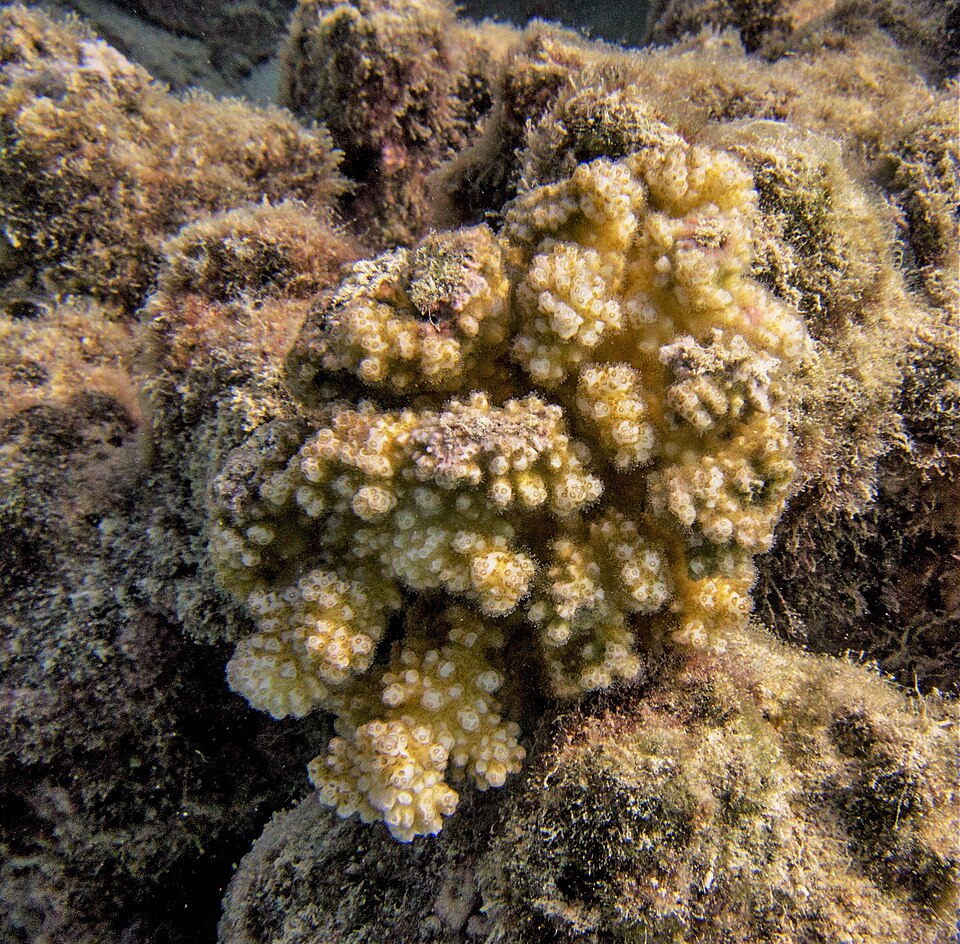
Photo: Ryan McMinds · Source · CC BY 2.0A coral identified as Pocillopora damicornis in the source record, Moorea, French Polynesia, November 9, 2015. This historical photograph is not one of the Stanford experiment’s fragments, a before-and-after comparison or evidence that this colony received a recovery treatment.Original: Pocillopora damicornis, Moorea.jpg. Source-provided 960 x 944 px JPEG reproduced unchanged. TRIMIX made no additional cropping, retouching, overlays or other image edits.
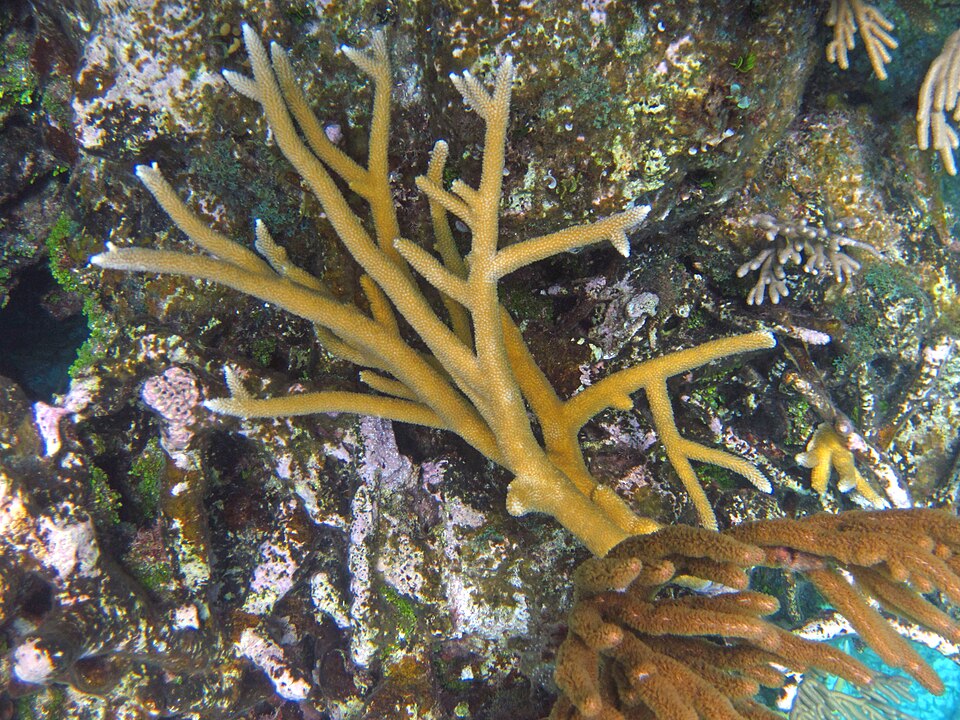
Photo: James St. John · Source · CC BY 2.0Staghorn coral identified as Acropora cervicornis at Gaulin Reef, San Salvador Island, Bahamas, June 19, 2010. This is a different coral species and region from the Acropora pharaonis study in the Arabian Gulf. It does not show bacteria, an immune response, a hormone experiment or a treatment result.Original: Acropora cervicornis (staghorn coral) (San Salvador Island, Bahamas) 1 (15513633663).jpg. Source-provided 960 x 720 px JPEG reproduced unchanged. TRIMIX made no additional cropping, retouching, overlays or other image edits.
An October 22 paper links coral bacteria, steroid production and heat-stress responses. Separate genomic clues, laboratory responses and reef-scale outcomes.
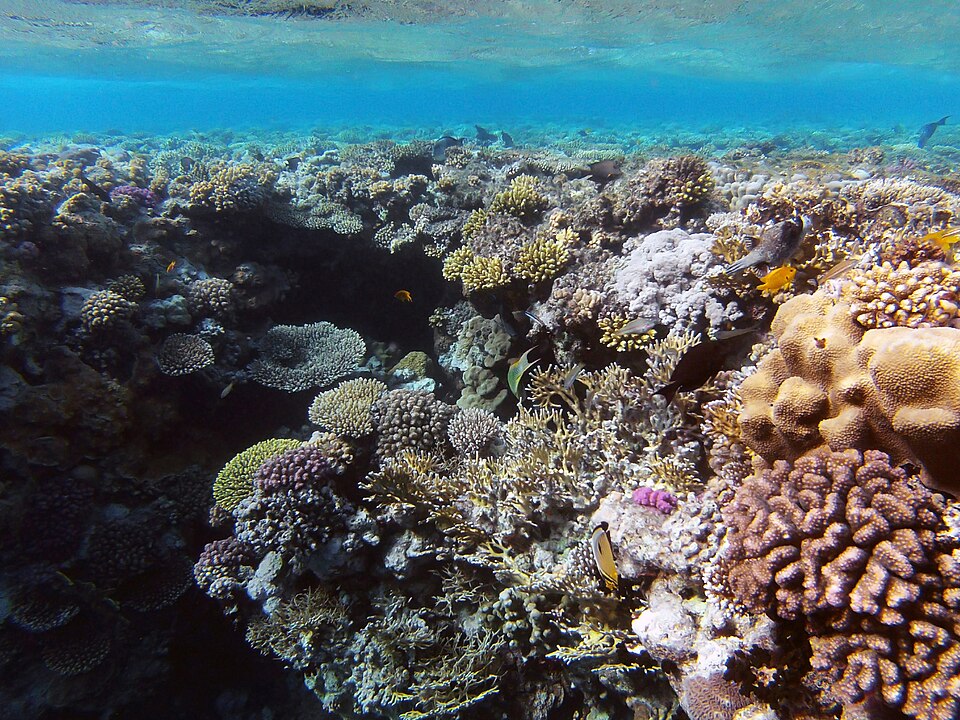
Photo: Sovernigo · Source · CC BY-SA 4.0A reef in Ras Mohammed National Park, Egypt, April 10, 2013. This is historical Red Sea context, not the Shushah Island study site, the November 2022 storm or an image of the acoustic experiment.Original: Ras Mohammed coral reefs.jpg. Source-provided 960 x 720 px JPEG reproduced unchanged. TRIMIX made no additional cropping, retouching, overlays or other image edits.
An October 22 study analyses a November 2022 Red Sea storm. Its acoustic baseline helps distinguish recorded sound changes from broader reef-health claims.
Allow Google Analytics to help us understand visits, traffic sources and product interest? Analytics loads only if you accept. You can reject it and keep browsing, or change your choice below.