
A laboratory result involving touching coral fragments has attracted attention for an understandable reason: it suggests another route to recovery after bleaching. The key word is not simply contact. The relationship between the fragments, the transfer of living partners and the eventual recovery outcome all matter.
What the initial comparison showed
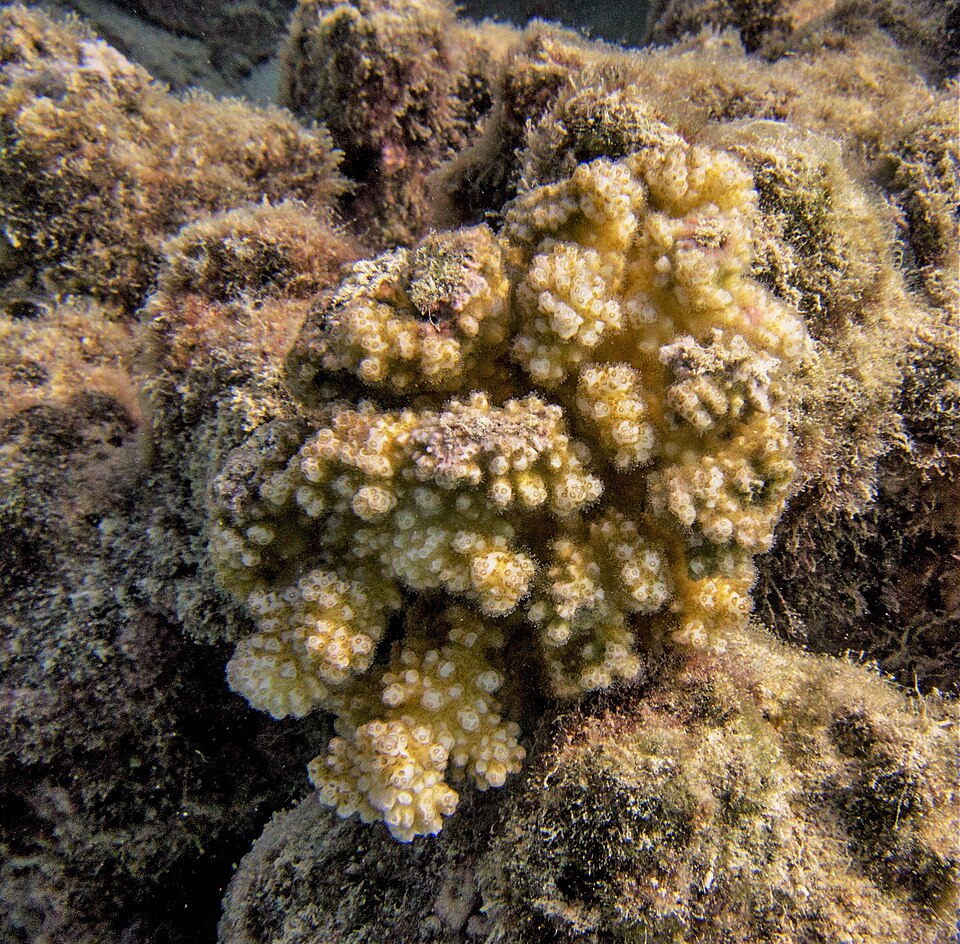
The original Science Advances study, published online October 14, used small fragments of Pocillopora damicornis. In an initial comparison, five bleached fragments touching healthy coral from the same genetic individual recovered within eight weeks. Five positioned a few millimetres away did not show the same recovery. The result concerns a controlled experiment, rather than an entire wild reef.
The authors describe tissue fusion that enabled transfer of algal symbionts from healthy to bleached tissue. That contact-dependent recovery was restricted to the same genetic individual, or genet; combining different genets did not produce the same successful response. This is not evidence that placing any two corals together is beneficial.
Transfer, separation and recovery are different milestones
Stanford’s October 14 explanation describes additional tests in which recovery continued after fragments were separated following a period of contact. It also identifies unresolved questions about translating the finding into useful recovery methods. The ability to initiate a process in a small laboratory fragment does not yet demonstrate a practical intervention across a damaged reef.
This distinction is especially useful when a headline compresses a study into a number of days. Detecting symbiont movement, seeing initial colour return and measuring complete recovery are not equivalent endpoints. A short transfer interval should not be presented as the time needed to restore a reef.
Why the work remains worth following
The university also scheduled an October 20 public talk by researcher Danny Collins on this recovery question. That dated discussion provides a recent reason to revisit the October 14 paper. The event is now over; it is not an invitation to register for a future session or proof that a public recording is available.
For reef visitors, a constructive question is how a proposed restoration method moves from mechanism to longer-term field evidence. Look for the coral species, genetic relationships, comparison groups and recovery endpoint. Then ask what remains unknown about scaling the approach and withstanding another period of heat stress.
These findings are not instructions to move or touch wild corals. Our reef visitor explainer considers the broader conservation context; this study addresses a narrower biological question. TRIMIX has not tested this technique or demonstrated a restoration outcome. The paper, university explanation and past talk listing were checked October 26, with the laboratory result kept separate from a claim about reef-wide recovery.
Join the discussion
Share a question or a useful experience about this article. Every comment is reviewed before it appears.