
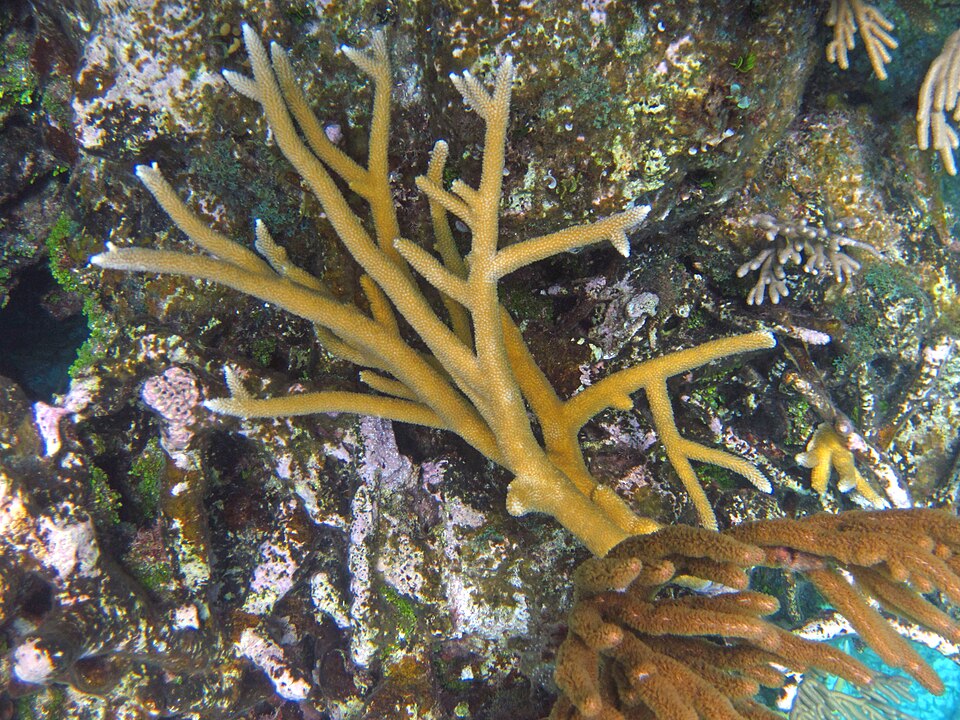
A coral’s visible surface gives only a partial view of the relationships sustaining it. A new study investigates chemical interactions between coral-associated bacteria and their animal hosts. Its significance lies in connecting several kinds of evidence, rather than demonstrating a treatment that visitors or restoration volunteers can apply to a reef.
A mechanism assembled from separate experiments
The Nature Microbiology paper published October 22 examines bacteria of the genus Endozoicomonas. Field work on Acropora pharaonis at Saadiyat Reef, Abu Dhabi, used samples collected in June, August and October 2016. Those older samples supported analysis across different temperature conditions; the collection was not a newly completed October 2026 survey.
The research combines chemical measurements, microbial and genomic analyses, bacterial culture work and coral experiments. It finds that studied bacterial isolates can produce steroid hormones and that exposure to hormones changes coral immune-related gene activity during thermal stress. These are connected lines of investigation, not one field trial showing that a treated reef survived a heatwave.
Genes, chemistry and an actual response
In their explanatory account displaying an October 23 date, researchers Amin Mohamed and Shady Amin describe why genomic clues were not enough. The presence of a gene suggests a possible capability; experiments were needed to investigate production and the coral’s response. They also explain that the researchers could not culture the target bacteria directly from the Arabian Gulf coral and instead worked with isolates from other coral hosts and locations.
That separation matters when judging a headline. A pathway identified in genomes, a substance detected in a culture and a change in an animal’s gene expression answer different questions. Reading the steps individually helps show both why the proposed mechanism is interesting and which links require further investigation.
What the result does not establish for a reef visit
The useful outcome for a diver is a more precise understanding of research claims. An immune-related response is not automatically evidence of lasting protection, increased survival in the wild or recovery of a whole reef. Those outcomes would need their own measurements over relevant periods and conditions.
The paper does not supply a visitor intervention, a retail coral supplement or a reason to add substances to seawater. No TRIMIX field testing or restoration performance is implied. A photograph of a coral colony also cannot reveal the chemistry or bacterial activity measured in this work.
Our coral reef ecosystem assessment explainer concerns a different scale of evidence. A promising biological mechanism and an assessment of ecosystem risk can both be informative without one cancelling the other. The primary paper and authors’ explanation were checked October 26. The research publication date is October 22; the explanatory post’s displayed date is not a new experimental result.
Join the discussion
Share a question or a useful experience about this article. Every comment is reviewed before it appears.