
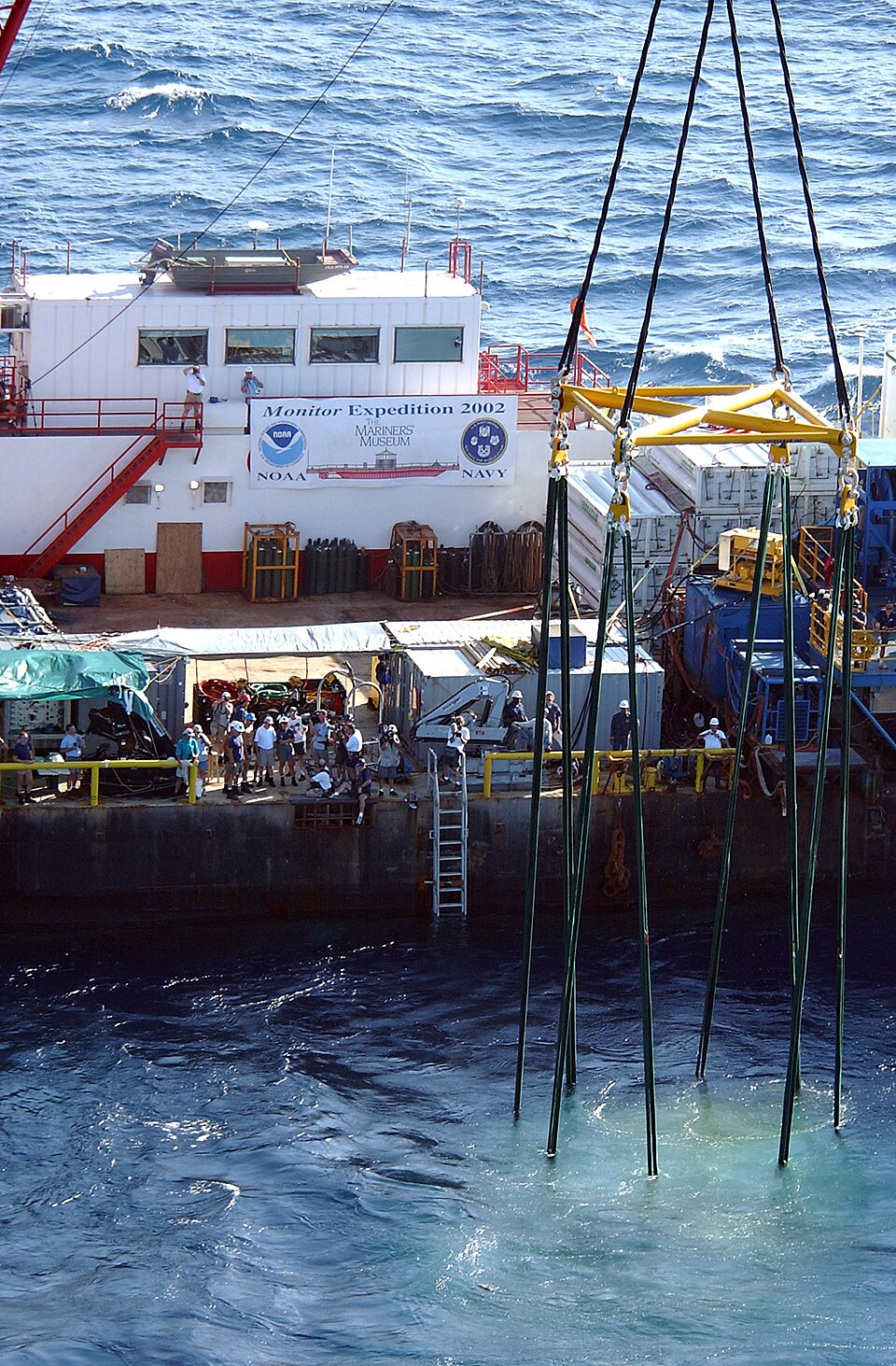
A recovered gun turret can look like a single dramatic object. Bringing it up from a protected shipwreck, however, involves decisions about history, engineering and stewardship. NOAA’s newly featured USS Monitor film offers a way to explore those decisions without confusing a historical recovery operation with an invitation to visit the wreck.
A new release about an older operation
NOAA’s national marine sanctuaries news index dates Honoring the USS Monitor to October 23, 2026. The official film page describes the recovery of major components, including the revolving turret, from a wreck 240 feet below the surface. The new item is the film presentation; the page is not announcing that the turret has just been recovered.
This distinction changes how to read the accompanying photographs. An archival photograph can document the equipment and people involved in an earlier operation. It does not establish today’s condition of the wreck, a current expedition timetable or an opportunity for a visitor to participate.
Access is a separate, current question
The sanctuary’s visitor information places Monitor off North Carolina, south-southeast of Cape Hatteras Lighthouse. It describes the wreck as difficult for an average diver to access and specifically addresses qualified technical divers. The historical significance of a place does not make its depth or environment suitable for every visitor.
The sanctuary permitting page says certain activities, including diving, require a permit. It states that permits are free and that proposed activities are evaluated for their effects on sanctuary resources and potential protection benefits. This is current agency guidance checked October 26, rather than a newly introduced October 2026 rule.
Look for the work beyond the lift
When watching the film, consider three different records: the object before recovery, the recovery operation itself and its later care. A spectacular lift answers a question about moving an object. It does not, by itself, answer how the object should be documented, interpreted or conserved afterward. NOAA’s presentation points viewers toward the broader conservation story.
For a prospective trip, use the sanctuary’s own access information and permitting route before treating a charter description or an old expedition photograph as practical guidance. Permission, the suitability of a proposed activity and the availability of an operator are separate questions. This article supplies neither a dive plan nor permission to disturb a wreck.
Our Kekova shipwreck research explainer offers another example of why the evidence around a wreck matters alongside its striking appearance. Here, the October 23 release is a new opportunity to learn about Monitor’s history; the wreck and the recovery history remain distinct from that publication date.
Watch the official video
Video: NOAA Sanctuaries, NOAA Office of National Marine Sanctuaries. Official NOAA documentary published October 23, 2026, about historical USS Monitor recovery and stewardship. It is a recording, not a live expedition feed. Open the official source or direct YouTube link if the player is unavailable. Official source · Watch on YouTube
Loading a video connects to YouTube. Videos do not load or play automatically.
Join the discussion
Share a question or a useful experience about this article. Every comment is reviewed before it appears.